This piece cuts through the noise of political theater to expose a fundamental rupture in American governance: the systematic dismantling of the Federal Reserve's independence. Brad DeLong, drawing on Peter Conti-Brown's analysis, argues that the current administration's campaign against Governor Lisa Cook is not merely a personnel dispute but a strategic assault on the constitutional separation of powers. For the busy professional tracking the stability of the dollar and the global economy, this is not abstract legal theory; it is the unfolding of a crisis that threatens to replace economic stability with executive whim.
The Pretext of Removal
The core of the argument rests on the stark realization that the administration's legal maneuvering is a facade. Brad DeLong writes, "The repeal of Humphrey's Executor is the most destructive blow to the American governmental order in history, creating an aggrandizement of the executive via creative delegations that were explicitly not to the president in his normal executive capacity." This reference to Humphrey's Executor v. United States, the 1935 Supreme Court case that established independent agencies could only be fired "for cause," is crucial. For ninety years, this precedent held firm across fourteen presidencies, ensuring that regulators like those at the Federal Reserve could make unpopular but necessary decisions without fear of retribution.
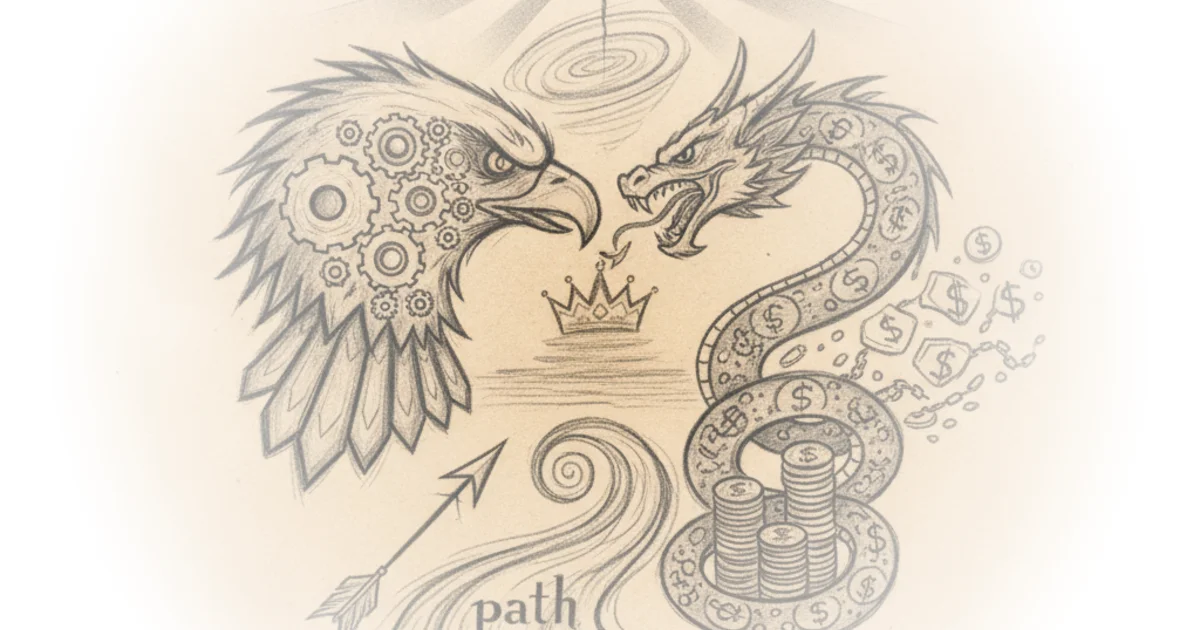
DeLong contends that the current attempt to remove Cook is "fully pretextual," designed to silence a specific economic voice. As he notes, "Getting Lisa Cook off the Federal Reserve Board would reduce the voices enunciating strong reasons for a relatively low interest-rate path, and so push its state of mind not toward but away from Trump's preferences." The administration's strategy involves manufacturing a crisis of credibility around Cook's past mortgage applications, a move DeLong describes as a "disqualification playbook" run three times against her. This framing is effective because it shifts the conversation from personal character to institutional integrity. When the stated reasons for removal are so easily debunked, the true motive—consolidating executive power over monetary policy—becomes undeniable.
Critics might argue that no public official should be immune to scrutiny regarding financial disclosures, regardless of their position. However, DeLong's point is that the timing and intensity of the attack, coupled with the Supreme Court's invitation to retry the removal, reveal a pattern of weaponized enforcement rather than genuine regulatory oversight.
A principle that binds only your enemies and never your friends is not a principle. It is a weapon wearing a principle's clothing.
The Flawed Legal Architecture
The legal reasoning used to justify this power grab is described by DeLong as "ludicrous" and "pathetic." He targets the Supreme Court's recent distinction that the Federal Reserve Board is a "quasi-private entity" unlike other independent agencies. Brad DeLong writes, "The Board is not quasi-private. The Board is not quasi-anything. The Board is a federal executive agency, full stop." This distinction is vital because it determines whether the President can fire a board member at will.
DeLong traces the history of the Federal Reserve to the 1913 compromise between Carter Glass, who wanted regional private banks, and Woodrow Wilson, who insisted on a governmental capstone. The result was a hybrid system, but the Board itself has always been a federal body. By labeling it "quasi-private," the Court has created a legal fiction that allows the executive branch to bypass the "for cause" removal protections that apply to everyone else. This is not just a technicality; it is a structural change that allows the President to dictate interest rates directly.
The danger here is the precedent it sets for fiscal dominance. If the executive branch can fire governors who disagree with its preferred interest rate path, the central bank loses its ability to anchor inflation expectations. As DeLong notes, Cook is the only governor who has "lived through a hyperinflation, and hence feels the costs of losing control of expectations... in her bones." Removing her isn't just about one person; it's about removing the institutional memory and economic discipline that prevents a slide into fiscal chaos.
The Human Cost of Institutional Defense
While the legal and economic arguments are severe, DeLong also addresses the personal toll on Lisa Cook. He acknowledges that she faces "ruinous legal bills" and the threat of indictment by a potential Attorney General, Todd Blanche. Yet, DeLong reframes her suffering not as a tragedy of personal failure, but as a testament to her resolve. He writes, "It is true that when she wakes up in the morning she now has to deal with an awful lot of people dissing her in small and large ways... But the dissing, the scorning, the lying, the discrimination, the physical risk—These are in this day only an extremely slight shadow of the lives that her African American ancestors lived."
This comparison, while stark, serves to underscore the resilience required to hold the line. DeLong invokes the Buddhist legend of the Bodhisattva Avalokiteśvara, who descends into hell to relieve the suffering of the damned, to illustrate Cook's position. He argues, "For her, Nirvana was not chanting sutras with the other Enlightened... For her, Nirvana was doing her job of harrowing hell." This is a powerful, if unconventional, rhetorical move. It suggests that the personal cost of defending the institution is not a burden, but a form of high-purpose duty.
A counterargument worth considering is whether such a heroic framing risks romanticizing the harassment of a public servant. The reality is that the threat of physical danger and financial ruin is a severe deterrent that could scare off future candidates from serving in independent agencies. However, DeLong's point is that Cook has already accepted this cost, and her refusal to step down is a critical check on executive overreach.
Bottom Line
The strongest part of this argument is its unflinching connection between the specific attack on Lisa Cook and the broader erosion of the administrative state. DeLong successfully demonstrates that the administration's actions are not isolated incidents but part of a coordinated effort to centralize power. The biggest vulnerability lies in the political reality: even if the courts eventually rule against the removal, the mere attempt creates uncertainty that can destabilize markets before a legal resolution is reached. Readers should watch closely for the Senate's response; as Peter Conti-Brown suggests, the silence of Republican senators on this issue will be the true test of their commitment to inflation fighting versus executive loyalty.