In a landscape where teacher activism is often reduced to contract negotiations or protest signs, Future Schools offers a startling pivot: what if the most radical act a teacher can perform is to heal their own nervous system? The piece argues that the exhaustion of modern labor activism isn't just a political problem, but a biological one, rooted in a "virus of white-body supremacy" that has infected our collective physiology for centuries. This is not a call for more meetings, but a demand for a somatic revolution that treats the body as a site of political resistance.
The Body as the First Frontier of Activism
The article opens with a visceral depiction of the modern educator's anxiety, triggered by breaking news of military escalation in the Middle East. Future Schools describes the physical toll of this uncertainty: "I swipe and tap my way to Youtube, the algorithm already primed for my search, my feed already full of breaking news... I scan my body for biophysical responses." The piece suggests that before teachers can effectively organize against policy shifts like the administration's proposed education cuts or immigration crackdowns, they must first address the "alarm fleets" running through their own nervous systems.
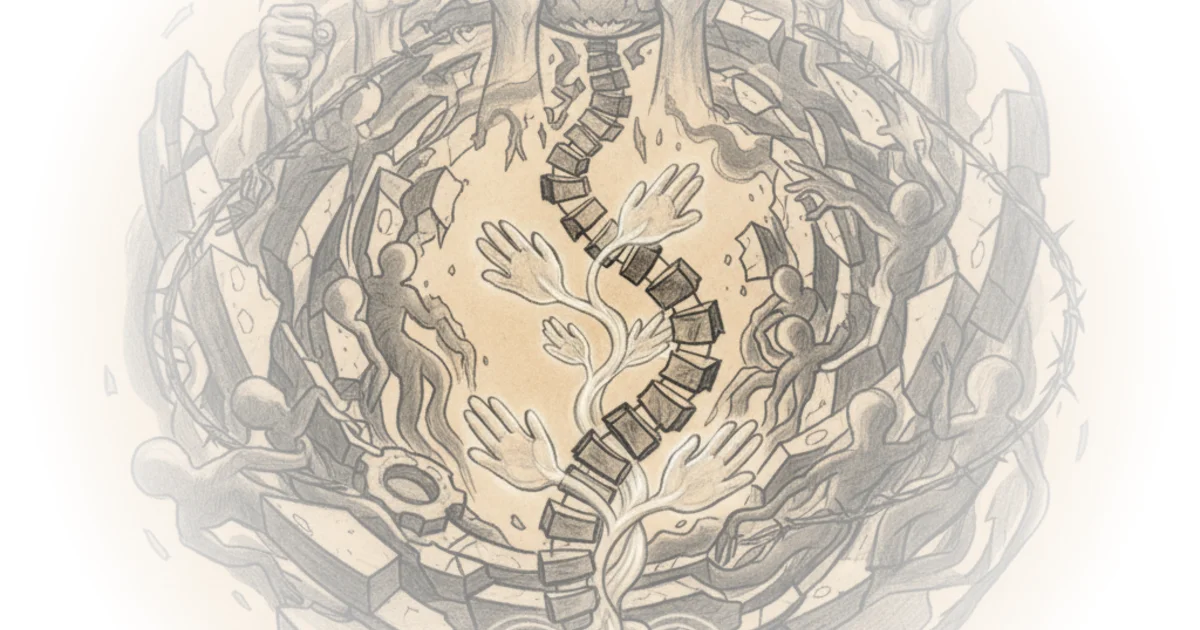
This framing is powerful because it moves beyond the standard narrative of burnout as a failure of time management. Instead, it posits that the "modern life war"—fueled by artificial intelligence, policy volatility, and global conflict—requires a new kind of stamina. The editors note that teachers often succumb to apathy not because they lack passion, but because they lack the somatic capacity to "hold all the pain of–and in–the world, without being numbed or overwhelmed." This distinction is crucial; it reframes self-care not as a luxury, but as a prerequisite for sustained political engagement.
"Nearly all of our bodies–bodies of all culture–are infected by the virus of white-body supremacy. This virus was created by human beings in a laboratory–the Virginia Assembly, in 1691–then let loose upon our continent."
By anchoring the argument in the historical specificity of the Virginia Slave Codes of 1691, the piece connects the abstract concept of systemic racism to a tangible, biological reality. It suggests that the trauma of slavery and the subsequent codification of racial hierarchy did not just shape laws, but rewired the human body's response to threat. This historical grounding prevents the argument from becoming purely theoretical, forcing the reader to confront the deep, generational roots of the stress educators face today.
Somatic Abolitionism: A New Framework for Labor
The core of the article's proposal is "Somatic Abolitionism," a concept borrowed from therapist Resmaa Menakem. Future Schools reports that this practice is "living, embodied anti-racist practice and cultural building–a way of being in the world." The argument here is that traditional labor activism, while necessary, often ignores the "intelligence that lies in our bodies." The piece asks a provocative question: what would happen if the National Education Association (NEA) and the American Federation of Teachers (AFT) stopped merely condemning legislation and started integrating somatic healing into their political education?
The editors draw on the work of scholar Sylvia Wynter to explain how our current understanding of "humanity" is a colonial construct that excludes many. They argue that to dismantle this, we must move beyond the mind and into the body. "In the process of building consciousness, we will unearth new knowledges about the world and ourselves, experiencing these in both our colonized minds and our racialized, gendered, and classed bodies." This is a bold claim, suggesting that the path to justice runs through the nervous system.
Critics might note that focusing on individual somatic practices risks depoliticizing the structural causes of teacher burnout. If a teacher is overworked because of state budget cuts, no amount of body scanning will fix the lack of resources. However, the piece anticipates this by framing somatic work not as a replacement for political action, but as the fuel that makes it sustainable. It argues that without healing the "wounds of humanity," activists will inevitably burn out or become paralyzed.
"We cannot gloss over the modern world's dependence upon the System of White Supremacy when implementing remedies to injustice. We cannot dismiss the importance of building relationships or educating each other on the sociopolitical nature of our work."
The article's synthesis of high-level theory and practical application is its greatest strength. It bridges the gap between the dense, metaphysical writing of Wynter and the concrete, actionable advice of Menakem. By inviting teachers to "condition [their] intellectual, political, and affective muscles for facing storms and running marathons in tortuous terrains," the piece offers a vision of activism that is resilient rather than reactive.
Bottom Line
Future Schools makes a compelling case that the future of teacher labor activism depends on a somatic shift, arguing that we cannot dismantle oppressive systems while remaining trapped in the trauma responses those systems created. The piece's greatest vulnerability lies in the practical challenge of scaling this deeply personal work within large, bureaucratic unions, but its core insight—that healing is a political act—is undeniable. As the administration pushes forward with policies that threaten public education, the most radical thing a teacher can do may be to stop, breathe, and reclaim their own body as a site of resistance.