This week's dispatch from City Observatory cuts through the noise of Oregon's special legislative session to expose a decades-old pattern of fiscal deception in transportation policy. Joe Cortright doesn't just report on a new gas tax proposal; he dissects a "bait and switch" where the promise of fixing potholes masks a relentless drive toward billion-dollar freeway expansions. For busy listeners tracking the intersection of climate policy and urban function, this is a critical warning: the state is actively dismantling the very mechanisms designed to reduce congestion while claiming to solve it.
The Maintenance Myth
Cortright opens with a scathing indictment of the Oregon Department of Transportation (ODOT), arguing that the agency is repeating a failed playbook. "ODOT is pulling the same tired playbook: crying poverty while promising to fix potholes and plow roads, then quietly diverting every available dollar to billion-dollar freeway megaprojects," he writes. The core of his argument rests on the lack of legal guardrails in the proposed LC 2 bill. While officials plead for emergency funds, the legislation contains zero language requiring new revenue to prioritize maintenance.
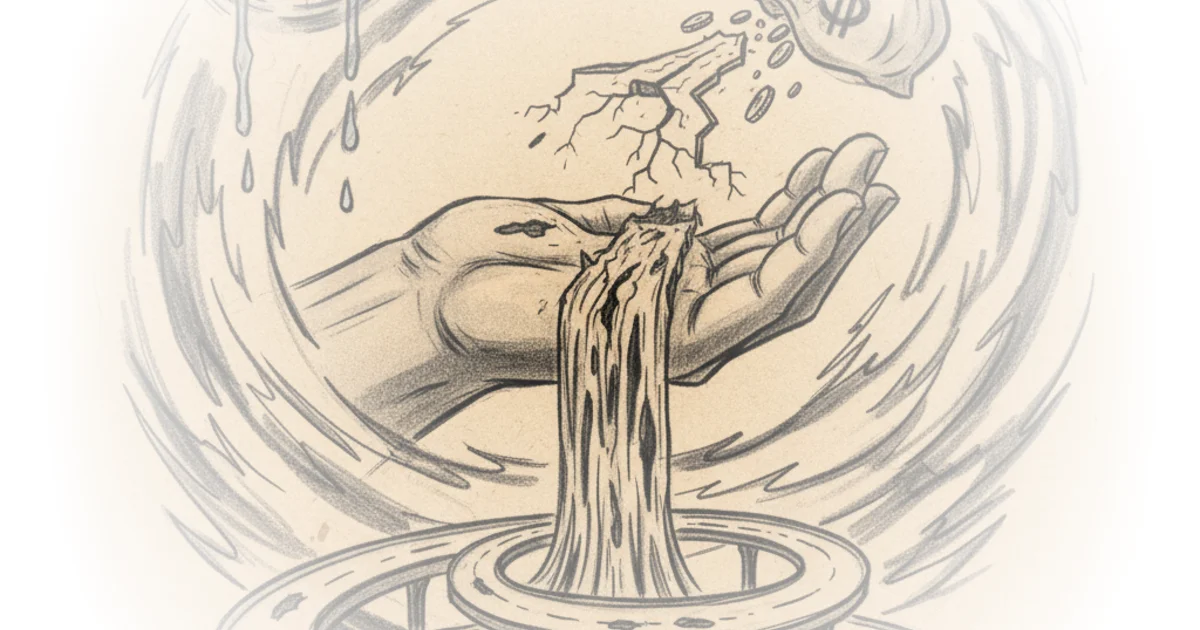
This framing is effective because it moves beyond abstract budget debates to concrete historical precedents. Cortright points out that in 2017, the agency swore new funding would prioritize "fixing the system above expansion," only to launch unfunded projects like the Abernethy Bridge and the Rose Quarter freeway widening. The irony is palpable: "Even as officials plead for emergency funding in Salem, ODOT contractors broke ground on the unfunded Rose Quarter project this week." The argument lands hard because it highlights a disconnect between political rhetoric and on-the-ground reality. Critics might note that megaprojects often have long-term economic benefits that maintenance alone cannot provide, but Cortright's evidence of cost overruns—like the Rose Quarter missing $1.5 billion—suggests the math simply doesn't add up.
The fix is simple: legally mandate ODOT spend new revenue on maintenance first, not megaproject cost overruns and consultant contracts.
The Death of Congestion Pricing
The piece takes a sharper turn when addressing the environmental implications. Cortright identifies a "monkey-wrench" in state climate policy: the repeal of a 2017 requirement for congestion pricing in the Portland Metropolitan Area. He argues this repeal is a betrayal of the environmental coalition that previously supported highway spending. "Environmentalists and the climate got rolled again," he asserts, noting that this move happens just as Manhattan proves pricing is a "rapid and effective solution to congestion."
This section is particularly strong because it connects local policy failures to global best practices. Cortright suggests that without pricing, "Portland traffic congestion will grow worse, and this blows a hole in state and regional climate plans." He draws a parallel to the 2009 transportation package, where a similar requirement was evaded, noting that "we've squandered a decade and a half when we needed to be making progress in reducing greenhouse gases." The comparison to Charlie Brown and the football is a vivid, if cynical, metaphor for the repeated disappointment of reformers. A counterargument worth considering is that congestion pricing is politically toxic and difficult to implement without robust transit alternatives, but Cortright rightly points out that eliminating the requirement entirely removes the only tool capable of managing demand.
The Transit Death Spiral
Shifting focus to Philadelphia, Cortright amplifies the work of transit expert Jarrett Walker to illustrate the catastrophic consequences of underfunding. He describes a scenario where Pennsylvania lawmakers, driven by rural interests, are slashing state aid and blocking local solutions. "Cutting almost half of a transit system is not a way to make it more efficient... this will be a disaster with far reaching consequences," Cortright writes. The human cost is immediate: riders lose jobs, and cities become less functional as people are forced back into cars.
The analysis here is stark and unflinching. Cortright warns that "a city whose high density makes transit essential for the city's functioning will soon not function very well." He frames these cuts not as fiscal prudence but as "culture war driven attacks on mass transit." This perspective challenges the narrative that service cuts are a necessary evil, suggesting instead that they are a choice with devastating ripple effects. The argument holds up because it relies on the logical inevitability of the outcome: if you remove the bus, the car fills the void, and congestion returns.
The Illusion of Free
Finally, the commentary tackles the popular but potentially dangerous idea of "free buses." Citing Eric Goldwyn of NYU's Marron Institute, Cortright argues that eliminating fares without addressing speed or reliability is a trap. "Free seems like a good price, until you realize that with any given amount of money for transit, free buses will come less often, and that's a pretty significant cost," he notes. The real cost to a rider is time, not the fare. Policies that speed up buses—dedicated lanes, signal priority, and all-door boarding—are far more valuable than zero-dollar tickets.
Cortright emphasizes that while buses are subsidized, they still generate significant revenue that offsets operating costs. "Without a long-term plan for where an additional $600 million would come from year after year... the MTA will be forced to reduce service." This is a crucial distinction for listeners who might be swayed by the simplicity of a "free" policy. The argument is that "fast, free buses" is a catchy slogan but a flawed policy. He concludes by praising Zohran Mamdani's focus on buses while contrasting it with the inaction in Pennsylvania, noting that enthusiasm for transit is a "positive sign in these difficult times."
Bottom Line
Joe Cortright's week observed is a masterclass in connecting fiscal policy to urban livability, exposing how short-term political maneuvering threatens long-term climate and mobility goals. The strongest part of the argument is the historical evidence showing that without legal mandates, transportation agencies will inevitably prioritize expansion over maintenance. The biggest vulnerability remains the political difficulty of enforcing these mandates against powerful construction lobbies. Readers should watch whether the Oregon Legislature has the courage to add the accountability language Cortright demands, or if the cycle of broken promises will continue.