Sara Hildreth transforms a standard book review into a profound meditation on the mechanics of meaning-making, arguing that literature functions not as a puzzle to be solved, but as a prism refracting our own desperate need for narrative order. While the piece begins with the personal rhythms of summer and parenting, it rapidly pivots to a sophisticated analysis of Anjet Daanje's The Song of Stork and Dromedary, revealing how the novel weaponizes its own structure to interrogate the reader's compulsion to find cause and effect in chaos.
The Architecture of Interpretation
Hildreth identifies the novel's unique structural gamble immediately. The book spans from the early 1800s to 2030, utilizing eleven distinct point-of-view characters to trace the "literary afterlife" of a fictional author named Eliza May. Hildreth notes that the text is "brilliant and playful and twisty," but she argues its true genius lies in how it forces the audience to become active participants in the construction of truth. "Much of the joy of this novel is in that readerly search for meaning within the prose and between the lines," she writes, capturing the specific cognitive labor required by Daanje's work.
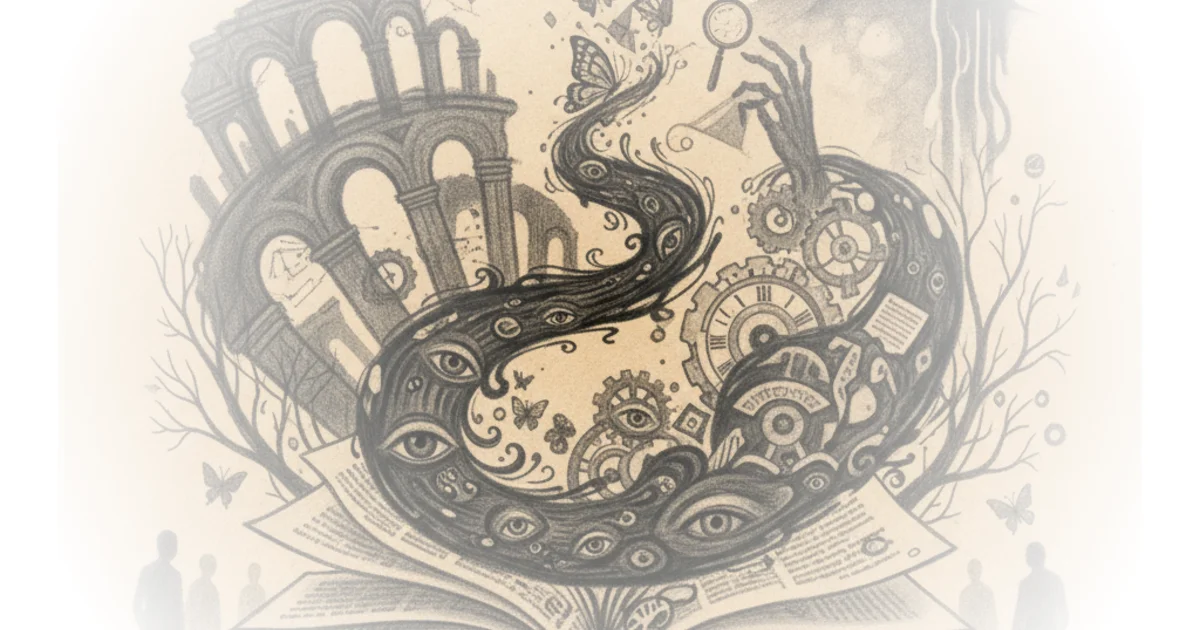
The author draws a sharp distinction between the book as a mystery and the book as a mirror. She observes that while the narrative feels "spiritually akin to Wuthering Heights" in its early chapters—filled with obsession, jealousy, and ghosts that refuse to haunt the right people—it eventually transcends its source material. Hildreth explains that Daanje, a mathematician by training, treats the narrative like a series of equations where variables are shifted to test outcomes. "What would happen if this type of character did this instead of that?" she asks, paraphrasing the author's structural inquiry. This mathematical approach to storytelling suggests that the novel is less about the specific tragedy of the Drayden family and more about the universal human algorithm for processing grief.
We humans crave answers, certainty, a story to tell ourselves, connections, and cause-and-effect; this book is full of people trying to make sense of their lives as well as the death and devastation around them.
This observation lands with particular weight given the novel's inclusion of interstitial multimedia spreads—letters, poetry, and biographical excerpts. Hildreth points out that these fragments, which include actual verses by Emily Brontë alongside fictional documents, pose "plot and thematic queries" that the subsequent chapters attempt to answer. This technique mirrors the epistolary tradition, where the truth is never handed down by a narrator but must be reconstructed by the reader from disparate, often unreliable, fragments. Just as the Air Force Mortuary Affairs Operations relies on the meticulous, often heartbreaking, identification of remains to provide closure to families, Daanje's characters rely on the reconstruction of a literary legacy to make sense of their own existence.
The Prism of Obsession
As the commentary deepens, Hildreth shifts from the mechanics of the plot to the psychology of the reader. She argues that the novel serves as a warning against the "obsessive pursuit to make everything make sense," even as it invites the reader to indulge in that very pursuit. "The book suggests that the stories we tell ourselves about how we ended up where we are... are all vital to how we move through the world," she posits. This is a crucial distinction: the book does not offer a solution to the chaos of life, but rather validates the human necessity of the story itself.
Hildreth's framing of the Brontë connection is particularly astute. Rather than viewing the novel as a mere homage, she describes it as a "recursive investigation of what Wuthering Heights means to Daanje." By treating the classic text as a variable in a larger equation, the author expands the scope from a single family's tragedy to a broader exploration of how we read our lives. "It was impossible not to see the recurring and recursive connections to them throughout," Hildreth admits, yet she insists the book moves beyond imitation to become its own entity.
Critics might note that this heavy reliance on literary intertextuality could alienate readers unfamiliar with the Brontë sisters or the specific tropes of the epistolary novel. If the reader lacks the historical context to recognize the "ghosts who just won't deign to haunt the right person," the thematic resonance may be lost. However, Hildreth counters this by suggesting the book's emotional core—grief, obsession, and the search for connection—is accessible regardless of one's literary pedigree.
The Human Cost of Meaning
Ultimately, Hildreth's review is a testament to the power of fiction to illuminate the darker corners of human experience without offering false comfort. She highlights the "complicated view of death" and the "bonds between sisters that verge from tender to horrifying" as central to the novel's impact. The piece concludes with a reflection on the odd title itself, which touches on "meaning, understanding, and myth-making," though she wisely refuses to spoil the specific discovery.
This is about that is about interpretation and that requires interpretation.
The repetition in this sentence, which Hildreth attributes to the book's nature, underscores the recursive loop of reading: we interpret the text, and the text forces us to interpret our own interpretations. In an era where information is often reduced to soundbites and algorithms, the willingness to sit with a 700-page "puzzle-like game" that demands patience and note-taking feels like a radical act. Hildreth's commentary elevates the review from a simple recommendation to a defense of deep reading as a necessary tool for navigating a world that often refuses to make sense.
Bottom Line
Hildreth's analysis succeeds by reframing a complex literary mystery as a fundamental inquiry into human psychology, effectively arguing that the act of reading is an act of survival. The piece's greatest strength is its refusal to offer a neat resolution, mirroring the novel's own rejection of certainty, while its only vulnerability is the assumption that the reader shares a deep familiarity with the Brontë canon. For the busy professional seeking more than distraction, this commentary offers a compelling case for why the most difficult books are often the ones that teach us how to live.