Cory Doctorow dismantles a fashionable policy panic with surgical precision: the idea that losing access to American AI models constitutes an existential threat to national sovereignty is a distraction from the far more dangerous reality of remote kill-switches embedded in our physical infrastructure. While governments scramble to fund "national AI strategies," he argues they are ignoring the fact that shutting down ChatGPT would barely register, whereas disabling Microsoft's cloud services or John Deere's tractors would paralyze modern society overnight. This is not just a tech critique; it is a call to stop chasing bubbles and start defending the actual levers of daily life from corporate overreach.
The Blockchain Mirror
Doctorow begins by revisiting an old heuristic he developed during the height of the cryptocurrency boom, using it as a litmus test for current policy proposals. He recalls his formulation: "if problem + blockchain = problem – blockchain then blockchain = 0." This logic was designed to expose how proponents of distributed autonomous organizations (DAOs) claimed to solve trust issues while actually reintroducing the very human vulnerabilities they sought to eliminate.
He illustrates this with the case of ConstitutionDAO, a crowd-funded effort to bid on an original copy of the US Constitution at Sotheby's. Despite the complex smart contracts and the promise of decentralization, the group still had to elect a single individual to walk into the auction house and raise a paddle. "That guy doesn't have to go to Sotheby's," Doctorow writes. "That guy can simply walk away with all the money." The complexity of the blockchain added nothing; it merely obscured the fact that the entire operation still relied on trusting one person with the keys to the kingdom.
This historical parallel is crucial because it reveals a pattern of technological solutionism failing to address institutional design flaws. Doctorow argues that "adding a DAO does nothing to solve the core problems of institutional design, and actually makes some of those problems worse." By focusing on the wrong tool, advocates often make systems more fragile, not less.
If you think AI tools are nifty and want Canada to invest in AI, then first, please stop pretending that this has anything to do with 'digital sovereignty.' Not only is this a transparent bit of nonsense, it's a dangerous one.
The Real Sovereignty Risk
The commentary then pivots from the abstract world of crypto to the concrete reality of "digital sovereignty." Doctorow identifies a genuine crisis: the global reliance on American tech platforms that can be weaponized by the executive branch. He describes a scenario where the White House, driven by belligerent foreign policy goals, could order companies like Microsoft to disconnect entire nations from their digital infrastructure.
"If Trump wants to steal Greenland, he doesn't have to roll tanks into Nuuk – he can just brick the country of Denmark," Doctorow writes. He details how this leverage extends beyond email and calendars to critical hardware: "He can shut down every tractor!" This is the true risk—not a lack of chatbots, but the ability of US tech giants to remotely disable the tools that keep food supplies moving and hospitals running.
Critics might argue that such extreme measures are unlikely due to diplomatic fallout or market self-interest, suggesting that the threat is overstated. However, Doctorow counters this by pointing to existing precedents where American companies have already severed ties with institutions abroad at the behest of political pressure. The danger lies in the concentration of power; when a single jurisdiction controls the "kill switch" for global infrastructure, sovereignty becomes an illusion.
The solution, he suggests, is not to build a competing AI model but to dismantle the legal frameworks that protect US monopolies. "If countries repeal the laws that the US bullied them into accepting... they can turn America's tech trillions into their own tech billions." This reframes the issue from one of technological competition to one of regulatory liberation and market opportunity.
The Bubble Trap
The final thrust of Doctorow's argument is a warning against economic folly. He observes that many nations are rushing to invest heavily in AI at the peak of its valuation, treating it as a strategic necessity for sovereignty when it is, in his view, largely irrelevant to the actual threat landscape. "Buying AI at the top of the market is nuts," he asserts, comparing it to purchasing office furniture during the dot-com crash.
He draws on personal history, noting that in the summer of 2000, he bought high-end Steelcase Leap chairs for a fraction of their original price from failed entrepreneurs. "If you just sit tight for a couple months, you'll be able to find bankrupt dotcom entrepreneurs selling these at knock-down prices," he explains. The implication is clear: governments should wait for the current AI bubble to burst before investing in talent and hardware, rather than burning cash on overpriced models that offer no protection against real-world digital subjugation.
If Trump takes away your AI, everything is fine. If Trump takes away your iPhones, Office 365 and tractors, your country grinds to a halt. This is just not that complicated.
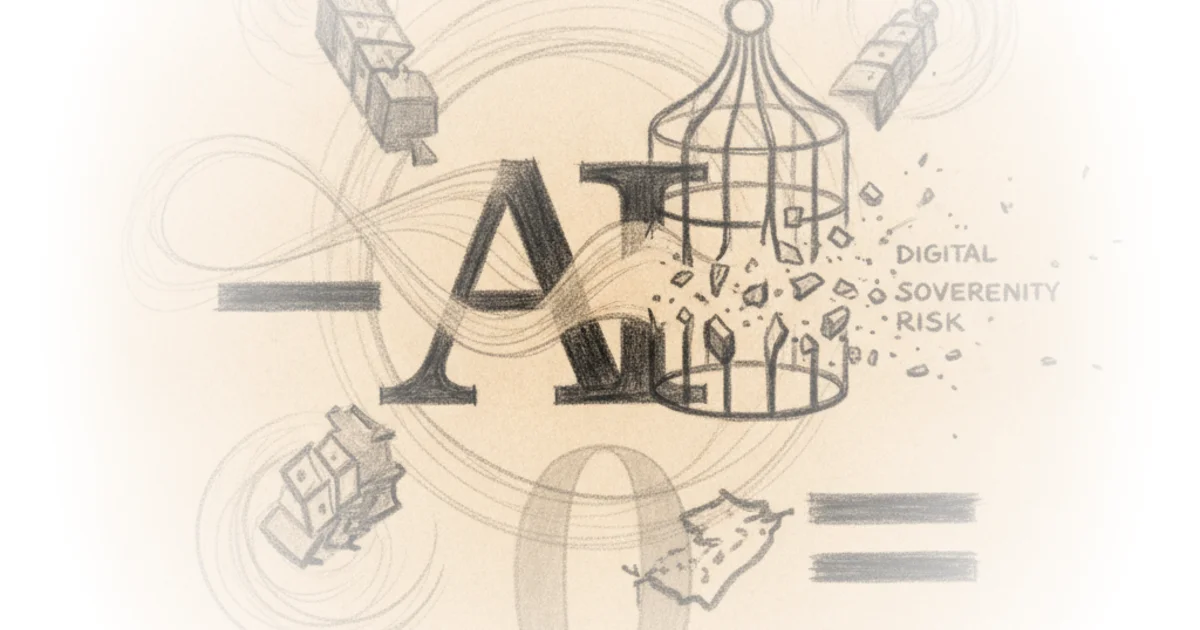
Doctorow's core thesis rests on the equation: "If digital sovereignty + AI = digital sovereignty – AI Then AI = 0." He argues that building a national AI strategy does nothing to prevent the executive branch from shutting down critical infrastructure. The focus must shift entirely to removing software locks and ensuring local control over essential hardware, rather than chasing the next big thing in generative models.
Bottom Line
Doctorow's most compelling contribution is his ruthless prioritization of physical infrastructure over computational hype; he successfully argues that sovereignty is lost when a tractor stops running, not when a chatbot goes offline. The argument's greatest vulnerability lies in its dismissal of AI as a strategic asset entirely, potentially underestimating how future geopolitical conflicts might leverage information control and model access as weapons in their own right. Readers should watch for whether policy makers heed the call to focus on hardware sovereignty or continue to pour billions into a bubble that offers no real defense against digital coercion.