Jeannine Ouellette transforms a simple family vacation into a profound meditation on how we preserve wonder for the next generation, arguing that the value of an experience lies not in its perfection but in the messy effort to recreate it. While most travel writing focuses on the destination or the historical facts, this piece centers on the friction between memory and reality, suggesting that our willingness to struggle with imperfection is what ultimately bridges the gap between generations.
The Architecture of Memory
Ouellette begins by anchoring her narrative in a specific cultural touchstone: Albert Lamorisse's 1956 film The Red Balloon. She describes how this story has served as a lineage of connection, moving from "my mother introduced it" on television to streaming it for grandchildren. The author writes, "This is the part about discovery—and, again, I've told you part of this already, in that Jon and I visited the 20th arrondissement on Monday and discovered that a good few of the places we associate with the most memorable scenes in The Red Balloon still exist." This observation is striking because it highlights the resilience of urban spaces; despite decades of redevelopment in Paris's 20th arrondissement, the specific geography of a film shot nearly seventy years ago remains recognizable.
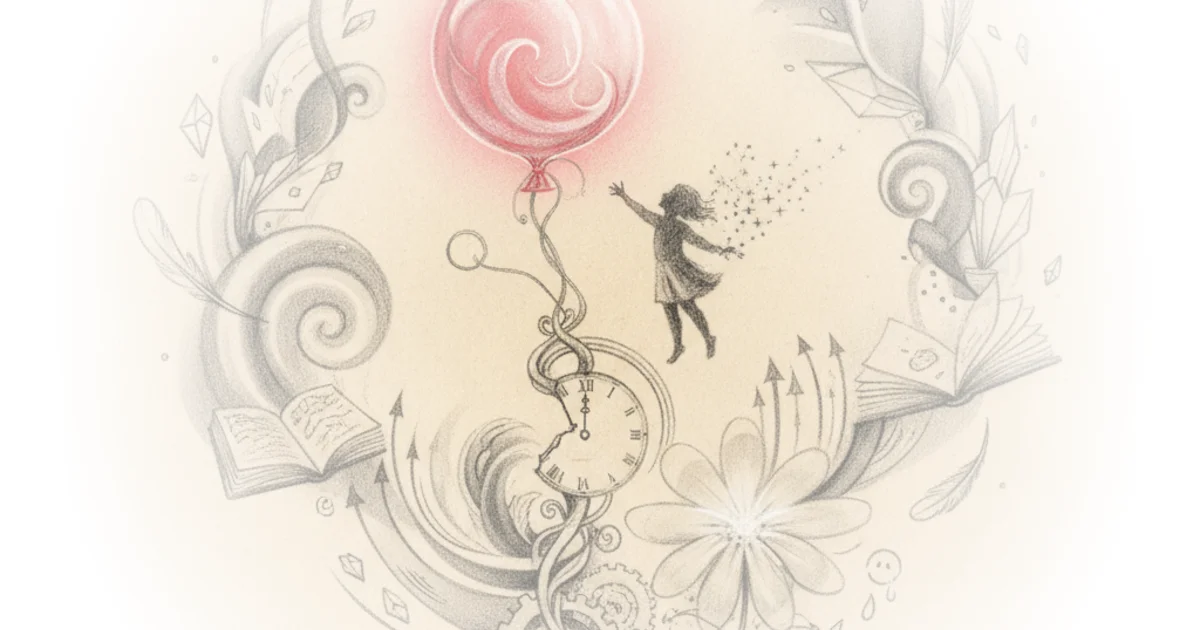
The narrative then pivots to the logistical reality of trying to replicate magic. Ouellette details the hunt for a "ballon rouge" while navigating her husband's physical limitations and a looming job interview. She notes the irony that "Jon currently has no attachment whatsoever in either of his achilles tendons," forcing them to rely on taxis rather than walking, even as they try to retrace the steps of the film's protagonist. This framing is effective because it refuses to romanticize the struggle; instead, it presents the effort itself—the detours, the wrong turns, and the physical pain—as an essential ingredient of the memory being forged.
"I decided then and there to follow my own advice about not letting perfect be the enemy of good and decided to be happy ending our adventure at the church in the rain."
The Friction of Reality
The core of Ouellette's argument emerges when the plan inevitably unravels. The balloon stand fails, the weather turns violent, and a key location from the film is revealed to have been razed years ago. She writes, "one of the places we'd seen the day before... is not actually Pascal's school, which as it happens was razed years ago." This admission serves as a powerful metaphor for the nature of memory itself: the physical structures fade, but the emotional resonance remains if we are willing to engage with what is left.
Critics might argue that this focus on personal anecdote distracts from broader historical realities, yet Ouellette uses these specific failures to make a universal point about attachment. She describes the chaos of "gale force winds and pouring rain" where the balloon stick kept coming loose, resulting in "many drops of the balloon and chasing it down the street." Rather than retreating, she leans into the messiness. The author states, "We are lucky it didn't pop!" This moment underscores a vital distinction: the goal was not to produce a flawless recreation for social media, but to share a genuine struggle with her family.
The narrative also weaves in an unexpected layer of serendipity through a concert by Ondara, a musician born in Kenya who now lives in Minneapolis. Ouellette recounts how she managed to connect the artist to their hometown fans during the show, noting that "Ondara came out and we chatted!" This detour reinforces her thesis that when plans fall apart, new, often better connections can form. The randomness of the evening mirrors the unpredictability of life, suggesting that the most meaningful moments are rarely the ones we script in advance.
"This tender story that speaks to something so deep down inside me I can only think it's, well, that essential part that is still entirely whole, unharmed, and beautiful."
The Bottom Line
Ouellette's piece succeeds by reframing a failed photo shoot as a triumphant act of love, proving that the "effort" to connect with the past is more valuable than the accuracy of the result. While the narrative relies heavily on personal context that may feel opaque to outsiders, its emotional core—that we must protect our capacity for wonder despite the inevitable disappointments of reality—is universally resonant. The strongest takeaway is not about Paris or a 1956 film, but the realization that the "whole, unharmed" part of us survives precisely because we are willing to chase it down the street in the rain.