Devin Stone delivers a searing indictment of a legal strategy that threatens to criminalize the act of reporting itself. He argues that the federal government's prosecution of Don Lemon and Georgia Fort is not merely aggressive but represents a dangerous, politically motivated untethering from First Amendment protections. This is not a standard legal analysis; it is a warning that the machinery of justice is being repurposed to silence documentation of controversial events.
The Legal Precedent That Isn't There
Stone begins by dismantling the administration's narrative, noting that Attorney General Pamela Bondi framed the arrests as "accountability for a coordinated attack on a place of worship." However, Stone quickly pivots to the core legal absurdity: the government is attempting to reframe news gathering as intimidation. He writes, "Whatever you think about the protest itself, the case against Lemon is not really about church service. It's about whether the federal government can take journalists who document a controversial protest, reframe their reporting as intimidation, and then use the civil rights laws... to criminalize news gathering the administration doesn't like." This distinction is crucial because it shifts the debate from the morality of the protest to the legality of the response.
The author highlights a critical procedural failure that should alarm any observer of the rule of law. Before securing a grand jury indictment, federal prosecutors sought an arrest warrant that was summarily rejected by a federal magistrate judge. Stone notes that Judge Douglas Miko concluded the government "had not established probable cause sufficient to justify the charges against Lemon and certain others, which is an incredibly low bar." The rejection was so stark that the judge crossed out charges with "no probable cause" written in the margin. When prosecutors attempted to appeal this denial, Chief Judge Schultz, a George W. Bush appointee, called the move "unheard of in our district, or as best I can tell, any other district in the Eighth Circuit." This judicial rebuke suggests the prosecution is proceeding despite a lack of foundational evidence, driven by political will rather than legal merit.
It is absurd to claim that Lemon and Fort committed a crime by engaging in ordinary reporting that in the government's words promoted the message the demonstration meant to convey.
Critics might argue that journalists do not have a blanket exemption from trespass laws, and Stone acknowledges this nuance. He concedes that if reporters gain access through deception or ignore clear signs, they can be charged. However, he points out that the indictment does not claim Lemon or Fort were told they were trespassing upon entry, nor does it allege they used deception. The church fellowship hall was publicly accessible at the time, and the typical response to overstaying a welcome would be a minor state-level charge, not a federal conspiracy indictment.
The Indictment of Observation
The most disturbing aspect of Stone's analysis is his dissection of the specific "overt acts" listed in the indictment. The government alleges that Lemon and Fort became criminal conspirators simply by standing close to a pastor, asking questions, and refusing to leave immediately. Stone describes how prosecutors twisted a moment of accidental physical contact—where a pastor's hand brushed against Lemon—into evidence of intimidation. He writes, "That moment, a brief physical contact initiated by the pastor is presented as evidence of intimidation by Lemon." This reframing turns a mundane journalistic interaction into a federal crime.
Stone further argues that the indictment relies on the journalists' failure to disengage rather than any actual threat or force. He notes that the indictment "never really comes out and says that Lemon or Fort made threats, used force, or physically restrained anyone." Instead, the charges rest on "proximity, questioning, and failure to immediately disengage." Stone emphasizes that Lemon's live commentary—describing the scene as "traumatic and uncomfortable" and noting the division in America—is exactly what journalism is supposed to be. He asserts that this was "descriptive observation and commentary which at least yesterday used to be core journalistic functions protected by the First Amendment."
The author also points to a hollowing out of the Department of Justice's own integrity. Stone reports that career prosecutors in Minnesota and Los Angeles declined to participate because the evidence was insufficient, leading to resignations and firings. He states, "Career prosecutors in both Minnesota and Los Angeles declined to participate because the evidence did not support the charges. As a result, the Justice Department... has been hollowed out." This suggests the case is being driven entirely by political appointees, bypassing the internal checks and balances designed to prevent overreach.
The Danger of Framing
Stone concludes by addressing the broader media landscape, arguing that the real danger lies in how the event is framed rather than the facts themselves. He observes that depending on the source, the same event is presented as an authoritarian crackdown, a descent into brutality, or a moral failure of the journalists. He writes, "Facts don't shape public opinion. Framing does." By aggregating these different narratives, Stone illustrates how the administration's legal strategy is part of a larger information war where the definition of a crime is being rewritten to suit political goals.
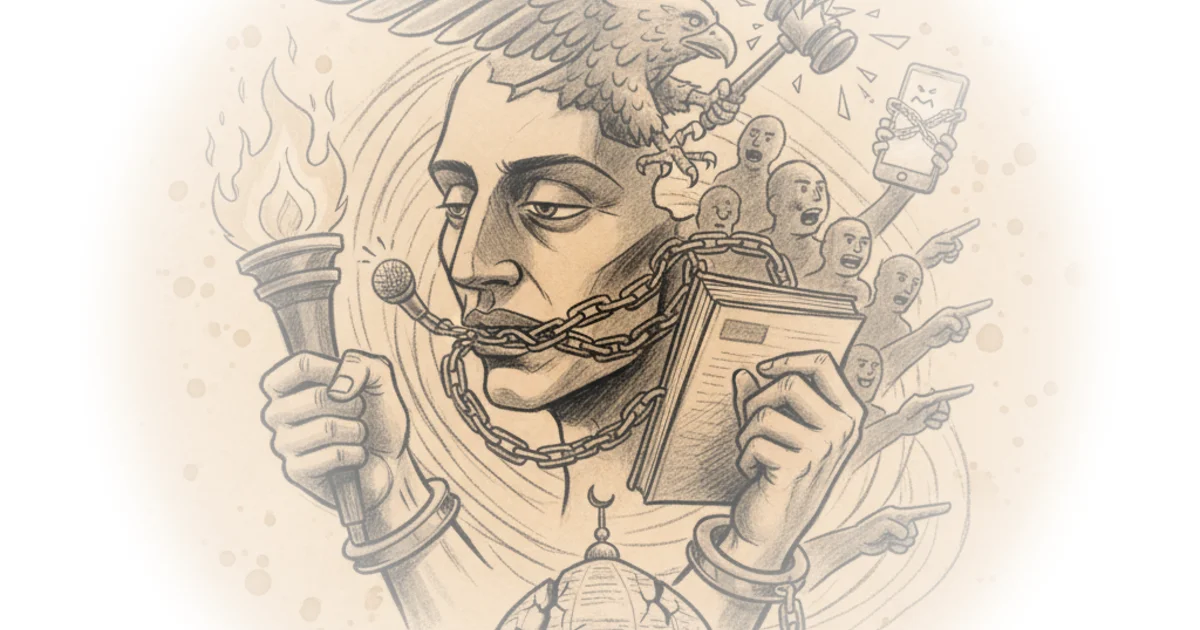
This prosecution is not just aggressive, it is politically motivated and untethered to the First Amendment.
A counterargument worth considering is whether the specific context of a religious service during a protest creates a unique legal environment where standard journalistic norms might be suspended. However, Stone's reliance on the judicial rejection of the initial warrant suggests that even within that context, the threshold for criminal liability has not been met.
Bottom Line
Stone's strongest argument lies in exposing the procedural irregularities and the judicial system's initial rejection of the charges, which undermines the administration's claim of a clear-cut legal violation. The piece's greatest vulnerability is its reliance on the assumption that the grand jury process was entirely one-sided and potentially misled, a fact that will only be fully tested if the case proceeds to trial. Readers should watch for whether the courts will allow this novel interpretation of civil rights laws to stand, as it could set a precedent that fundamentally alters the ability of journalists to cover civil unrest.