This piece from Sinification delivers a jarring geopolitical pivot: it argues that the very forces designed to contain Beijing are now inadvertently constructing a multipolar world where China holds the advantage. The most startling claim isn't just that alliances are fraying, but that Europe and Russia have effectively swapped places in the global hierarchy, leaving the United States isolated against three distinct powers simultaneously seeking to "de-risk" from American hegemony. For busy observers tracking the next decade of global order, this analysis suggests we are witnessing a structural shift where Washington's own unilateralism is accelerating the decline of its influence.
The Great Reversal
The core of Sinification's argument rests on a dramatic inversion of the post-2014 security architecture. Historically, Europe relied on American protection to contain Russia while China faced pressure from both. Now, the piece contends that "Europe and Russia's positions have reversed," with Moscow's standing improving as Washington pivots away from European concerns. The editors note that since the start of the current administration's second term, "Russia–US relations have improved... with Washington increasingly viewing the Russia–Ukraine conflict from Moscow's standpoint." This reframing is significant because it treats the Ukraine war not as an existential threat to the West, but as a manageable dispute where American priorities have shifted.
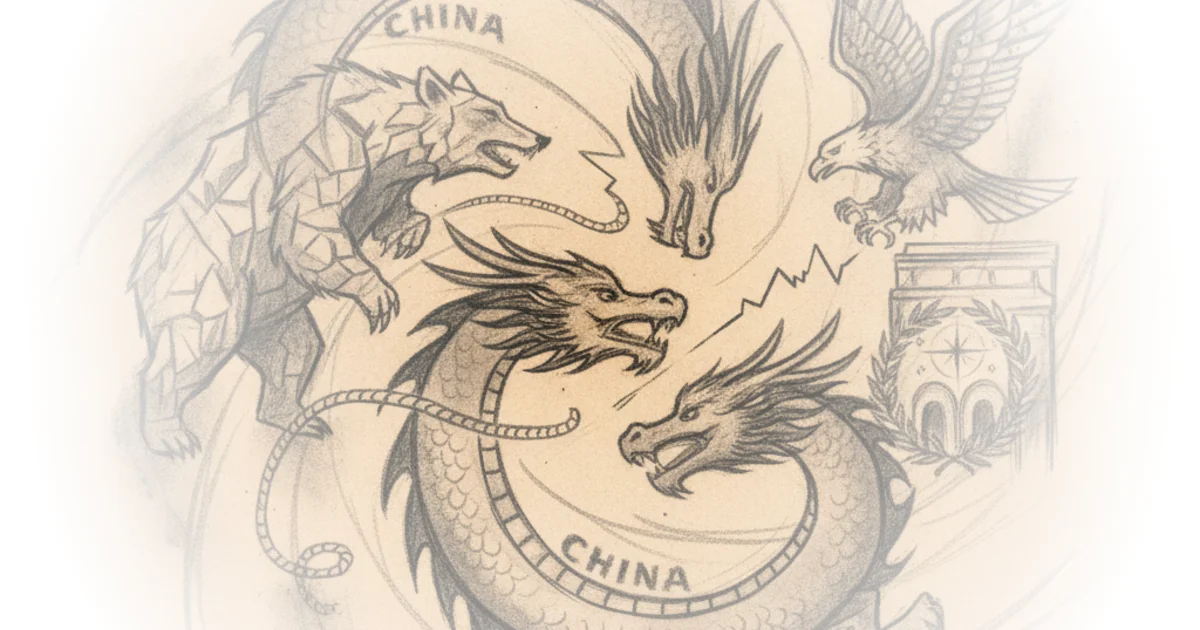
This narrative gains weight by highlighting Europe's deepening strategic isolation. The piece argues that "Europe is simultaneously pursuing policies that treat China, the United States and Russia alike as adversaries," creating a paradoxical situation where Brussels faces pressure from all sides. While European leaders loudly condemn Moscow, Sinification points out that "its actual pressure on Russia can no longer keep pace with its rhetoric" due to internal economic strain and the distraction of transatlantic friction. A counterargument worth considering is whether this "reversal" overstates Moscow's gains; while US-Russia tensions may have eased rhetorically, the fundamental reality of a protracted war and continued sanctions suggests Russia remains economically dependent on non-Western partners rather than truly restored to great power parity.
Europe finds itself in a strategic predicament where the loss of US support makes facing Russia alone harder, yet hostile relations with Moscow make the breakdown of the transatlantic alliance more painful precisely when vulnerability is highest.
De-Risking the Dollar
Perhaps the most provocative section of the analysis is how it co-opts Western terminology to describe a unified front against American financial dominance. The piece turns the concept of "de-risking" back on the United States, observing that "the United States now finds itself in opposition to China, Europe and Russia alike." It suggests these three entities are independently motivated to reduce exposure to US power, creating an "unprecedented" collective policy effect even without formal coordination.
Sinification links this geopolitical maneuvering directly to financial architecture, noting that "Europe's promotion of euro internationalisation and the digital euro helps ease the pressure the renminbi faces from the US dollar." This connects to broader discussions on strategic autonomy seen in recent deep dives into the Digital Euro project; the argument here is that European efforts to build sovereign cloud infrastructure and a digital currency are not just about privacy, but are structural moves to "constrain dollar hegemony." The editors suggest this fragmentation creates space for China, stating that "China and Europe may gain more space for cooperation on global governance" as the US engages in "de-superpowering."
Critics might argue that this view underestimates the inertia of the dollar's dominance or the deep institutional ties binding European finance to Washington. However, the piece effectively highlights a psychological shift: the perception that "dreams of a fully united American and European front toward China are over" is becoming a self-fulfilling prophecy as policy divergence widens.
The Strategic Stability Paradox
The analysis concludes by framing China's position not as one of aggressive expansion, but of opportunistic stability. Sinification reports that the intensity of confrontation has declined, with relations moving toward a "constructive relationship of strategic stability." This is a crucial distinction from previous years; the piece argues that while the US remains an obstacle to Sino-European ties, it has paradoxically become a driver of cooperation between Beijing and Brussels because both are seeking to mitigate American unpredictability.
The text notes that "the United States has begun to view Europe as 'a power drain rather than a force multiplier'," signaling a retreat from the traditional alliance model. This dynamic allows China to position itself as a stabilizer in a fragmented world, leveraging the fact that "China–Russia relations have faced greater scrutiny" in the past but now operate with less external interference. The underlying message is clear: the US strategy of containment has fractured its own coalition, allowing Beijing to occupy a privileged space where it can engage with both Europe and Russia on its own terms.
Bottom Line
Sinification's most compelling insight is that American unilateralism is inadvertently forging the very multipolar order Washington fears, as China, Europe, and Russia independently seek alternatives to US financial and security dominance. The argument's greatest vulnerability lies in assuming that disparate "de-risking" efforts will coalesce into a coherent bloc rather than remain fragmented and competitive; however, the shift in European strategic calculus described here is undeniable. Readers should watch closely for whether the digital euro and local-currency settlements actually gain traction as viable alternatives to the dollar, or if they remain symbolic gestures in a still-dollar-dominated system.