In a cultural moment often defined by the demand for perfect curation and the curation of a flawless public self, Sarah Bessey offers a radical counter-narrative: the spiritual weight of the messy, the broken, and the ordinary. This piece is not a polished memoir of triumph, but a raw accounting of how a life dedicated to love must include the chronic pain of a failing body and the terrifying vulnerability of raising children into an uncertain world. For the busy reader seeking depth without the performative gloss, Bessey's argument that our deepest struggles are not obstacles to holiness but the very ground of it, is a necessary correction to the modern spiritual industrial complex.
The Altar of the Ordinary
Bessey anchors her reflection in the specific, tactile details of a life lived in real time, moving from the memory of her son's "navy blue" glasses with a "little green squid" to the stark reality of his graduation. She writes, "Loving the particularity of him has set up a thousand altars for encountering Emmanuel, the one who is God with us." This framing is potent because it refuses to separate the sacred from the mundane; the "sturdy, steady, humble love" required to raise a child is presented not as a fairy tale, but as the actual work of faith.
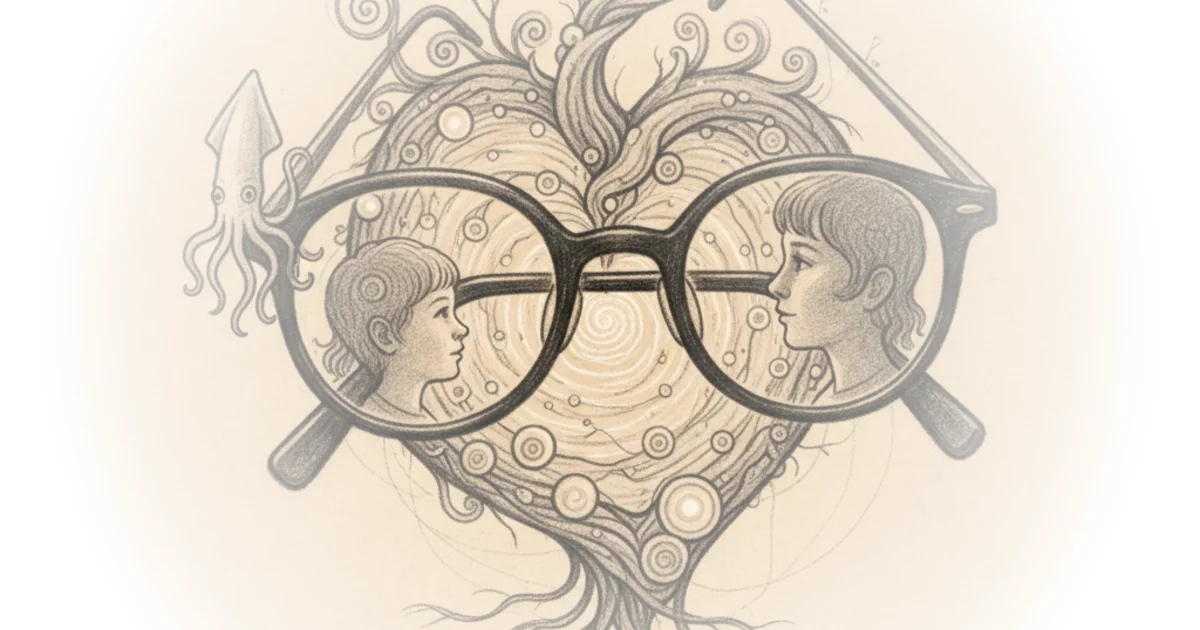
The author connects this domestic intimacy to a broader theological claim, suggesting that the "ordinary mystery" of a twenty-five-year marriage is a true vocation. She notes that while she and her husband "grew up together," the reality of their later years involves "salt and pepper" hair and reading about menopause, stripping away any romanticized veneer. As Bessey puts it, "Nothing about real love is sentimental and it's not a fairy tale but now, all these years later, I think this ordinary mystery may actually be our true vocation." This lands with force because it validates the exhaustion of long-term commitment as a spiritual discipline rather than a failure of passion.
Loving the particularity of him has set up a thousand altars for encountering Emmanuel, the one who is God with us.
The Theology of Brokenness
The essay's most striking pivot occurs when Bessey shifts from the joys of family milestones to the physical toll of chronic illness. She refuses to minimize her suffering, admitting to "repeated relapses of chronic illness and flare-ups of fibromyalgia" that have left her in a "fog." Here, she challenges the notion that spiritual maturity equates to physical wellness or constant optimism. She writes, "Bodies rarely cooperate with our plans," and candidly admits, "I am trying but mostly failing to dedicate this part of life to God, too."
This vulnerability is the essay's engine. By weaving in the wisdom of Howard Thurman, whose 1953 classic Meditations of the Heart she revisits, Bessey finds a language for this struggle. She highlights Thurman's assertion that making one's life an offering includes "all of my entanglements and involvements," leading to a "radical change over my entire landscape." The reference to Thurman adds historical depth, grounding her personal crisis in a lineage of spiritual thought that understands freedom as a centering of the self amidst chaos, not an escape from it. A counterargument worth considering is that this level of radical surrender can feel inaccessible to those whose suffering feels entirely meaningless or devoid of any spiritual framework. However, Bessey's insistence on the "impossible" nature of the command to love everything suggests she is not offering a quick fix, but a shared burden.
The answer to all this reaction of deep anxiety and anguish is, says the poet: 'thy life to God an offering make, and to Him dedicate.'
The Offering of Everything
The core of Bessey's argument is that the act of dedication must be dynamic, constantly updated to match the reality of one's experience. She rejects the static "altar call" of her youth in favor of a continuous, real-time re-dedication. "I keep dedicating my life to God, over and over again, not because I'm afraid of hell... but because I am learning how to love God and love my neighbour and love my self in real time," she writes. This reframing moves faith from a one-time transaction to a daily practice of holding one's joys, losses, and anxieties up to the divine.
She illustrates this with the image of her daughter's whiteboard, which features the line, "God is love. Whoever lives in love lives in God, and God in them." Bessey uses this to argue that the capacity to break one's heart and mend it simultaneously is the definition of an abundant life. She concludes, "It turns out that it is actually an abundant life when it has the capacity to break your heart and mend your heart at the same time. It's all an offering." This synthesis of grief and gratitude is the piece's strongest move, offering a model of resilience that does not require the erasure of pain.
I am offering it all like a gift even when it feels more adjacent to a curse sometimes.
Bottom Line
Sarah Bessey's strongest argument is her refusal to let the "curse" of suffering invalidate the "gift" of life, successfully weaving personal frailty into a robust theology of offering. The piece's only vulnerability lies in its heavy reliance on a specific Christian lexicon that may alienate secular readers, though the underlying human truth—that love requires enduring the brokenness of the world—remains universally resonant. Readers should watch for how this framework of "up-to-date" dedication might reshape their own approach to the inevitable crises of aging and illness.