This isn't just another tech hype piece; it's a field report from the front lines of a labor war that is already underway. More Perfect Union drives straight to a stretch of Texas highway where the future of freight is being tested without public oversight, revealing a stark disconnect between corporate promises of safety and the reality of job displacement. The most chilling claim isn't that the technology exists, but that the narrative of a "driver shortage" is a manufactured excuse to replace human beings with algorithms.
The Myth of the Shortage
More Perfect Union frames the arrival of Aurora Innovation not as a solution to a crisis, but as the culmination of decades of industry degradation. The piece argues that the much-touted "driver shortage" is a fabrication used to justify automation. "There isn't a shortage of truck drivers. We have three times the number of folks with a license to drive a truck than than the trucks that need to be operated," the author notes, pointing out that the real issue is a "shortage of willingness to invest in people and pay them better." This reframing is crucial. It shifts the blame from the workers' inability to find jobs to the industry's refusal to make those jobs viable. By exposing the turnover rate—nearly 100% in some years—the commentary dismantles the industry's primary justification for removing humans from the cab.
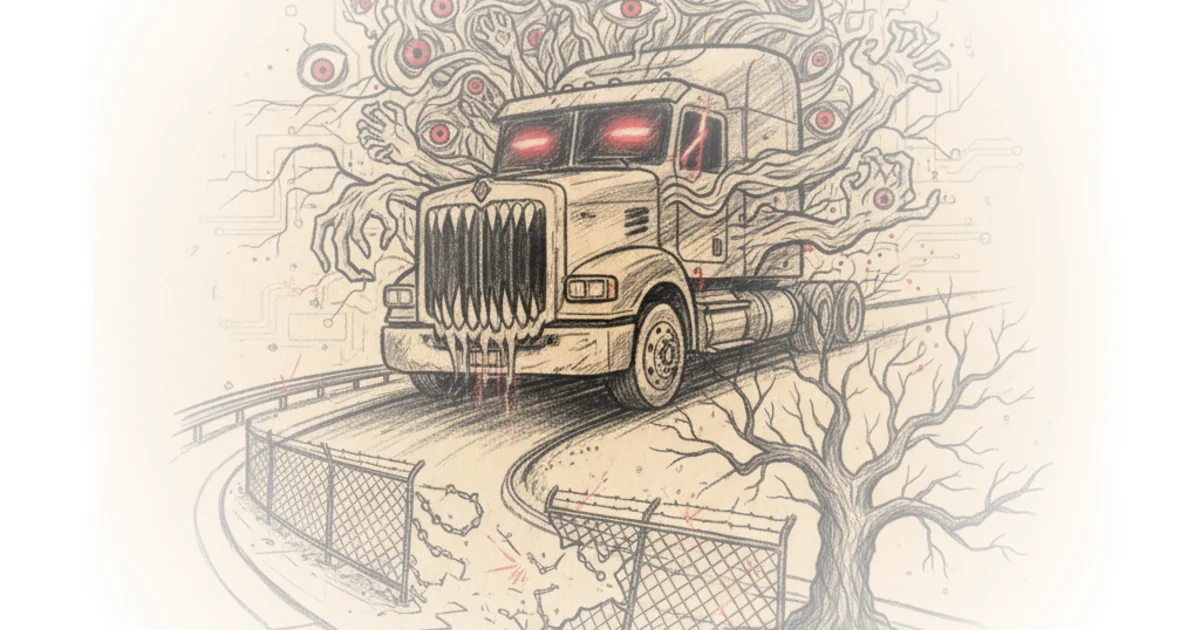
Critics might argue that even with high turnover, the physical demands of the job naturally limit the labor pool, making automation a necessary efficiency. However, the piece effectively counters this by showing that the turnover is a symptom of poor conditions, not an inherent flaw in the profession. The argument lands because it connects the dots between the Motor Carrier Act of 1980, wage stagnation, and the current push for driverless vehicles.
"The advent of self-driving trucks, in my view, is actually the end point of a long series of technologies that have caused a decline in wages and working conditions."
The Regulatory Wild West
The coverage highlights how Texas has become a testing ground precisely because of its permissive regulatory environment. More Perfect Union describes the scene on Interstate 45, where companies like Aurora can test their "Aurora driver" software with minimal public scrutiny. The author points out the irony of a technology promising zero fatalities being developed "without public oversight or regulation." This lack of transparency is a major vulnerability in the industry's safety claims. While the companies guarantee safety, the piece notes that "a lot of their claims are hard to prove" because the testing happens in a vacuum.
The commentary effectively uses the presence of safety drivers in the test trucks to underscore the gap between marketing and reality. Even when a truck is technically "driverless," a human is often required to intervene, yet the corporate narrative pushes for a fully autonomous future. "They're not addressing a shortage because there isn't one. There's never been one," the author asserts, suggesting the real goal is simply to "run the freight for a lot cheaper than it would be to to have a a meat in the seat driver."
The Human Cost and the Path Forward
The piece doesn't just diagnose the problem; it explores potential solutions that prioritize human labor over pure automation. It introduces the concept of "platooning," where a human leads a convoy of autonomous trucks, potentially increasing efficiency without eliminating the driver. "Self-driving trucks aren't going to do anything to truck drivers. Their employers are going to do something to truck drivers," the author argues, emphasizing that the outcome depends on policy choices, not just technological inevitability. This is a powerful distinction that restores agency to the democratic process.
The commentary draws a poignant parallel to the industrial revolution, comparing modern truckers to John Henry, the folk hero who raced a steam drill. "I really felt like okay this must be what John Henry felt like when the steam driven hammering machines came out and his job was on the line," the author reflects. This historical lens adds emotional weight to the economic analysis, reminding readers that technology reshapes society often at the expense of workers unless checked by policy.
"Rather than assuming the technology is going to decide what impacts it has, we as a democratic society should decide what those priorities are and we should put this tool to work achieving those goals."
Bottom Line
More Perfect Union delivers a necessary corrective to the techno-optimism surrounding autonomous vehicles, proving that the "driver shortage" is a convenient myth masking a deliberate strategy to cut costs. The piece's greatest strength is its refusal to accept technological determinism, instead arguing that the future of trucking is a political choice. The biggest vulnerability remains the speed of legislative action; without immediate federal intervention, the permissive state-level environment will likely allow the industry to cement its new reality before safeguards can be enacted.