Tom van der Linden challenges a pervasive assumption in film criticism: that a woman directing a film about men must be an act of deconstruction or a critique of toxic masculinity. Instead, he argues that Claire Denis's masterpiece Beau Travail offers something far more radical—a loving, sensory gaze that reveals the inherent beauty and tragedy of the male experience without reducing it to a checklist of gender failures. This is not just a film review; it is a philosophical intervention into how we understand male vulnerability, suggesting that the real tragedy isn't that men are broken, but that the systems they serve force them to harden until they break.
The Gaze Beyond Homoeroticism
Van der Linden begins by acknowledging the tension in his own position as a male critic discussing a female director's work. He admits that while he believes criticism should be free of gender essentialism, the gender of the storyteller is undeniably consequential. He writes, "Speaking as a guy here, I've always found it fascinating to see masculinity through the eyes of an outside observer. It gives me a chance to reflect on a part of my identity that I only experience from the inside." This framing is crucial because it establishes that the film's power lies not in its ability to expose men, but in its capacity to show them to themselves in a new light.
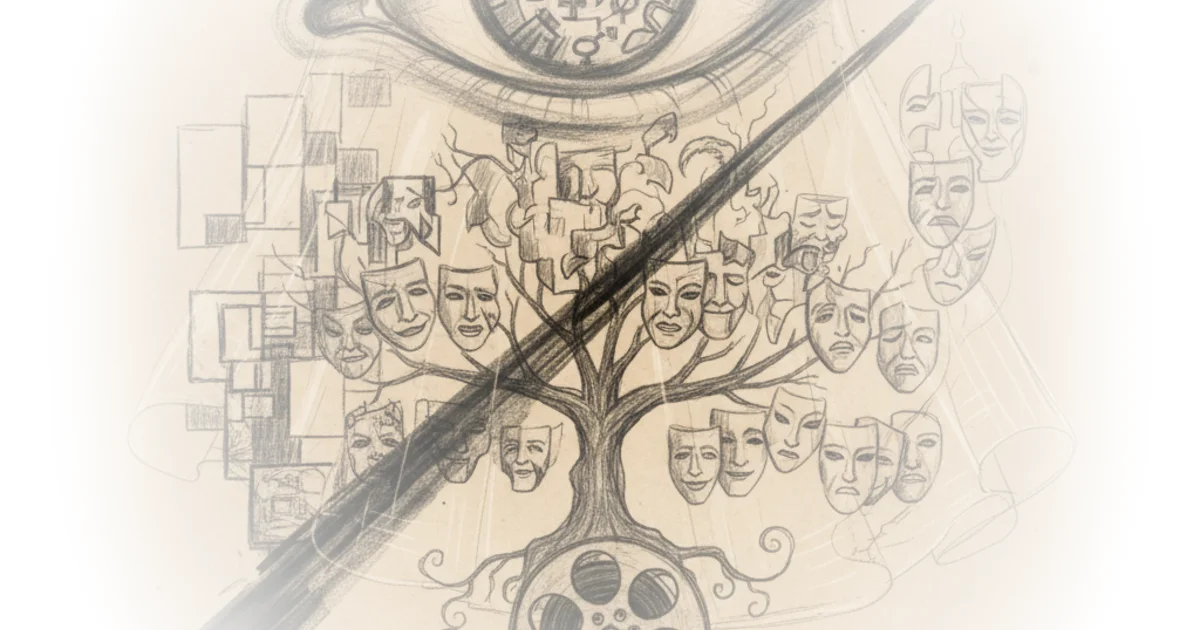
The author tackles the most common interpretation of Beau Travail head-on: the idea that the intense focus on male bodies is purely homoerotic or a sign of repressed homosexuality. He notes that the film's director, Claire Denis, herself rejected this narrow reading, stating, "The foreign legion was not uh happy with my project... they said the foreign leg agent is not happy because your film is is about being gay. And I said, 'No, it's about being a leer.'" Van der Linden argues that while the film is undeniably sensual, labeling it strictly as homoerotic "can actually obiscate what in reality is a much more complicated male experience."
It is a depiction that again might be interpreted as sexualized and as homoerotic. And yet, while I don't want to invalidate that perspective for those to whom the story becomes more meaningful when viewed through this lens, I personally didn't feel like that was necessarily what was going on here.
This distinction is the article's intellectual engine. By refusing to reduce the tension between the characters to sexual repression, Van der Linden opens the door to a more profound emotional reality. He suggests that the film captures a "conflicted longing" where men admire, envy, and desire the beauty in other men without it needing to be sexual. This is a rare articulation of male intimacy that moves beyond the binary of "brotherhood" and "homosexuality." Critics might argue that ignoring the homoerotic subtext ignores a vital layer of the film's historical and cultural context, but Van der Linden's point stands: the film's power is in its ambiguity, allowing for a broader range of emotional entanglements.
The Tragedy of Hardening
The commentary then shifts to the film's central tragedy: the process of "hardening" that the military imposes on young men. Van der Linden describes the French Foreign Legion not as a place that cultivates strength, but as a machine that strips away the softness necessary for life. He draws a powerful parallel to Andrei Tarkovsky's Stalker, quoting a character who says, "May they believe in themselves and become as helpless as children, for softness is great and strength is worthless." This comparison illuminates the film's deeper message: that the rigidity of military discipline is actually a form of death.
The author argues that the system demands what bell hooks called "the first act of violence that the system demands: men engaging in acts of psychic self-mutilation." He writes, "It's the way men can so easily mistake being self-actualized for me being hardened. how easily they think they're strengthening themselves through discipline when in reality they're actually becoming more fragile like the brittle wood of a dead tree." This is a devastating critique of modern masculinity, suggesting that the very traits men are taught to prize—stoicism, discipline, emotional suppression—are actually the things that make them vulnerable to destruction.
Hardness and strength are death's companions. He concludes, "Flexibility and softness are the embodiment of life. That which has become hard shall not triumph."
The narrative arc of the protagonist, Galoup, serves as the ultimate proof of this theory. Galoup is not a hero; he is a victim of the system he served. Van der Linden notes that Galoup's obsession with the younger, more charismatic soldier, Saint-Saint, is driven by the fact that the younger man possesses a "generosity of spirit" that the Legion cannot reach. When Galoup sabotages the younger man's compass, he is acting out the violence the system has taught him, only to be cast out by that same system. The author observes, "I see Galoup and I see a man victimized by the very system that promised him significance. A man made small through psychological and emotional self-mutilation."
The Modern Mirror
In the final section, Van der Linden connects the film's 1999 themes to the current cultural moment. He argues that the tragedy of Galoup is not confined to the desert of Djibouti but is playing out in the posturing of modern men. He lists contemporary figures and archetypes—the man who denies affection, the man obsessed with status, the man who needs to control his partner—as evidence of a masculinity that has become "a stranger to itself."
He writes, "I think of all those men who need ever more control over their wives out of a deep-seated fear of losing them. A deep-seated fear that they were never truly loved by them in the first place." This connection transforms the film from a historical drama into a urgent diagnosis of the present. The author suggests that the "rigid ways of the foreign legion" are mirrored in the "ridiculously rigid philosophies of masculinity" that dominate online discourse today. The tragedy is that these men, like Galoup, are performing a routine for no one, maintaining a facade of strength while their inner lives have atrophied.
I see Galoup and I'm reminded of so many other men today performing, posturing, increasingly detached. I think of all those ridiculously rigid philosophies of masculinity, of men chasing productivity without true purpose, of men pursuing prosperity and status without true service.
Critics might note that this broad brushstroke risks oversimplifying the diverse experiences of men today, or that it places too much blame on individual psychology rather than structural economic forces. However, Van der Linden's focus is on the internal landscape of masculinity, and his argument that the feeling of inadequacy drives these behaviors is compelling. He effectively argues that the problem isn't that men are too masculine, but that they have been taught a version of masculinity that is fundamentally unsustainable.
Bottom Line
Tom van der Linden's commentary is a masterful re-reading of a classic film, using it as a lens to examine the painful paradox of modern masculinity. The strongest part of his argument is the refusal to reduce the film's emotional complexity to simple labels, instead revealing how the "hardening" process destroys the very vitality it claims to protect. The biggest vulnerability lies in the leap from the specific tragedy of a French Foreign Legion officer to the broad generalizations about contemporary men, though the emotional resonance of the connection is undeniable. Readers should watch for how this perspective shifts the conversation from "fixing" men to understanding the systems that break them.