In a year defined by fragility, the Hinternet Editorial Board makes a startling pivot: they declare 2025 an annus mirabilis of intellectual flourishing while simultaneously invoking a medieval famine where people ate lime leaves and birchbark. This jarring juxtaposition is the piece's engine, using the stark reality of historical suffering to frame modern institutional growth not as mere expansion, but as a precarious triumph against entropy.
The Architecture of Memory
The Board opens by grounding their celebration in the grim reality of the Novgorod First Chronicle, noting that "An osminka of rye cost a grivna, bread cost two nogatas, and honey ten kunas a pood; the people ate lime leaves, birchbark." This is not just historical color; it is a deliberate rhetorical anchor. By reminding the reader that "there but for the grace of God go we too," the authors reframe the year's successes as something far more significant than a standard industry report. They argue that human thriving is "fragile and reversible," a sentiment that adds weight to their claim that they are "congealing into an institution."
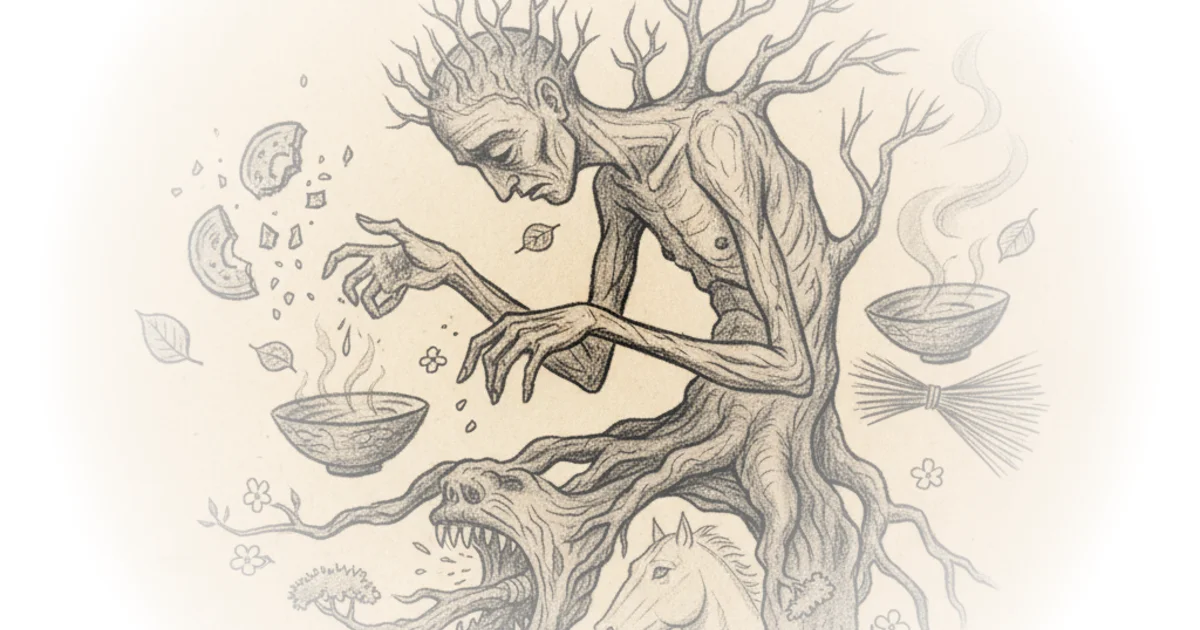
The commentary here is effective because it refuses to treat the present moment as inevitable. Instead of a simple list of wins, the Board presents their growth as a defiance of the historical trend toward collapse. They write, "we're spinning off projects; we're launching the careers of talented young people who so much as approach our orbit." This language suggests that their work is not just about producing content, but about cultivating a specific kind of human capital that might otherwise be lost to the chaos of the times.
We make an effort to share the above passage from the Novgorod First Chronicle every year around this time, so that none may ever forget how fragile and reversible human thriving in this low world always is.
The Paradox of Conservatism in a Tech World
The piece's most provocative argument comes when it tackles the nature of conservatism in an age of rapid technological disruption. Citing Justin Smith-Ruiu, the Board highlights a tension that many political observers miss: the disconnect between policy and character. Smith-Ruiu echoes François-René de Chateaubriand's sentiment that "I can't stand the pride of victory," using it to define a "conservative character" that is currently absent from the political landscape.
The Board paraphrases this as a "disposition to the world and to history that hates to see venerable forms of life subducted under new strata hastily composed from the passions of know-nothing youth." This is a sharp critique of the current regime, suggesting that true conservatism is not about specific policies but about a deep-seated respect for continuity. However, the argument faces a counterpoint: is it possible to maintain "venerable forms of life" when the technological substrate of society is being rewritten in real-time? The piece acknowledges this difficulty, asking, "What, I find myself wondering these days, could it even mean to be a conservative in a world that tech is transforming so thoroughly, rapidly, and mercilessly?"
The Democratization of Cognition
Perhaps the most ambitious section of the commentary is the guest essay on "soul-craft," which traces the history of writing from a tool of control to a "shared infrastructure for cognition." The Board notes that "The wedge-shaped marks of Uruk did not, on their own, produce introspective readers or democratic citizens." Instead, the shift to mass literacy required centuries of institutional support, from the alphabet to public education.
This historical arc serves as a warning for the present. The authors point out that "this global diffusion is reaching its widest extent just as the role of text itself begins to recede." This observation is crucial. It suggests that the very tools we use to democratize thought are becoming obsolete just as they reach their peak utility. The Board argues that turning a "tool of power into a widespread cognitive commons is a long, arduous process," and the current moment feels like a precarious pivot point where that progress could be undone.
Turning a tool of power into a widespread cognitive commons is a long, arduous process, contingent on new forms that serve to democratize access and use.
Critics might argue that the Board's focus on the "receding role of text" is premature, given the explosion of digital literacy and new forms of media. Yet, the piece's strength lies in its skepticism of technological determinism. It reminds us that the medium does not guarantee the message; the infrastructure must be actively maintained. The essay on the Voynich Manuscript and the piece on the Great Oxygenation Event further reinforce this theme, suggesting that even inanimate matter and ancient scripts have their own "revolutions" and agency, challenging the human-centric view of progress.
Bottom Line
The Hinternet Editorial Board succeeds in transforming a standard year-end list into a meditation on the resilience of human thought against the backdrop of historical fragility. The strongest element is the refusal to separate intellectual achievement from the material conditions that make it possible, a lesson drawn from the Novgorod famine and the history of writing. The piece's vulnerability lies in its somewhat nostalgic view of "venerable forms," which may struggle to address the radical discontinuity of the current technological era. Readers should watch for how the Board navigates the tension between preserving tradition and embracing the inevitable obsolescence of the very text they champion.