In an industry obsessed with the next breakthrough, a persistent narrative claims that nanoimprint lithography (NIL) is about to dethrone the extreme ultraviolet (EUV) machines that power modern computing. Dylan Patel dismantles this hype with a forensic breakdown of why the technology, while theoretically sound, collapses under the weight of physical reality in a high-volume factory. This is not just a technical correction; it is a crucial reality check for investors and strategists betting on a rapid, low-cost pivot away from the current semiconductor dominance of ASML.
The Theory-Practice Gap
Patel begins by acknowledging the seductive logic of the alternative: using a physical "stamp" to press patterns into resin rather than projecting light through complex lenses. "Theoretically, NIL could match or even exceed EUV capabilities," he writes, noting that the technology avoids the stochastic errors—random photon fluctuations—that plague light-based systems at the cutting edge. The argument is compelling on paper because it promises a drop-in replacement that bypasses the astronomical costs of current photolithography.
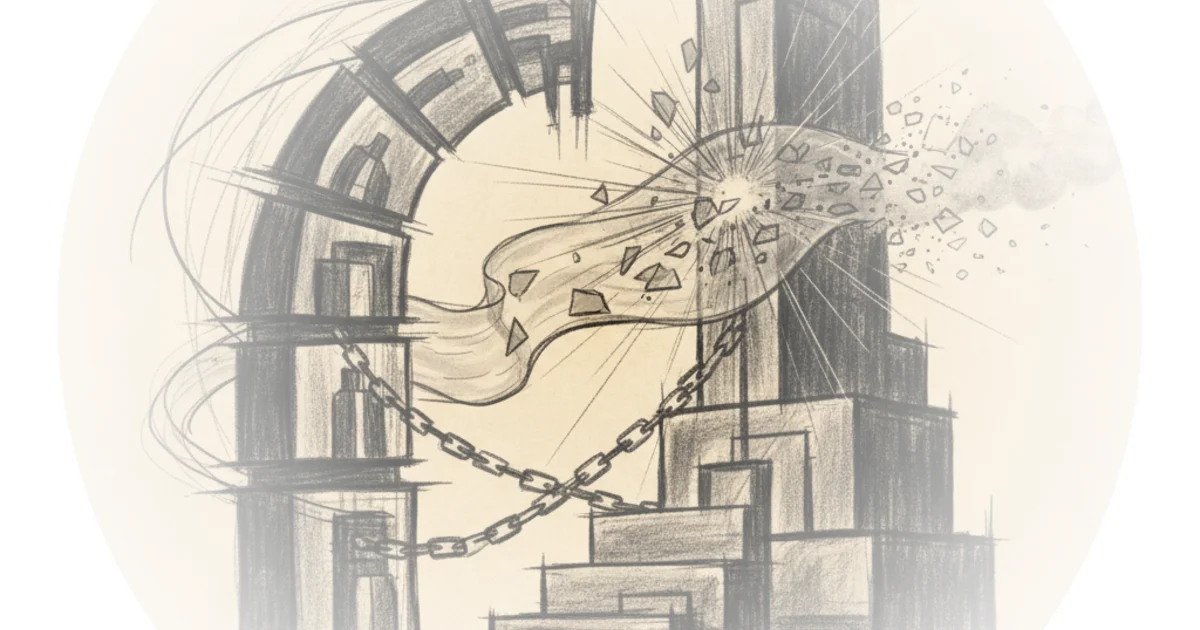
However, Patel immediately pivots to the brutal constraints of manufacturing. He explains that while the concept sounds like a simple printing press, the execution involves nanometer-scale 3D structures that are incredibly fragile. "Imagine you had a stamp with features as small as a human hair. Just breathing in its direction might ruin it," he illustrates, before scaling that fragility down four orders of magnitude. This analogy is effective because it translates abstract physics into tangible risk. The core of the argument is that the physical durability of the tool is the bottleneck, not the resolution.
"It turns out NIL in practice is very different from NIL in theory."
The Economics of Fragility
The financial case for NIL rests on a massive cost advantage: a four-cell NIL tool reportedly costs about one-tenth of an EUV scanner, with power consumption 90% lower. "Most likely a 4-cell tool costs about 1/10th what an EUV scanner costs," Patel notes, highlighting the allure of a cheaper, more energy-efficient path to advanced chips. Yet, this savings evaporates when examining the lifespan of the critical component: the template.
Patel details a catastrophic failure point in the supply chain. While a traditional photolithography mask can print over 100,000 wafers before wearing out, current NIL templates last for only about 50 wafers. "Canon claims more than 10x that number, but customers demoing the tool say otherwise," he reports, casting doubt on the vendor's optimistic projections. The implication is severe: if a stamp breaks after a few minutes of production, the cost of constantly replacing and inspecting these templates wipes out any upfront hardware savings.
Critics might argue that this is an early-stage problem that will resolve with better materials, but Patel points out that the inspection requirements create a new bottleneck. To ensure a defect isn't printed onto millions of dollars of silicon, every single template must be inspected. "Fabs would need 4 mask inspection tools for each 4-tool NIL cell," he calculates, noting that equipping a single modern fab this way would consume the entire annual output of the global mask inspection market. This is a systemic constraint that cannot be solved by simply improving the stamp material; it requires a fundamental rethinking of quality control economics.
The Overlay and Throughput Hurdles
Beyond the template lifespan, the article addresses the precision required to align layers on a chip. "Overlay, the alignment of the pattern being printed to other layers already on the wafer, is about 4x too large right now," Patel states. While he acknowledges that optical systems have proven alignment is possible, the mechanical nature of NIL—physically pressing a mask onto a wafer—introduces unique challenges in deformation and thermal expansion that light-based systems do not face.
The throughput argument also falters under scrutiny. While the actual imprinting process is fast, the overhead of wafer exchange and metrology drags the total speed down. "This adds up to a maximum throughput of 25 wph," Patel writes, comparing it unfavorably to the 220 to 330 wafers per hour achieved by leading EUV and DUV tools. Even if the template life issue were solved, the sheer volume required for global chip demand would necessitate building ten times as many NIL tools as EUV tools, negating the capital expenditure advantage.
"Without it, NIL will never compete with EUV."
Bottom Line
Patel's analysis provides a necessary corrective to the speculative fever surrounding nanoimprint lithography, grounding the discussion in the unforgiving metrics of factory throughput and defect rates. The strongest part of the argument is the demonstration that the "cheap tool" narrative is a fallacy when the consumable templates require replacement after every few minutes of operation. The biggest vulnerability for the technology remains the lack of a clear roadmap to extend template life or solve the inspection bottleneck, leaving the industry with a theoretically superior but practically unviable alternative for the foreseeable future.