Devin Stone, a practicing attorney and legal commentator, transforms the internet's most absurd legal memes into a masterclass on courtroom procedure, proving that humor often reveals the sharpest truths about the legal system. Rather than dismissing pop culture references as frivolous, Stone uses them to demystify complex concepts like summary judgment, the rules of evidence, and the high-stakes anxiety of legal correspondence.
The Anatomy of a Legal Joke
Stone opens by acknowledging the crowd-sourced nature of his content, noting that while the memes are funny, they often hinge on a specific misunderstanding of how law actually works. He dissects a meme involving a dolphin defending a killer whale, using it to explain the evidentiary rule against prejudicial names. "You know you gotta be careful sometimes even things like names to be more prejudicial than probative and they are not allowable in court," Stone explains. This observation is crucial; it highlights that the law is not just about logic, but about managing human perception and bias. The joke works because it exposes a real, often invisible, constraint on attorneys.
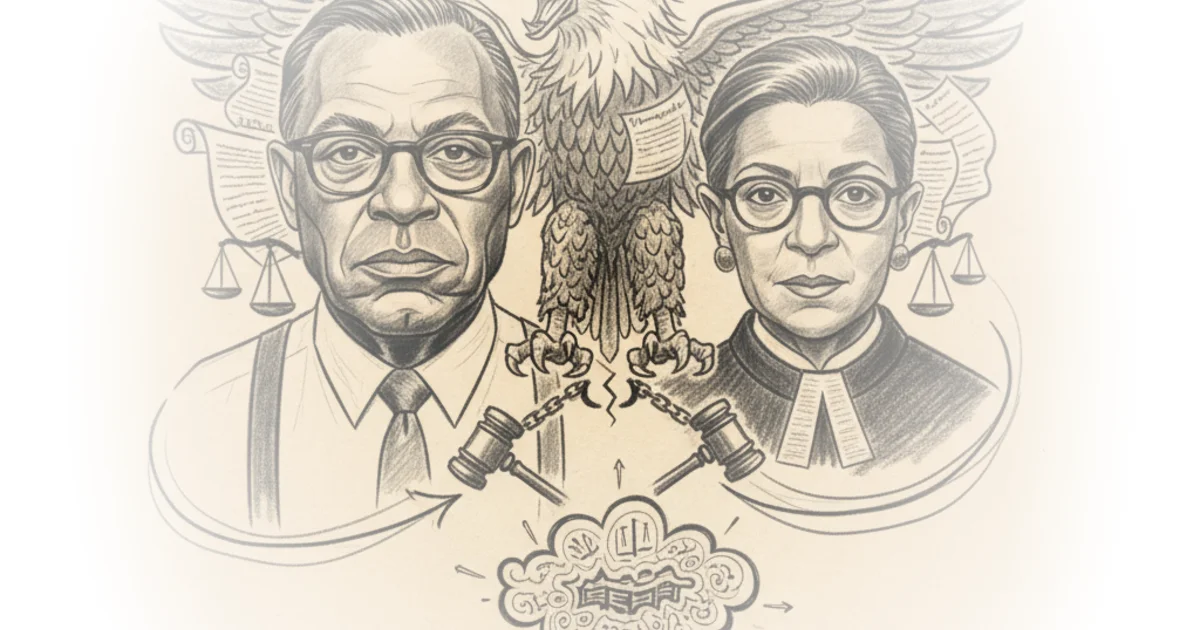
The commentary then shifts to the delicate social dynamics of the courtroom. Stone contrasts the relief of a lawyer landing a joke with the awkward obligation to laugh at a judge's humor. "You're basically obligated to laugh whether the joke is funny or not and all Federal Court judges think that they are just absolutely the funniest people on Planet," he quips. This captures the inherent power imbalance in the judicial system. While the humor is light, the underlying point is serious: the courtroom is a place where hierarchy dictates behavior as much as the rule of law.
"Sometimes getting it done is more important than getting it perfect."
The Reality of Legal Practice
Moving beyond courtroom theatrics, Stone tackles the grueling reality of legal deadlines with a meme about a partner demanding a quick turnaround. He describes how the pressure to file often turns a "beautiful finished masterpiece of a brief" into a hasty draft. "Sometimes Managing Partner comes in and tells you that you have exhausted all of your time you just have to get it done," Stone writes. This reframes the public perception of lawyers from meticulous scholars to overworked professionals making triage decisions. Critics might argue that this normalizes cutting corners, but Stone's point is that the legal system often functions on imperfect submissions rather than theoretical perfection.
The piece also addresses the emotional toll of written communication. Stone vividly describes the post-send panic of reviewing an email to opposing counsel. "It will cause an asthma attack or a panic attack in so many different lawyers thinking about the email that they sent as opposed to the email that they they intended to send," he observes. This is a rare, candid admission of the vulnerability lawyers feel behind the aggressive facade of "nasty grams." It humanizes a profession often caricatured as cold and calculating.
Misconceptions and Pop Culture
Stone uses pop culture references to correct widespread legal myths. He tackles the Simpsons character Lionel Hutz to explain the nuance of contingency fees, noting that the joke works because it highlights the absurdity of a lawyer working for nothing. He also uses a meme about Kanye West teaching contracts to explain the concept of "consideration"—the requirement that both parties must exchange something of value for a contract to be valid. "Consideration is just something of value that is exchanged between parties really what it's done is to prevent people from having what's called a gratuitous contract," Stone clarifies. By anchoring these abstract concepts in familiar characters, he makes the law accessible without dumbing it down.
Finally, Stone addresses the visual expectations of the courtroom. Using a meme of a client with excessive tattoos, he notes that while the law is blind, judges and juries are not. "Obviously when you go to court you have to wear a suit but I'm not always in court," he admits, before pivoting to a sponsor segment. While the commercial break is a necessary reality of the format, the preceding point remains valid: appearance influences credibility in a way that the law does not explicitly mandate but implicitly enforces.
Bottom Line
Stone's greatest strength is his ability to use humor as a Trojan horse for legal education, turning viral moments into genuine insights about procedure and human nature. The piece's only vulnerability is its reliance on the audience's familiarity with specific TV tropes, which may date the content quickly, but the underlying legal principles remain timeless. For the busy professional, this is a rare opportunity to understand the mechanics of the justice system without wading through dense case law.