Freddie deBoer returns to his book club series with a piece that is less a literary review and more a preemptive eulogy for a potential adaptation, driven by a specific, visceral fear: that the visual language of Neuromancer has been so thoroughly imitated that the original now feels like a cliché. He argues that the upcoming Apple TV series faces a unique historical burden, not just of adapting a difficult text, but of avoiding the very aesthetic tropes it invented. This is not merely nostalgia; it is a critique of how cultural memory flattens innovation into style.
The Paradox of Influence
DeBoer opens by acknowledging the sheer weight of Neuromancer's legacy, noting that its 1984 debut won the Nebula, Philip K. Dick, and Hugo awards in the same cycle—a feat rarely matched since. He posits that the novel's greatest strength has become its greatest liability in the modern era. "This is what Harold Bloom called apophrades, the phenomenon captured in the joke 'Boy, Hamlet is just full of clichés!' - when the ideas and images and vocabulary that were minted in a particularly work become so influential that new audiences find that work old hat," he writes. The argument here is sharp: the book feels derivative of its own descendants, from The Matrix to Deus Ex, because the visual grammar of the internet was written by Gibson and then copied a thousand times over.
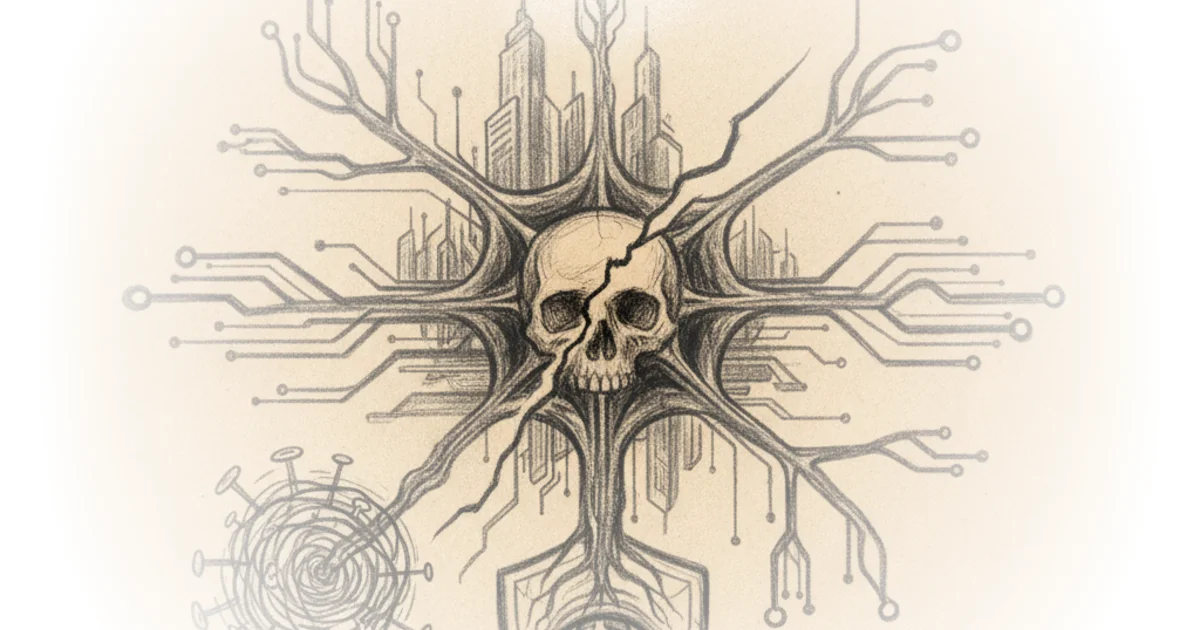
Yet, deBoer insists that the prose remains the one element that cannot be easily replicated. He praises Gibson's "compressed, elliptical, aggressively noun-forward style that withholds explanation and trusts you to keep up," a technique that forces the reader to navigate the world of Chiba City without a map. This lack of exposition is not a bug, but a feature that creates the novel's unique texture. Critics might argue that this style alienates modern readers accustomed to clearer narrative signposting, but deBoer suggests that the confusion is part of the intended experience, mirroring the disorientation of the protagonist, Case, a "console cowboy" whose nervous system has been burned so he can no longer jack into cyberspace.
The book has been imitated so completely that it can feel derivative of its own imitators.
The Trap of Visual Adaptation
The core of deBoer's anxiety centers on the new trailer released for the Apple TV adaptation. He expresses deep concern that the showrunners will mistake the aesthetic of cyberpunk for its substance. He points to a specific moment in the teaser where the novel's famous opening line—"the sky above the port was the color of television, tuned to a dead channel"—is displayed as text on a screen. "Putting it on a monitor is the visual equivalent of characters just saying the themes of a show or movie out loud," he argues. This is a damning critique of lazy adaptation, where the medium fails to translate the literary device into a cinematic one.
DeBoer contrasts the gritty, transactional reality of Gibson's world with the glossy, "dark and wet and neon" look of shows like Altered Carbon. He fears the new series will be "too clean," stripping away the essential grime that defines the genre. He notes that Gibson, who wrote the book on a manual typewriter without using a computer, was describing a "set of feelings about technology, not very good ones," rather than a technical manual. The dread of the cyberpunk genre comes from its bleakness, a quality that deBoer worries will be smoothed over by a high budget and a desire for mass appeal. He observes that the trailer's depiction of the sky as "mildly overcast" misses the specific, dead-channel color that anchors the novel's atmosphere.
The author also highlights the characters as the true heart of the story, particularly Molly Millions, the "razorgirl" with mirrored lenses and scalpel blades. He notes that while the character has been "ripped off by other writers many, many times," the original remains superior because of the specific, unglamorous humanity Gibson imbued in her. The relationship between Case and Molly is strictly transactional, a fact deBoer emphasizes when he critiques the trailer's dialogue where a character speaks of "purpose." "Whatever Case is after, it's not purpose! He is a true mercenary," deBoer writes, underscoring how the adaptation seems to be injecting a moral clarity that the novel deliberately avoids.
The Unfilmable Legacy
DeBoer contextualizes his worry by listing the "elephant's graveyard of adaptations" that have failed to capture the spirit of Gibson's work, from Chris Cunningham's abandoned project to Vincenzo Natali's decade-long attachment. He acknowledges that the novel has been called "unfilmable" for forty years, largely because its magic lies in the prose, not the plot. "What's great about Neuromancer is not the plot but its execution," he states, a point that resonates with the historical context of the genre's roots in the 1980s, where the visual language of Blade Runner had already begun to dominate, yet Gibson managed to carve out something distinct with his "arcade cabinets and William S. Burroughs and Lou Reed and the Hong Kong skyline."
Despite the skepticism, deBoer refuses to be entirely cynical. He admits to a "deliberate" openness, noting that the shift from a potential movie to a ten-hour series might offer the necessary space to explore the world, provided it avoids the trap of being a "sprawl" without substance. He mentions the specific detail of the rasta space colony Zion, which gets only four pages in the book, as an example of the novel's density and the risk of losing such fleeting, atmospheric moments in a long-form format. The historical connection to the character Tōru Rikiishi, whose own cybernetic modifications in the anime Ghost in the Shell reflect the same anxieties about the body and technology, serves as a reminder of how deeply these themes have permeated global culture, making the stakes of this adaptation even higher.
I need the grime, man. I gotta have the grime.
The author's final plea is for the adaptation to understand that the "grimy, kind-of-near future" is not just a backdrop but the central character. He worries that the show will fall into the trap of making the technology look cool rather than terrifying, a distinction that defines the difference between a great sci-fi story and a mere spectacle. While the trailer offers a glimpse of high production value, deBoer remains unconvinced that it has captured the "dread" that is the genre's most potent element.
Bottom Line
DeBoer's most compelling argument is that the success of the Neuromancer adaptation hinges not on budget or star power, but on its ability to resist the very visual tropes it helped create. The piece's greatest vulnerability is its reliance on the assumption that the "grime" is essential, potentially overlooking how a modern audience might interpret the aesthetic differently. However, his warning that the show risks becoming a hollow imitation of its own legacy is a necessary check on the industry's tendency to prioritize style over substance. Readers should watch for whether the series can translate the novel's internal, linguistic disorientation into a visual language that feels fresh rather than retro.