The $30 Billion Hearing Loss Industry Has a Trust Problem
Benn Jordan, the musician and acoustics educator behind the YouTube channel Acoustic Island, decided to do something that sounds straightforward but turned out to be anything but: get his hearing tested. What he discovered was a consumer landscape so thoroughly corrupted by perverse incentives that two out of three "free" hearing tests told him he was losing his hearing and needed expensive treatment. He was not. The third tester, a certified audiologist at Miracle Ear, told him his hearing was fine and sent him on his way.
That two-to-one ratio of bad advice is not an anomaly. It is, Jordan argues, the predictable result of a $30 billion industry where the line between healthcare and retail has been deliberately blurred.
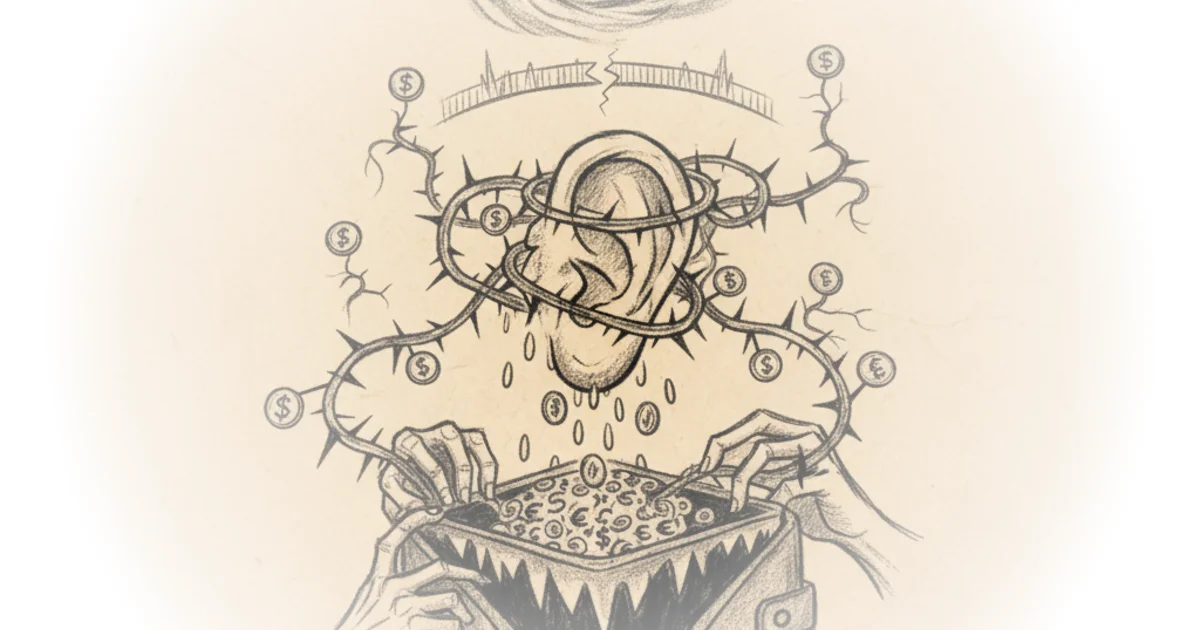
When Congress Opened the Floodgates
The pivot point in Jordan's account is the 2017 congressional bill that created a new class of FDA-approved over-the-counter hearing aids, purchasable without a doctor's involvement. The legislation was framed as a consumer empowerment measure, breaking the prescription chokehold that had made hearing aids prohibitively expensive, sometimes costing upward of $10,000 per device before factoring in appointments, tests, and maintenance.
There is a real problem worth solving here. The American healthcare system has long made hearing aids inaccessible to people who genuinely need them. Jordan does not dispute this. What he disputes is the notion that the solution was to remove medical professionals from the equation entirely:
Unfortunately, and probably unintentionally, the most significant accomplishment of the over-the-counter hearing aid bill was removing the most important part of hearing loss treatment, the doctor.
The counterpoint is worth stating plainly: prescription hearing aids were a racket too. Jordan himself calls the old system "just another arm of the US healthcare racket." The over-the-counter bill was a response to real price gouging. But in swinging from one extreme to the other, Congress created an unregulated space where companies backed by private equity could sell amplification devices to people who did not need them, sometimes causing the very hearing damage they claimed to prevent.
The Anatomy of a Hearing Scam
Jordan profiles several companies that have exploited this regulatory vacuum. Nano Hearing Aids, founded in 2017 (the same year the OTC bill passed), allegedly claimed FDA approval it did not have, sold devices sourced from Alibaba while marketing them as American-made, promoted hearing aids for children, and refused to honor its money-back guarantee. Jordan took their online hearing test the day after being professionally cleared and was told he had hearing loss. When he retook the test claiming to be a healthy 20-year-old, he passed.
Could be a coincidence, although one could just go through the test logic on the JavaScript to see how the test works.
Then there is Eargo, which ran a multi-million-dollar campaign offering "free" hearing aids to federal employees by fabricating diagnosis codes and billing the government. The company paid a $32 million settlement after a whistleblower exposed the fraud. Despite this, Jordan notes that Eargo retailers and partners continued making claims about free hearing aids for federal employees.
These are not edge cases being cherry-picked to make an argument. They represent a systemic pattern in which the financial incentive is to diagnose hearing loss whether it exists or not, and to sell devices whether they help or not.
The Tinnitus Gold Rush
Jordan's investigation extends to tinnitus treatment, where the landscape is arguably even more predatory. Tinnitus, the perception of phantom sounds like ringing or buzzing, affects roughly 15 percent of the population and has no definitive cure for most sufferers. This combination of widespread demand and limited medical options creates what Jordan's audiologist source, Dr. Cliff Olsen, describes bluntly:
You want to talk about an industry that has just scam after scam, like outside of the world of hearing aids, tinnitus like the worst. These really small companies, they're not really a target of any type of big class action lawsuits or things like that. So people just have to educate themselves.
Jordan examines one device in particular, the Lenire, an FDA-approved product that delivers electrical stimulation to the tongue through a small device connected to headphones. At $4,000 to $5,000 per unit with no refund policy and a prohibition on resale, it represents a significant financial commitment. Jordan is measured in his criticism. He does not call the device a scam. He does, however, raise substantive concerns about the research behind it.
The initial study that generated headlines claiming 91.5 percent of patients experienced "clinically meaningful reduction" lacked a control group. The follow-up study added a control group, but it consisted of people wearing headphones without the tongue device, which is not an equivalent placebo experience. The FDA then guided a third trial without any control groups and granted approval upon completion.
I frankly don't understand how any skeptical researcher or publisher would read these studies and have a conclusion other than, well, now we need to have a control group using a fake or inactive Lenire device.
This is a fair methodological criticism. In a field where the placebo effect is notoriously powerful, particularly for subjective neurological symptoms like tinnitus, the absence of a properly blinded control group undermines the strength of any efficacy claim. It does not prove the device is ineffective; it means the research has not yet proven it is effective to the standard one would expect for a $5,000 medical device.
What Actually Works
Amid the critique, Jordan does offer constructive guidance, drawn largely from Dr. Olsen's expertise. The rules are simple but go against the grain of an industry built on convenience marketing: no online tests (consumer headphones are not calibrated for diagnostic accuracy), no free tests (they are loss leaders designed to funnel people toward a sale), and no direct purchases of over-the-counter hearing aids without professional guidance.
Nobody who spent a decade and hundreds of thousands of dollars to become an audiologist is working for free. You can either pay them for their professional courtesy and honesty, or you can let a hearing aid retailer pay them for a referral.
Dr. Olsen identifies the clearest red flag: any clinic that only offers one product, especially one it manufactures itself. A legitimate hearing care professional follows clinical guidelines from organizations like the American Academy of Audiology and evaluates patients against a range of treatment options.
It is worth noting that Jordan's framing, while largely persuasive, may overstate the case against OTC hearing aids as a category. For people with mild hearing loss who cannot afford $10,000 prescription devices and who do not have insurance coverage, a $200 OTC device from a reputable manufacturer, used with realistic expectations, may be materially better than nothing. The problem is not the existence of OTC options but the absence of guardrails around marketing, testing, and consumer education.
Bottom Line
Jordan's investigation reveals an industry caught between two dysfunctions: a legacy prescription model that priced people out of care, and a deregulated OTC market that incentivizes fake diagnoses and snake-oil treatments. The victims are the same in both cases, people with genuine hearing concerns who lack the expertise to distinguish legitimate care from sophisticated sales tactics. The most actionable takeaway is also the most old-fashioned: pay an independent, certified audiologist for a real evaluation. It is the one transaction in this ecosystem where the professional's incentive aligns with the patient's interest.