Most legal commentary on the recent Supreme Court leaks focuses on the breach of trust by court staff. This piece from Reason takes a far more provocative turn: it argues that the journalist who published the documents, Adam Liptak, may have violated his own professional ethics as a licensed attorney. In an era where the line between journalism and legal advocacy is increasingly blurred, the editors suggest that holding a law license carries weighty obligations that cannot be shed simply by picking up a byline.
The Ethics of the Attorney-Journalist
The core of the argument rests on a specific, often overlooked intersection: the New York Rules of Professional Conduct. Reason reports that Liptak, a licensed attorney in New York, may have violated Rule 8.4(f), which prohibits a lawyer from "knowingly assist[ing] a judge or judicial officer in conduct that is a violation of applicable rules of judicial conduct or other law." The piece posits that if Liptak actively helped a leaker make confidential memoranda public, he didn't just report the news; he facilitated a breach of judicial confidentiality.
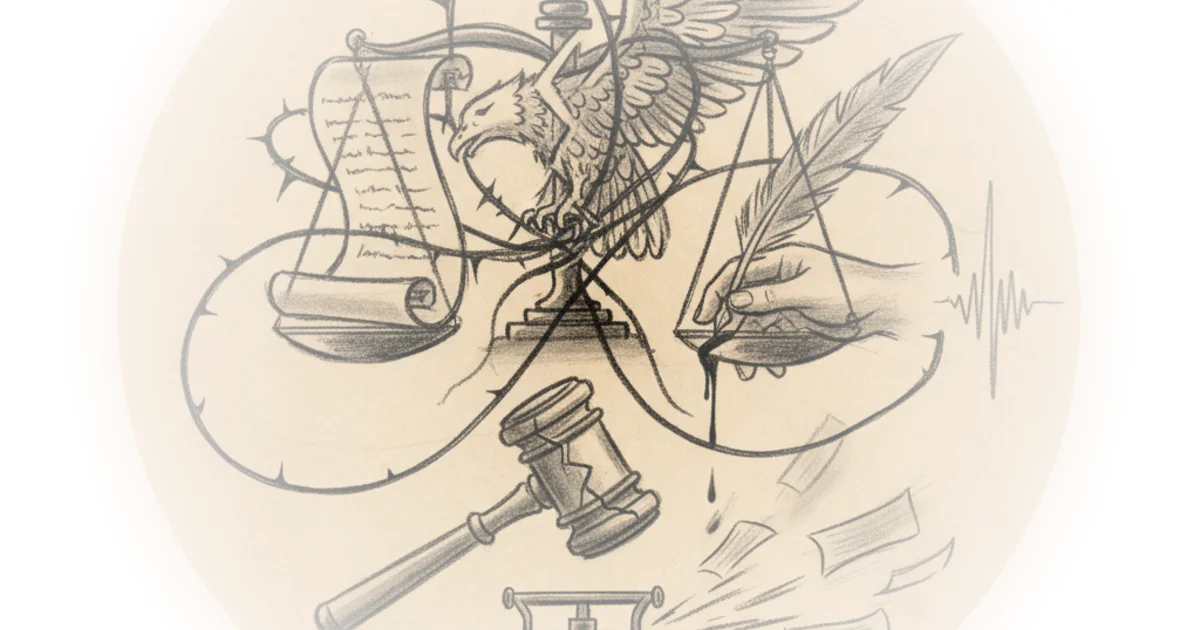
This is not a trivial distinction. The editors draw a sharp line between analyzing public records and participating in the release of private ones. "Commenting on now-public memos... is very different from playing a role in making them public," the article notes. "It's akin to the difference between an attorney's advising a defendant who has already committed a crime and an attorney advising a client on how to commit a crime without detection." This framing is powerful because it shifts the focus from the content of the leak to the mechanics of its acquisition. It forces the reader to consider whether the journalist's role was passive observation or active complicity.
Critics might argue that the public's right to know about the inner workings of the Supreme Court outweighs internal confidentiality rules, especially given the Court's lack of a formal code of conduct. However, the piece counters this by noting that courts must deliberate in private to function effectively. "Judges have to think in private," Reason argues. "And multimember courts can't deliberate effectively, much less administer justice effectively, if their judges can't write anything down for fear of seeing it in the next day's Times."
The sanctity of the deliberative process is the cornerstone of the judicial system and such a violation can lead to a host of problems.
The argument gains historical weight when it references the broader context of judicial confidentiality. Just as the Supreme Court has adopted rules similar to the Judicial Conference's Code of Conduct for Judicial Employees—which mandates that employees "should never disclose any confidential information received in the course of official duties except as required in the performance of such duties"—the integrity of the institution relies on a culture of trust. The piece suggests that when an attorney-journalist bypasses these norms, they aren't just breaking a rule; they are eroding the foundation of the judicial system itself.
The Limits of the First Amendment Defense
A significant portion of the commentary tackles the inevitable counter-argument: the First Amendment. Liptak's defenders, including a New York Times spokesperson quoted in the piece, assert that the reporting "brings to light vital information for the public to understand how the court carries out its duties." Reason acknowledges that the First Amendment generally protects the publication of illegally obtained information, citing Bartnicki v. Vopper. However, the editors argue that this protection is not absolute for licensed attorneys.
The piece makes a crucial distinction: "Attorneys are often under confidentiality obligations that the First Amendment doesn't impose on others." It uses a striking analogy to illustrate this point. If a journalist were also a licensed social worker, they might be required to report suspected child abuse even if it meant burning a source. "The additional role carries with it additional duties (even conflicting duties)," the article states. This analogy effectively dismantles the idea that a journalist's role automatically supersedes their professional obligations as a lawyer.
Furthermore, the editors warn against the slippery slope of allowing attorneys to weaponize leaks. "We don't want a world where every internal judicial memo serves as a potential weapon in a political fight, one available to whoever's willing to violate the ethics rules first." This concern is not theoretical; the piece points to the real-world consequences of the Dobbs draft leak, which led to an assassination attempt on Justice Brett Kavanaugh. The argument here is that the culture of respect and fidelity among attorneys and court personnel is the only thing preventing such leaks from becoming a daily occurrence.
Bottom Line
The strongest part of this argument is its refusal to accept the "journalist" label as a shield against professional responsibility. By grounding the critique in the specific ethics rules of the legal profession, Reason forces a necessary conversation about the dual roles many legal experts play in the media. The biggest vulnerability, however, lies in the difficulty of enforcement; without a clear admission of solicitation, proving that Liptak "assisted" in the leak rather than just reporting on it will be a high bar for disciplinary committees to clear. Readers should watch for whether the New York State Bar Association takes up this specific question of attorney-journalist liability, as the outcome could redefine the boundaries of legal ethics in the digital age.