In a landscape saturated with fear-mongering and speculative headlines, Rohin Francis offers a grounded, data-driven roadmap for understanding the trajectory of the coronavirus pandemic. Rather than relying on sensationalism, he leverages off-the-record insights from public health experts in the UK and the US to dissect the mechanics of viral burnout, the nuances of testing, and the realistic timeline for a vaccine. This is not just a medical explainer; it is a strategic guide for navigating the next few years of global health policy.
The Mechanics of Viral Burnout
Francis begins by dismantling the assumption that this virus will simply vanish on its own, a notion often held by those hoping for a quick resolution. He anchors his argument in hard statistics, noting that "81% of the cases are mild" while only "5% are critical typically requiring intensive care." However, he immediately contextualizes this by warning that these figures shift dramatically for vulnerable populations, where the fatality rate climbs between 8 to 15%. This distinction is crucial for understanding why the executive branch and health agencies are pushing for such aggressive containment measures despite the high percentage of mild cases.
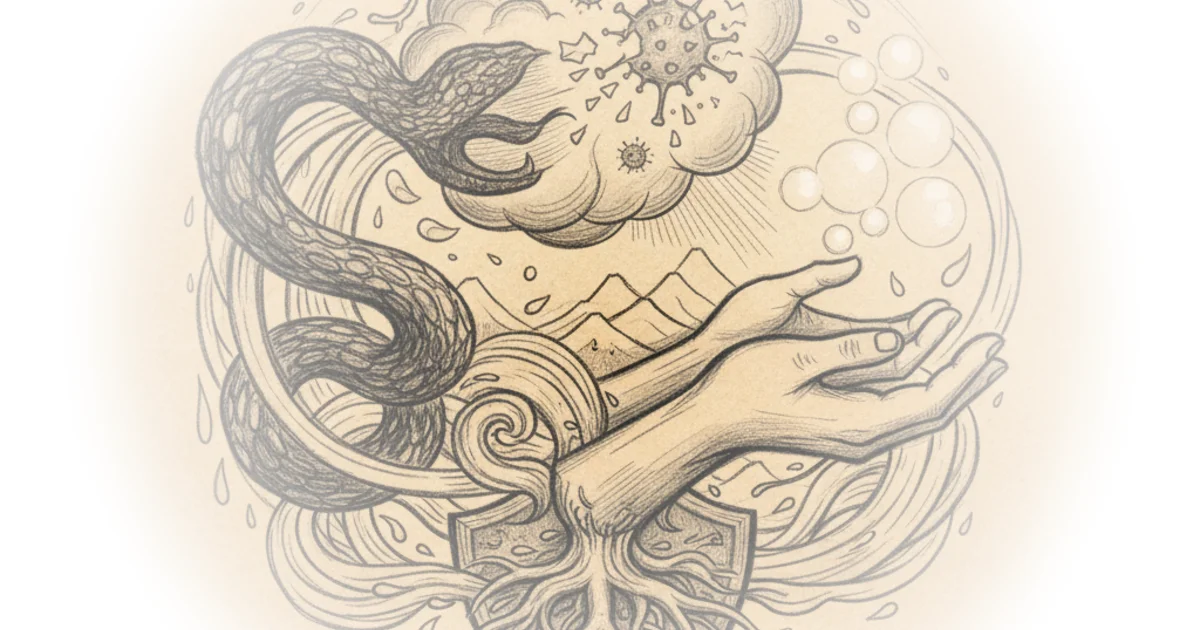
The core of Francis's argument rests on the concept of "burnout"—the point at which a virus runs out of susceptible hosts. He explains that while this worked for SARS, the scale of the current outbreak presents a unique challenge. "This Burnout is essentially how we beat SARS quarantine the affected people until the incubation and infect just period was over," he writes, but adds the sobering caveat that "this time it's on a much larger scale." He suggests that global burnout may require a couple of years, a timeline that contradicts the public's desire for a rapid return to normalcy. Critics might argue that relying on burnout through natural infection is ethically fraught given the potential loss of life, yet Francis frames it as the biological reality that must be managed through quarantine rather than ignored.
The presence of symptoms is not required to spread the disease, which coupled with the long incubation period is why we're seeing such rapid spread.
The Testing Trap and Reinfection Myths
One of the most valuable contributions of this piece is its clarification of the confusion surrounding positive tests after recovery. Francis addresses the alarming reports of reinfection by explaining the limitations of the reverse transcriptase polymerase chain reaction (RT PCR) test. He writes, "having a positive test for up to 30 days after recovery is fairly normal in many common viral infections." This technical nuance is vital for policymakers and the public alike, as it suggests that the virus may not be causing reinfections, but rather that the testing technology is detecting lingering viral RNA long after the patient is no longer infectious.
He further notes that the RT PCR test "stays positive for a long time even after two negative tests," which implies that what looks like a resurgence of the virus in recovered patients may actually be a false negative followed by a delayed positive result. This reframing is essential for avoiding panic-driven policy shifts based on misunderstood data. While the possibility of reinfection cannot be entirely ruled out, Francis's analysis suggests that the current data points more toward prolonged viral shedding than a failure of the immune system.
The Vaccine Timeline and Scientific Openness
Moving to the long-term solution, Francis tackles the frustration regarding the 18-month to two-year timeline for a vaccine. He contextualizes this delay by reminding readers that "vaccines normally take the best part of a decade to make," framing the current accelerated schedule as a record-breaking effort rather than a bureaucratic failure. He highlights a significant shift in geopolitical cooperation, noting that "the comparative openness of the Chinese government" regarding the genetic code was a "positive step in the wake of kovat 19 in comparison to SARS."
This openness allowed the entire genetic code to be published online within weeks, enabling researchers globally to begin work immediately. Francis argues that the scientific community is "prepared in many ways for SARS Co v2" due to previous work on SARS, which utilized ferrets to identify the bat origin of the virus. However, he remains realistic about the hurdles that remain. "There are many steps which simply can't be skipped," he writes, emphasizing that safety checks and large-scale manufacturing cannot be rushed without risking public safety. This is a necessary counterbalance to the political pressure for a quick fix, grounding the debate in the realities of pharmacology.
Vaccines normally take the best part of a decade to make so this really is everything moving as fast as possible.
The Low-Tech Reality of Containment
Ultimately, Francis brings the focus back to the most effective tools currently available: basic hygiene and social distancing. He critiques the tendency to look for a pharmaceutical silver bullet while neglecting proven behavioral interventions. He urges the public to heed the advice of the World Health Organization (WHO) and local health authorities, specifically warning those with manageable symptoms to avoid emergency departments. "If your symptoms are manageable if you feel you have basically a nasty cold or flu please don't go to the emergency department or your doctor surgery waiting room," he advises, explaining that doing so places an undue strain on the health system and risks infecting high-risk groups.
He also addresses the skepticism surrounding alcohol gel, clarifying that while it is "not as effective as good hand-washing it's not useless at all." This pragmatic approach cuts through the noise of conflicting advice, offering clear, actionable steps for individuals to protect themselves and their communities. The argument is effective because it empowers the reader with agency, shifting the narrative from helplessness to active participation in the solution.
Bottom Line
Rohin Francis's analysis succeeds by replacing speculation with the grounded reality of virology and epidemiology, offering a clear-eyed view of a long road ahead. His strongest contribution is the demystification of testing data and the realistic framing of the vaccine timeline, which serves as a necessary antidote to public impatience. The piece's greatest vulnerability lies in its reliance on the assumption that quarantine and behavioral changes will be sustained long enough to achieve global burnout, a political and social challenge that science alone cannot solve.