This isn't just another regulatory squabble; it is a stark warning that the federal government is preparing to weaponize broadcast licensing to punish political dissent. Reason delivers a crucial analysis of how the Federal Communications Commission (FCC) is attempting to dismantle decades of settled law to silence a specific talk show, revealing a mechanism that could easily be turned against any outlet the administration dislikes.
The Weaponization of "Equal Time"
The piece centers on a brazen attempt by FCC Chairman Brendan Carr to revoke the "bona fide news" exemption for ABC's The View. This exemption, established by Congress in 1959, was designed to prevent the "equal time" rule from paralyzing news coverage. Under the strict interpretation Carr is pushing, if a station interviews one candidate, it must provide equal airtime to every other candidate on the ballot—a logistical impossibility that would effectively ban political interviews from daytime television.
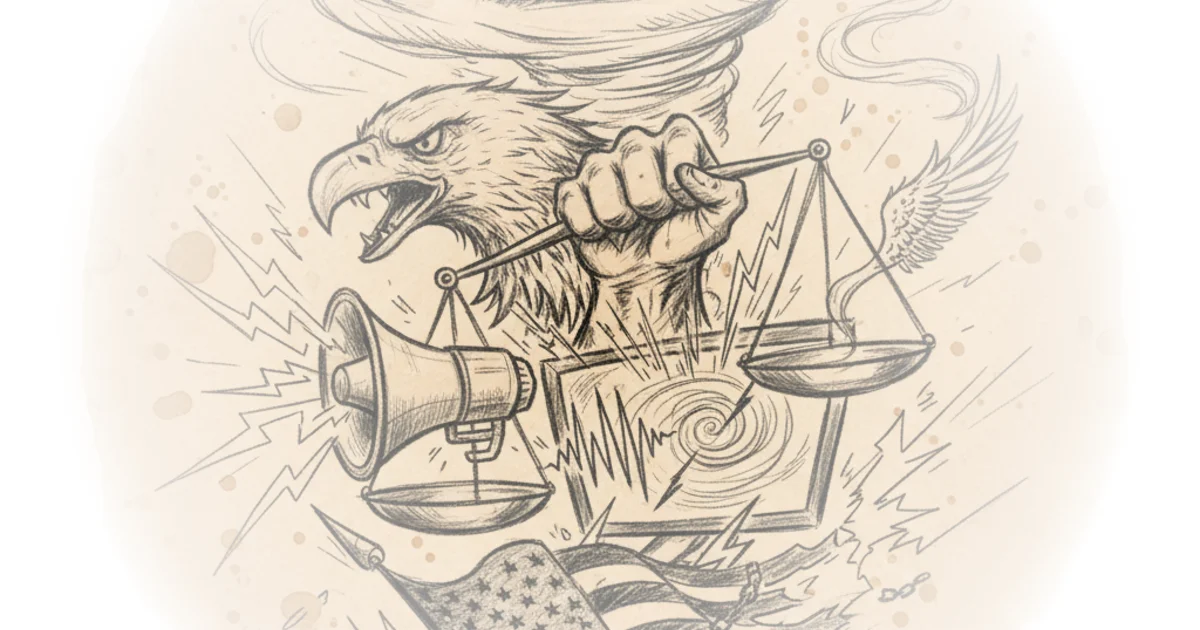
Reason reports, "Universal application of that requirement would have a crippling impact on news coverage." The argument here is not merely about one show's survival; it is about the structural integrity of political discourse. The piece notes that since 1984, the FCC has granted similar leeway to programs ranging from The Jerry Springer Show to The Tonight Show, recognizing that editorial judgment, not rigid quotas, should govern newsgathering. Carr's move to target The View specifically, while ignoring conservative talk radio, suggests a regulatory double standard that undermines the agency's neutrality.
"If you're fake news, you're not going to qualify [for] the bona fide news exception."
This quote from Carr, cited by the editors, is the smoking gun. It explicitly ties regulatory compliance to political alignment. The piece argues that this is a dangerous departure from the agency's historical role. By defining "fake news" as programming that opposes the administration's views, the FCC is effectively becoming an arbiter of political truth. Critics might note that the FCC has always had some authority to ensure the "public interest," but the editors rightly point out that this power has never been used to punish editorial bias before. The distinction between regulating technical standards and policing viewpoints is being erased.
The Obsolescence of the "Scarcity" Rationale
The legal foundation for FCC intervention rests on a 1969 Supreme Court ruling, Red Lion Broadcasting v. FCC, which justified government oversight based on the "scarcity" of radio frequencies. Reason dismantles this premise, noting that the media landscape has fundamentally shifted. The editors highlight that the "scarcity" rationale "never made much sense, and it has not aged well."
Paul Clement, the Supreme Court litigator representing ABC, is quoted in the piece making a devastating point about the modern information ecosystem: "The marketplace of ideas has never been more robust." The argument is that in an age of podcasts, cable news, and social media, the government has no business deciding which broadcast voices are "fair." The piece draws a sharp contrast between the 1960s and today, noting that the Supreme Court's original reasoning is "unsupportable now in an age of information ubiquity."
The editors further strengthen this by pointing out the hypocrisy in the FCC's selective enforcement. While Carr demands that The View justify its news status, he has ignored similar appearances by conservative candidates on shows like The Mark Levin Show and The Glenn Beck Program. As Clement notes, "Such a clear disparity in the treatment of broadcasters that ought to be subject to the same treatment under law raises serious concerns about viewpoint discrimination and retaliatory targeting."
"Brendan Carr's FCC is continuing its streak of naked partisanship by wielding the agency's power in new and laughable ways."
This blunt assessment from Robert Corn-Revere, chief counsel at the Foundation for Individual Rights and Expression, captures the mood of the legal community. The piece uses this to illustrate that the threat is not theoretical; it is already chilling coverage. When CBS canceled an interview with a Texas legislator due to fear of FCC retaliation, the damage was done regardless of whether a formal penalty was ever issued. The mere possibility of government retribution is enough to silence speech.
The Danger of Precedent
The most chilling aspect of this coverage is the warning that today's political weaponization will inevitably become tomorrow's tool for the opposition. The editors cite Senator Ted Cruz, a Republican, who warned that while it might feel good to threaten liberal hosts now, "we will regret it" when the tables turn. The piece argues that "it is unbelievably dangerous for government to put itself in the position of saying, 'We're going to decide what speech we like and what we don't, and we're going to threaten to take you off air if we don't like what we're saying.'"
This is not a partisan defense of The View; it is a defense of the principle that the government should not control the airwaves based on political preference. The editors conclude that the "equal time" rule, without a robust exemption, is a constitutional liability that threatens to "limit news coverage of political candidates and chill core First Amendment-protected speech for years and potentially decades to come."
Bottom Line
Reason's analysis is a masterclass in connecting a specific regulatory threat to a broader constitutional crisis, effectively demonstrating that the FCC's actions are less about fairness and more about political retaliation. The piece's greatest strength is its reliance on the bipartisan consensus that government control of editorial content is a slippery slope, yet its biggest vulnerability lies in the fact that the Supreme Court's "scarcity" doctrine remains technically on the books, leaving the door open for aggressive interpretations. Readers should watch closely as this legal battle plays out, for the outcome will determine whether the FCC remains a technical regulator or becomes a political censor.
"If the government is allowed to discriminate on the basis of viewpoint in a Republican administration, there is little preventing it from doing so when the Democrats are in charge."