Rana Ayyub delivers a harrowing indictment of how religious hatred has metastasized into state-sanctioned apathy across South Asia, arguing that the trauma of 1947 Partition never truly healed but merely evolved into a modern political tool. This is not a standard report on violence; it is a forensic examination of how digital mobs and political rhetoric have normalized the murder of minorities in both India and Pakistan, turning human lives into disposable ciphers.
The Anatomy of a Mob
Ayyub opens by juxtaposing two brutal, almost identical tragedies separated by 800 miles but united by the same lethal logic. She details the killing of Salman Vohra, a 23-year-old newlywed in Gujarat, who was beaten to death at a cricket match simply for being a Muslim player who performed well. "His uncle showed me a grainy video that went viral on the internet. You can see the crowd closing in and hear someone screaming for help and others shouting, 'Hit him, hit him hard!'" The visceral nature of this evidence forces the reader to confront the raw, unfiltered brutality that official reports often sanitize.
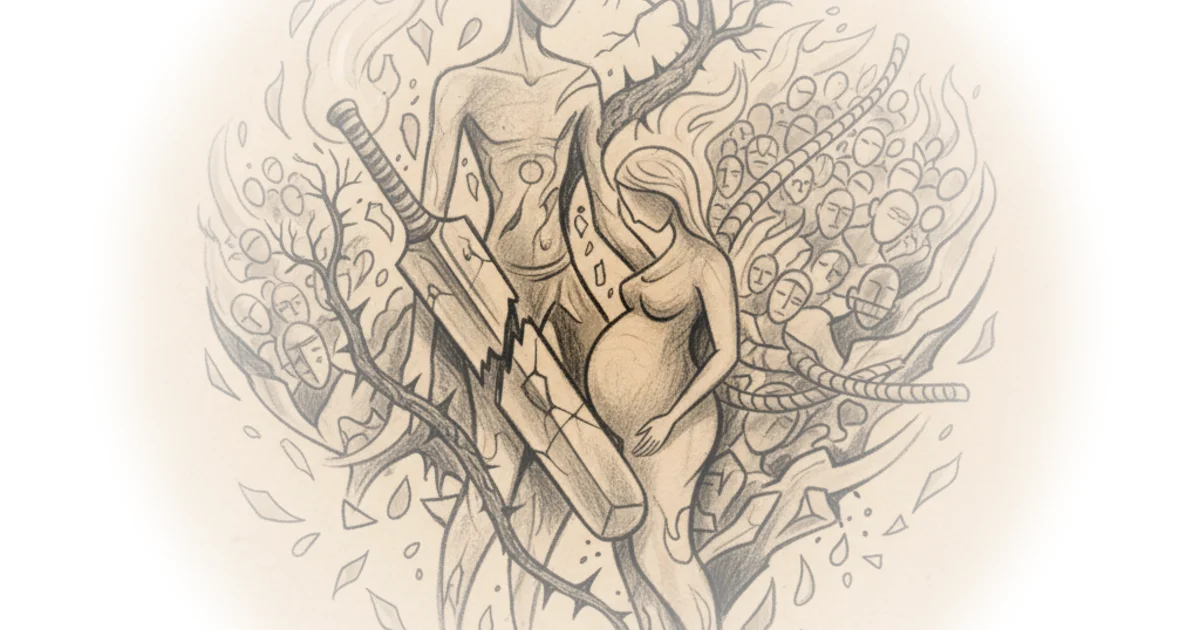
Simultaneously, she recounts the death of Mohammad Ismail in Pakistan, a Muslim man burned alive by a mob after false rumors of blasphemy spread through mosque announcements. "Islamist radicals forced their way into the police station, setting it and several police cars on fire, and the police fled." Ayyub's choice to present these cases side-by-side is her most powerful analytical move: it dismantles the narrative that one nation is uniquely virtuous while the other is uniquely barbaric. The evidence suggests a shared pathology where the rule of law collapses the moment religious sentiment is inflamed.
"The calamity of Partition was not that India had been divided into two countries but that human beings in both countries were slaves, slaves of bigotry … slaves of religious passions, slaves of animal instincts and barbarity."
By quoting the chronicler Saadat Hasan Manto, Ayyub anchors the current violence in a historical continuum, suggesting that the political borders drawn in 1947 failed to contain the hatred they were meant to resolve. This framing is effective because it shifts the blame from abstract "sectarianism" to specific human choices enabled by leadership.
The Weaponization of Law and Media
The commentary then pivots to how modern technology and legal frameworks have accelerated this cycle of violence. Ayyub argues that social media has not just amplified these incidents but has created a feedback loop where outrage is performative and selective. She notes that while Pakistani nationals condemn Indian lynchings, they remain silent on their own, and vice versa. "When a mob lynched a Muslim man in India in 2015... Prime-time TV shows and lead editorials in newspapers asked, How could this happen in a democracy like India? Nine years later, mob lynchings barely make a ripple."
This observation on the normalization of violence is chilling. Ayyub illustrates how the initial shock of such events has been replaced by a cynical acceptance, where victims are stripped of their humanity. In Pakistan, she highlights how blasphemy laws have become a tool for settling personal scores, noting that "anyone is free to act as a prosecutor, judge and executor." The case of Nazir Masih, a Christian man killed after a dispute over a shoe business, underscores how legal protections are entirely absent for minorities.
Critics might argue that focusing on mob violence obscures the complex geopolitical tensions between the two nations or the legitimate security concerns that governments cite. However, Ayyub counters this by showing that the state itself is often complicit. In India, she points out that authorities have dropped charges against suspects in cattle-related lynchings or charged journalists with "promoting enmity" for reporting the truth. "It seems it's a crime in Modi's India to report a crime," she writes, quoting journalist Ziya Us Salam. This reframing is crucial: it moves the discussion from isolated criminal acts to a systemic failure of governance.
The Political Economy of Hatred
The core of Ayyub's argument is that this violence is not a bug in the system but a feature of current political strategies. She asserts that leaders in both countries are actively "inflaming religious hatred rather than tamping it down." In India, she references the rhetoric of the executive branch regarding Muslims as "infiltrators," while in Pakistan, she notes the government's decision to broaden blasphemy laws despite their lethal consequences. "Minorities are being murdered daily … no religious minority is safe in Pakistan," admitted Pakistan's defense minister, Khawaja Asif, even as the state failed to pass laws to stop it.
Ayyub's interview with Nadeem Khan, founder of the Association for Protection of Civil Rights, provides the piece's starkest conclusion: "You can have all the laws and rules against mob lynching, but when you are dealing with an anti-Muslim regime that has systematically abdicated its responsibility towards the marginalized, there can be little justice in sight." This quote lands with devastating force because it strips away the illusion that legal reforms alone can solve a problem rooted in political will.
The human cost is brought home through the voices of the victims' families. When Ayyub speaks to the brother of Saddam Qureshi, a man killed while transporting cattle, the brother asks, "Tell me what is illegal in the country — transporting cattle or being a Muslim or both? Or just being a Muslim and a poor man in this country whose life has no meaning?" These questions are not rhetorical; they are the desperate inquiries of people who have lost everything to a system that no longer values their existence.
"Sowing hatred against 'the other' is a powerful political tool used by autocrats worldwide. With a lack of political will to counter that force, humanity will continue to be a casualty in these two nations with a shared history and culture."
Bottom Line
Ayyub's most compelling contribution is her refusal to let the reader look away from the complicity of the state, proving that the mob is only as dangerous as the government that allows it to act with impunity. The piece's greatest vulnerability lies in its bleak outlook; by framing the situation as an inevitable result of "autocratic" tools, it offers little hope for immediate reversal, though this may simply reflect the grim reality on the ground. Readers should watch for whether the recent judicial rebukes of police inaction in India translate into actual policy changes, or if they remain isolated gestures in a sea of normalized violence.