This is not a story about a college merger; it is a case study in how a public institution can be dismantled from the inside out by a political apparatus that views higher education as a battleground for cultural dominance. Justin E. H. Smith, a historian of philosophy, offers a rare, ground-level view of the systematic erasure of academic freedom at New College of Florida, framing the event not as a policy dispute but as an existential collision between two incompatible worldviews.
The Architecture of a Liberal Experiment
Smith begins by establishing the unique character of the institution he joined in 2018, a place that defied the standard metrics of American higher education. He describes a campus where students negotiated their own learning contracts and where the constitution declared that "[t]he natural state of the human spirit is ecstatic wonder!" This was not merely a quirky footnote; it was a deliberate pedagogical choice rooted in the belief that education should be a personal, self-directed journey. Smith notes that students received "narrative evaluations" rather than grades, a system designed to foster deep intellectual growth over transactional achievement.
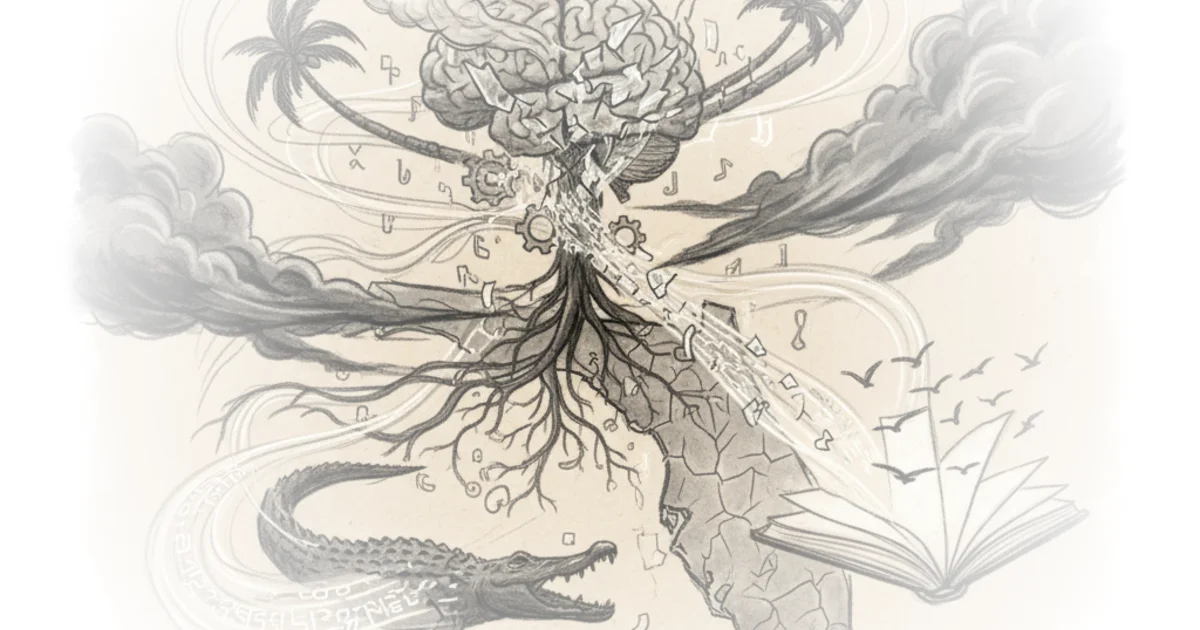
The author draws a fascinating parallel between this educational philosophy and the complex, non-linear logic of the ancient board game Go. Just as the game was only recently "conquered" by artificial intelligence in 2016, New College represented a humanistic complexity that resisted easy algorithmic categorization. Smith writes, "I could help students draw links between the most ancient of human traditions with our most daunting contemporary problems." This framing is crucial: it positions the college as a living laboratory for the very kind of critical thinking that the incoming administration would soon deem dangerous.
Critics of the old system might argue that such unstructured freedom leads to a lack of rigor or accountability, a point often raised by traditionalist educational reformers. However, Smith's account suggests that the rigor was internal and self-imposed, driven by a genuine community of inquiry rather than external mandates.
"In the last analysis, every student is responsible for his or her own education."
The Political Takeover
The narrative shifts dramatically with the arrival of a new board of trustees in January 2023, appointed by the state's executive branch to correct what they perceived as ideological capture. Smith details how the administration, led by figures like Christopher Rufo, immediately moved to fire the president, eliminate the Diversity, Equity, and Inclusion office, and deny tenure to five faculty members. The stated goal was to transform the school into "Florida's classical college, more along the lines of a Hillsdale of the South."
This is where Smith's expertise as a Leibnizian scholar becomes vital to the analysis. He references the 17th-century philosopher Gottfried Wilhelm Leibniz, who argued that while many possible worlds exist, only one is "compossible"—meaning it can coexist with all other necessary truths. Smith argues that the new administration's vision is fundamentally "incompossible" with the reality of New College. The two systems cannot coexist; one must destroy the other.
The administration's rhetoric was stark. Rufo, a central figure in the takeover, framed the conflict as a war against "post-modern, anti-normative" fields. Smith recounts how the board voted to eliminate the Gender Studies program, with trustee Spalding dismissing the field as a "mish-mash" and "ideological activism." The physical manifestation of this ideological purge was visceral: Smith describes viral images of books from the Gender and Diversity Center piled in dumpsters outside the campus.
"We abolished the gender studies program. Now we're throwing out the trash."
This quote, attributed to Rufo, reveals the dehumanizing logic at the heart of the takeover. It is not merely a curricular adjustment; it is an act of erasure. Smith notes that the administration justified this by claiming a return to "the true, the good, and the beautiful," a phrase that sounds benign until one realizes it is being used to justify the removal of any inquiry that challenges traditional religious or biological norms.
The Human Cost of Ideological Purity
The human toll of this transformation is palpable in Smith's writing. He describes the exodus of faculty, including colleagues who resigned because they could no longer work in an environment characterized by "censorship, refusal of accountability, blatant disregard for students' wellbeing." The administration's creation of an athletics program from scratch for a school whose mascot had been the "null set" is presented not as a genuine expansion of student life, but as a performative gesture to "rebalance the ratio" of male to female students.
Smith's observation that the new regime's actions are "incompossible" with the college's history is a powerful analytical tool. It suggests that the conflict is not about policy details but about the very nature of truth and inquiry. The administration seeks a singular, dogmatic truth, while the college was built on the premise of "ecstatic wonder" and the exploration of diverse intellectual constellations.
A counterargument worth considering is whether the administration's intervention was a necessary correction to a school that had become insular and disconnected from the broader public. However, Smith's evidence of the rapid, wholesale dismantling of faculty and programs suggests a political agenda rather than a pedagogical reform.
Bottom Line
Justin E. H. Smith's account is a masterful dissection of how political ideology can weaponize the mechanisms of governance to dismantle a public institution. The strongest part of his argument is the use of Leibnizian philosophy to frame the conflict as a fundamental incompatibility of worldviews, rather than a simple policy dispute. The piece's greatest vulnerability is its reliance on the assumption that the "classical" education the administration seeks is inherently superior, a premise the author challenges but which remains a potent political rallying cry. Readers should watch for how this model of takeover is replicated in other public institutions across the state and beyond, as the administration's success at New College may serve as a blueprint for future interventions.