In a landscape saturated with polished, corporate-sponsored gear reviews, Benn Jordan offers a refreshingly chaotic and deeply personal inventory of his own studio. He reframes the entire exercise not as a consumer guide, but as an act of "spite" and a necessary step for insurance documentation, arguing that the most honest way to evaluate tools is to strip away the marketing hype and admit what actually works in the wild.
The Economics of Spite and Utility
Jordan opens with a candid admission about his motivation, noting that "maybe between 90 and 95% of my daily activities are fueled by Spite." This provocative framing sets the stage for a review that prioritizes raw utility over brand loyalty. He explains that the video serves a dual purpose: cataloging his assets for insurance while simultaneously testing his own criteria for what makes a piece of equipment worth keeping. The result is a tier system that is brutally honest, where a device can be "S tier" for its transformative potential yet remain unused because it doesn't fit a specific workflow.
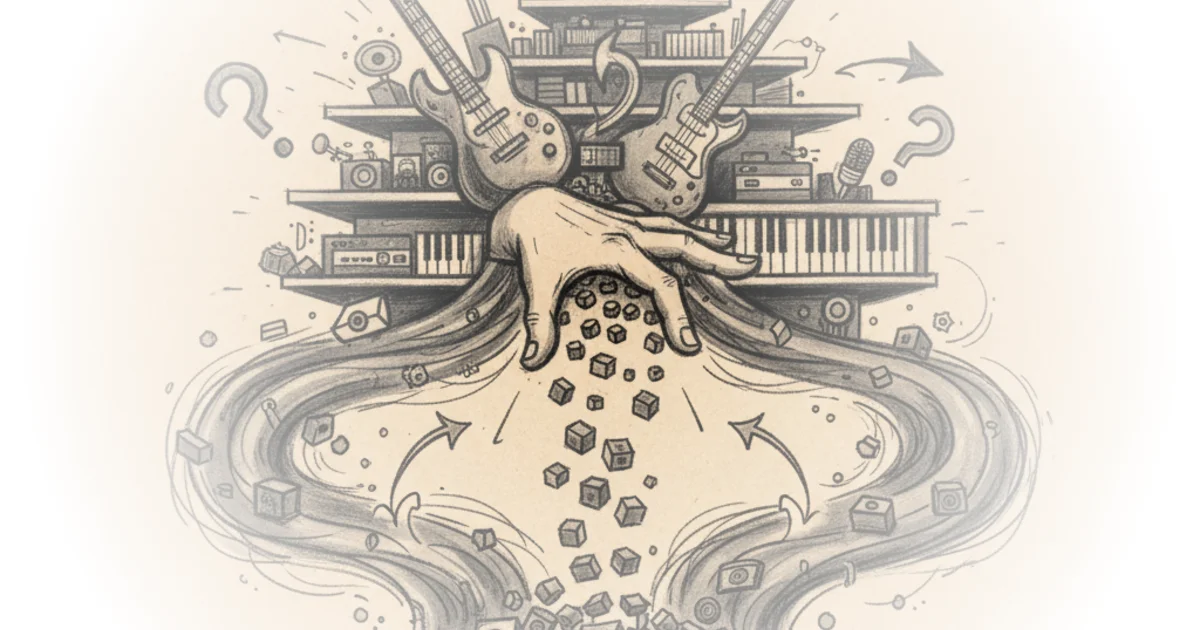
He defines his ranking system with surgical precision. "F tier is dog [__]," he writes, describing it as "nothing redeemable about it at all other than human civilization gaining the knowledge of where Rock Bottom is." Conversely, he elevates a product to S tier only if it "changes the way future products in that category are made and it changes the artists who use them." This distinction is crucial; it moves the conversation away from spec sheets and toward the tangible impact of technology on creativity. Jordan's willingness to label a piece of gear as "dog [__]" even if it has a cult following demonstrates a refreshing lack of deference to industry trends.
F tier is dog [__], there's nothing redeemable about it at all other than human civilization gaining the knowledge of where Rock Bottom is.
The Paradox of the Unused Masterpiece
A recurring theme in Jordan's analysis is the disconnect between a device's theoretical brilliance and its practical application in a specific studio environment. He highlights the Erica Synths Perkins HD1 drum machine, calling it "pretty brilliant" and predicting it will "increase in value over time." Yet, he admits, "I don't think I ever once actually used it in a recorded song." He rates it a B for himself, while acknowledging it would be an S tier for others. This nuance is often missing from standard reviews, which tend to treat a product's potential as its actual value.
Similarly, he discusses the Aai APC 64, a controller that "transformed not only the way that I think about music but the way that I think about creativity." Despite this profound impact on his thinking, he reveals, "I literally never even turn this thing on because I didn't realize that it only works with Ableton." This admission underscores a critical flaw in the gear ecosystem: the barrier to entry created by software dependencies. A device can be revolutionary in concept but useless in practice if it doesn't integrate seamlessly into a user's existing workflow.
Critics might argue that a review should focus on the ideal use case rather than the user's specific limitations. However, Jordan's approach is more valuable for the working musician, who needs to know what fits their reality, not just what exists in a vacuum.
The Survivor: Durability Over Design
Perhaps the most compelling part of Jordan's commentary is his assessment of durability and longevity. He recounts the story of the Behringer B Control BCF 2000, a device he has toured the world with, spilled beer in, and even had pieces of it crumble off. "This is 18 years old," he notes, marveling that it still works. He compares it to UFC fighters who "absorbed insane amounts of punishment and then would come out winning on top," ultimately awarding it an A tier.
This stands in stark contrast to modern devices that prioritize sleek aesthetics over ruggedness. Jordan points out that while newer gear often offers more features, it frequently lacks the resilience of older, simpler machines. He gives the Roland TR-8 a B tier, noting that while it is "way simpler" and "super easy to program," it still has "UI quirks that still piss me off quite a lot." The takeaway is clear: a tool that survives the chaos of a touring life is often more valuable than a fragile, feature-rich alternative.
I've toured around the world with this thing, I've spilled beer in it, I've spilled water in it... I wonder if I could just like punch that back in it worked.
The Verdict on Obsolescence
Jordan does not shy away from labeling gear as obsolete, even if it was once a staple. He describes the Elisis Air Effects as having effects that are "deplorable by the standards of the early 2000s were still pretty shitty," giving it a D tier. He also calls the Yamaha QY10 music sequencer "for people who hate themselves," citing it as "probably the worst experience I've ever had programming music into a sequencer." These harsh judgments serve as a warning against nostalgia bias. Just because a device was once popular doesn't mean it holds value today.
However, he also finds value in the unexpected. The Roland TB-3, which he initially thought was a "terrible idea," turned out to be "so much fun to use" and earns an A tier. This highlights the unpredictable nature of creative tools; sometimes the flaws in a design are exactly what make it inspiring. The Cyclone Analogic Bass Station 2, which he calls "probably the best acid machine I've ever used in my life," earns an S tier because it allows for "extremely easy" customization and randomization.
It is an S tier synthesizer.
Bottom Line
Benn Jordan's tier list succeeds because it prioritizes the human experience of making music over the technical specifications of the machines. His argument that a tool's value is determined by how it fits into a specific workflow, rather than its marketing hype, offers a necessary corrective to the consumerist cycle of the music industry. The piece's greatest strength is its honesty about failure—admitting when a brilliant tool is useless to the user—while its vulnerability lies in its highly subjective nature, which may not translate to every listener's needs.
A device can be revolutionary in concept but useless in practice if it doesn't integrate seamlessly into a user's existing workflow.