Noah Smith challenges a foundational assumption of modern political discourse: that class is defined by your current bank account or your zip code. Instead, he argues that in America, class is fundamentally about future potential and human capital, a distinction that explains why the political left is losing its traditional base. This is not just a semantic debate; it is a diagnosis of a widening cultural chasm that threatens the viability of progressive coalitions.
The Illusion of Shared Struggle
Smith begins by dismantling his own biography to make a broader point. He recounts growing up in a "small house with only one bathroom shared between four people," driving a "beat-up used Toyota Tercel," and even "picking cotton by hand" for a research project. Yet, despite these material hardships, he asserts, "I have never once considered myself part of the working class." The reason, he explains, is that he viewed class not as a "present snapshot of someone's lifestyle" but as a measure of "potential."
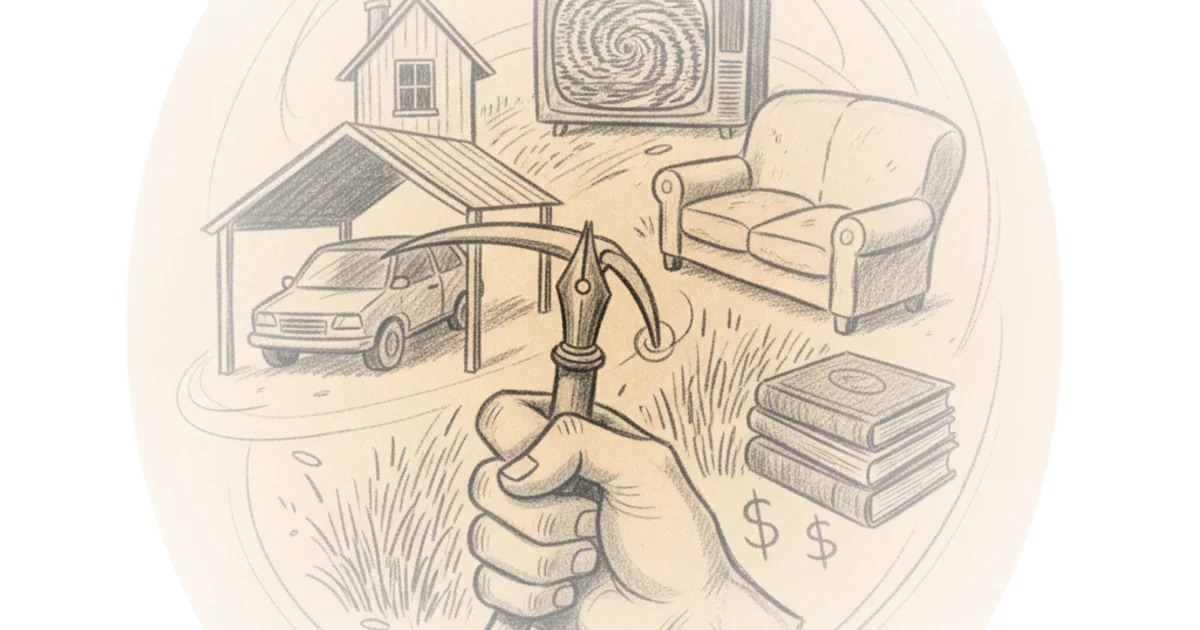
This framing is crucial because it aligns with economic theories like the Permanent Income Hypothesis, which suggests that people spend based on their expected lifetime earnings rather than their current cash flow. Smith writes, "If you're a shabby grad student living off of cup ramen, your current income is low, but your permanent income is high, because you know you're probably going to make a lot of money in the future." He contrasts this with the reality of millions of Americans for whom high-paying careers were "just never an option, and never will be." The argument holds water because it explains why a struggling graduate student might feel culturally distinct from a truck driver, even if their current paychecks are similar.
However, this perspective risks overlooking the psychological toll of precariousness. Critics might argue that defining class solely by potential ignores the immediate, crushing reality of debt and instability that prevents many from acting on that potential, regardless of their education level.
The Disconnect of the Professional-Managerial Class
The piece takes a sharper turn when analyzing why the Democratic Party and the socialist left are failing to connect with low-income voters. Smith points out that while the working class has drifted toward the executive branch's populist appeals, the left has become dominated by the "professional-managerial class" (PMC). He cites the Ehrenreichs' 1977 essay, noting that the PMC now forms the Democratic Party's "most important voter base," with DSA members holding degrees at twice the national average.
Smith observes that this elite often projects their own struggles onto the working class, creating a distorted view of who belongs where. He recalls a law student who defined the working class as "a sex worker who had a bunch of student loans and a humanities degree that she wasn't able to use." This anecdote illustrates a profound cultural blindness. As Smith puts it, "The integrating institutions that once pushed us together across class lines — church, the military, school — are gone." Without these shared spaces, the educated elite cannot imagine the lives of those without degrees, leading to a political strategy based on "vibes" rather than reality.
"If Trump is 'a poor person's idea of a rich person,' Platner is basically the opposite — a rich person's idea of a working-class person."
The Graham Platner saga serves as Smith's primary evidence of this disconnect. He describes how recruiters, including a sociology PhD student and the heir to the Toys "R" Us fortune, recruited an oyster farmer and Marine veteran who they felt "seemed rough and tough." Smith argues they picked him based entirely on stereotypes, treating him as a "messianic figure" who could win back blue-collar voters. The result was a campaign that collapsed under the weight of its own inauthenticity. This suggests that the left's attempt to co-opt working-class identity is not just ineffective; it is patronizing.
The Future of Class Politics
Smith concludes that the cultural gap is now so wide that Americans seem "unable to even imagine what Americans from other social classes are like." He warns that bridging this divide will require more than just finding a new candidate who fits a stereotype. "It would probably require moderating on social issues — DEI, immigration, etc. — instead of just running candidates that pattern-match to the kind of people that bullied rich lefty kids back in junior high." This is a stark admission that the current progressive coalition may be incompatible with the working-class base it claims to represent.
The argument is compelling because it moves beyond policy prescriptions to address the deep-seated cultural alienation that drives political behavior. It suggests that the failure of the left is not just about economics, but about a failure of empathy and imagination. Yet, one could counter that the demand to moderate on social issues may simply alienate the very progressive base that funds and organizes these movements, creating a political catch-22.
Bottom Line
Noah Smith's most powerful insight is that the American working class is defined by a lack of upward mobility, not just by current income, and the political left has failed to recognize this distinction. The piece's greatest vulnerability is its potential to justify a retreat from social justice issues as a purely transactional political move, which could further erode the moral foundation of the movement. Readers should watch for whether the Democratic Party attempts to address this cultural gap through policy or simply through candidate selection.