Most histories of the Roman Empire focus on the rise of emperors or the fall of cities, but Kings and Generals zeroes in on the quiet, bureaucratic genius that held the machine together for three centuries. This piece argues that Augustus didn't just win a war; he engineered a military identity so robust that it survived the loss of entire legions and the chaos of civil war. For the busy strategist or history buff, the takeaway isn't just about ancient tactics, but about how institutional design can outlast the individuals who build it.
The Architecture of Command
The core of the argument rests on the radical restructuring of the legion's leadership. Kings and Generals writes, "the legions would remain near enough around this number for the next 300 years," highlighting how the administration stabilized a force that had swollen to 60 legions during the civil wars down to a manageable 28, and eventually 25. This wasn't just a reduction in numbers; it was a consolidation of power. The author notes that the first cohort was "double-strength... forming a strong elite corps," a move that created a permanent, professional backbone for the army.
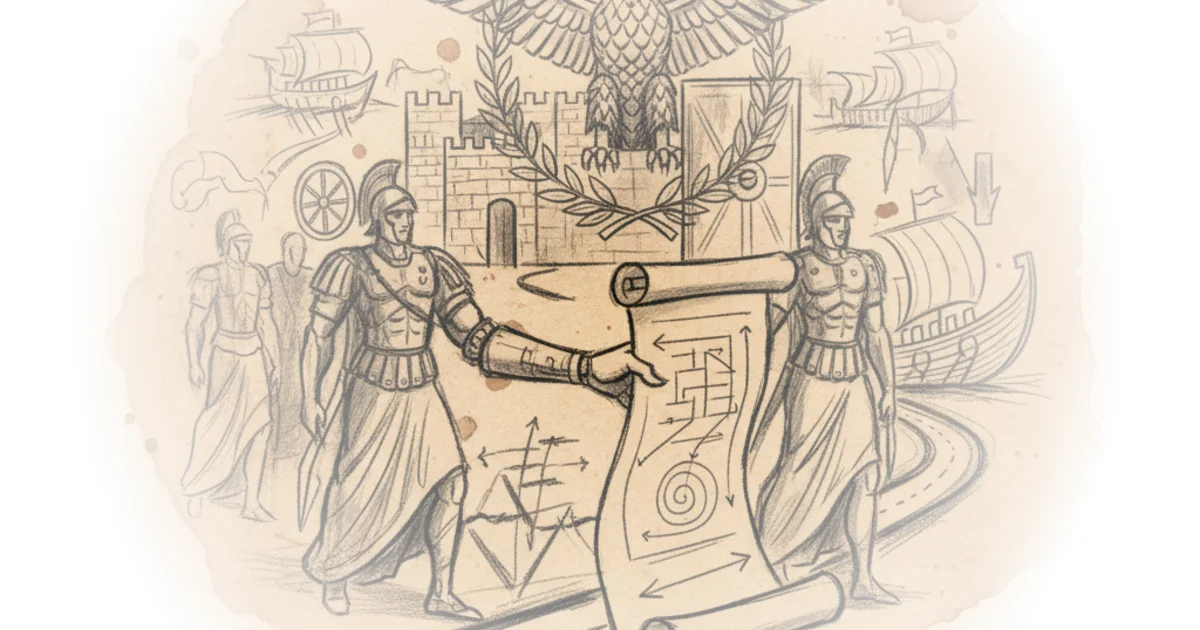
What makes this analysis compelling is the focus on the human element of command. The piece details the creation of the Praefectus Castrorum, or camp prefect, a role designed to balance the often inexperienced senatorial leadership with technical expertise. As Kings and Generals puts it, the camp prefect "balanced the often inexperienced senatorial leadership of the Legion with an expert who possessed much technical expertise." This reframes the Roman military not as a monolith of brute force, but as a complex organization where political ambition was checked by logistical reality. Critics might argue that the reliance on senatorial legates still left the army vulnerable to political maneuvering, but the inclusion of a career military officer in the chain of command was a significant safeguard.
The camp prefect balanced the often inexperienced senatorial leadership of the Legion with an expert who possessed much technical expertise.
Identity as a Weapon
Perhaps the most distinctive claim in the coverage is that a soldier's sense of self was a tactical asset. The author argues that the Roman army leveraged "individual identity of each unit" to foster cohesion. Kings and Generals observes that "identity, collective pride and cohesion are powerful forces," noting how legions retained historical names like "Germanica" or "Thunderer" to bind soldiers to a legacy of bravery. This wasn't accidental; it was a calculated psychological operation. The text explains that Emperor Trajan named his legion "Trajan's victorious 30th Legion after its campaigns in Asia," turning a unit's history into a brand of loyalty.
This approach to morale is often overlooked in favor of equipment or formation analysis. By granting titles for loyalty rather than just victory—such as the "Pious and Faithful" awarded for refusing a mutinous commander—the administration ensured that the army's loyalty was to the institution, not just the current ruler. The argument suggests that the Roman military's longevity was partly due to this ability to make every soldier feel part of a larger, enduring story.
The Fortress as a City
The final major shift discussed is the transition from temporary marching camps to permanent fortresses, a move that fundamentally changed the nature of Roman occupation. Kings and Generals writes, "once an area was conquered the Roman military would lay down a network of turf and timber forts roughly a day's march from one another." This wasn't just about defense; it was about projection. The author notes that these forts eventually became "hearth and home of Roman legionaries," evolving into the towns and cities that still dot the European landscape today.
The coverage details the meticulous engineering of these camps, from the "low earth rampart" to the "v-shaped ditch" designed to force attackers into vulnerable positions. But the real insight is the economic and social implication. By making the camps permanent, the administration turned soldiers into settlers. As the author notes, the "gradual slowing of this trend gave way to a defensive attitude," signaling the end of expansion and the beginning of a static, fortified empire. This shift from a mobile offensive force to a stationary defensive network is the defining characteristic of the early Empire, and Kings and Generals captures it with precision.
The later legacy of Roman permanent entrenchments blossoming into towns and cities was likely a consequence of the comfortable and often economically prosperous nature of these permanent camps.
Bottom Line
Kings and Generals delivers a masterclass in institutional analysis, showing how Augustus's reforms created a military machine that was as much about identity and logistics as it was about combat. The strongest part of the argument is the connection between unit identity and long-term loyalty, a lesson in organizational culture that remains relevant. The biggest vulnerability is the slight glossing over of the immense human cost required to maintain such a rigid system, but the focus on structural endurance rather than individual tragedy serves the piece's analytical goal perfectly.