Dan Snow does not merely recount the history of Auschwitz; he dissects the chilling bureaucracy of its evolution, revealing how a standard concentration camp was methodically engineered into an industrial slaughterhouse. By walking the reader through the physical remnants of Block 11 and the fragmented walls of the Krakow ghetto, Snow transforms abstract statistics into a tangible narrative of calculated efficiency. This is not a story of sudden madness, but of a slow, deliberate slide into genocide, driven by the need to solve logistical problems like ventilation and capacity.
The Laboratory of Death
Snow begins his investigation in the most feared location within the camp: Block 11. He highlights a specific, horrifying moment where the Nazis moved from ad-hoc killing to industrial experimentation. "It was here in this basement in September 1941 that the Nazis first use Cyclone B for the purposes of mass murder," Snow notes, establishing the site as a testing ground rather than just a prison. The author's coverage is particularly striking in how he frames these early murders not as the end goal, but as a data-gathering exercise. He explains that the initial attempt was a logistical failure, lasting two or three days and requiring excessive ventilation time. "What the experiments conducted here proved to the Nazis is that Zyclon B worked," Snow writes, but crucially adds, "What it also showed them is that they needed to get the quantities right."
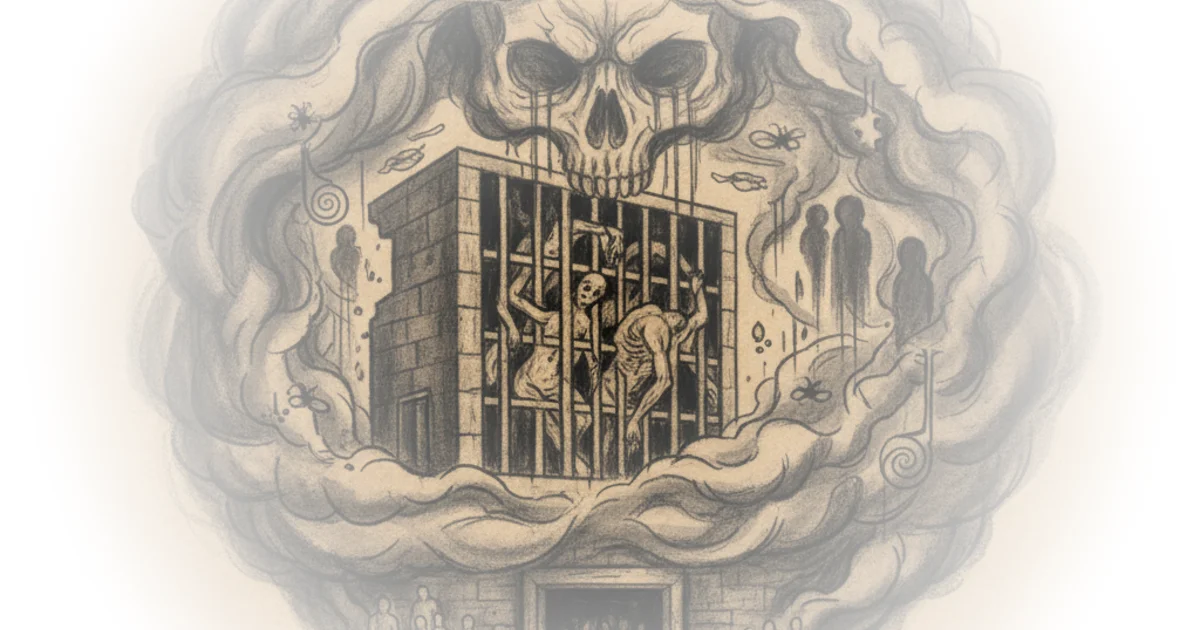
This framing is essential. It strips away the myth of chaotic evil and replaces it with the reality of cold, corporate-style optimization. The Nazis realized the small rooms were inefficient, leading directly to the construction of purpose-built gas chambers. Snow argues that the camp's transformation was a direct response to these operational hurdles. "They knew that they needed to build a purpose-built facility and that is what led to the first gas chamber at Ashvitz," he states. The sheer scale of the result—1.1 million people killed—is presented as the inevitable conclusion of this early, grim R&D phase.
The Nazis used the information that they gleaned to calculate how much Cyclon B will be necessary for mass murder.
From Ghetto to Ground Zero
The narrative then shifts to the broader context of the Nazi occupation in Krakow, arguing that the genocide was not an isolated event but the culmination of a long-term territorial strategy. Snow visits the remnants of the Krakow ghetto, pointing out the architectural cruelty embedded in its design. He describes the curved wall detail as a "sick joke, a reference to headstones in Jewish cemeteries," intended to signal to the inhabitants that they were "living dead." This observation underscores the psychological warfare that preceded the physical extermination.
To deepen this analysis, Snow interviews Professor Elysia Yarakovska, who contextualizes the ghetto within the Nazi concept of Lebensraum (living space). The historian explains that the Nazis viewed Poland as land to be seized and reshaped, a plan that began in the 1930s. "For Hitler and the Nazi regime, Lebanon's realm or living space was the ideological blueprint for territorial expansion in Eastern Europe," Snow paraphrases, though the transcript contains a likely transcription error here (referring to Lebensraum as "Lebanon's realm"). Despite the audio glitch, the core argument holds: the displacement and destruction of millions were not reactions to events, but the pre-meditated objective of the regime. The creation of the ghetto was merely the first step in a process that would eventually require a dedicated extermination site.
Critics might note that the transcript's audio errors occasionally obscure the nuance of the historian's argument, particularly regarding the specific terminology of Nazi ideology. However, the visual evidence Snow presents—the wall, the gate, the empty spaces—speaks clearly enough to support the claim that the infrastructure of death was built on a foundation of ideological certainty.
The Architecture of Terror
Returning to the camp itself, Snow explores the stark contrast between the camp's humble beginnings and its horrific end. He speaks with guide Agata Miovska about the early days of 1940, when the site was merely a Polish army barracks. "When the first prisoners came to Aitz there were no barb wires here," Miovska explains, noting that the first 30 prisoners were actually German criminals used as block leaders. This detail challenges the common perception of Auschwitz as a monolith of evil from day one; instead, it was a system in flux, evolving to accommodate the Nazis' expanding ambitions.
Snow uses the preserved Block 3 to illustrate the dehumanizing conditions that defined daily life before the mass extermination phase fully took hold. He describes the sleeping arrangements with visceral clarity: "Sometimes two even three people had to share one bed." The commentary emphasizes that the suffering was not just about the threat of death, but the relentlessness of the routine. Prisoners woke before dawn, worked eleven-hour shifts, and returned to overcrowded, disease-ridden barracks where sleep was impossible. "They couldn't even rest," Snow observes, highlighting the psychological and physical exhaustion designed to break the human spirit.
The distinction between the regular prisoners and the Kapos (prisoner functionaries) is also drawn sharply. Snow shows the Kapo's room, which, while still a prison cell, offered a single bed and a wardrobe compared to the concrete floors of the others. "They lived in much better conditions," Miovska confirms, explaining that these were the privileged ones who guarded their fellow inmates. This hierarchy, Snow implies, was a deliberate tool of the SS to fracture solidarity among the prisoners, forcing them to police one another.
This is exactly how it was in 1945. Same bed, same table, same walls, the same floor.
Bottom Line
Dan Snow's coverage succeeds by grounding the abstract horror of the Holocaust in the physical reality of bricks, walls, and bunk beds, proving that the machinery of genocide was built step-by-step through logistical necessity. The strongest part of his argument is the revelation that the gas chambers were not the starting point, but the solution to a problem the Nazis created for themselves. The piece's main vulnerability lies in the reliance on a transcript with occasional audio errors that slightly muddy the historical terminology, yet the visual and narrative power of the site remains undiminished. Readers should watch for how this model of "evolutionary terror" applies to other historical atrocities, where the machinery of death is rarely built all at once.