Ann Kjellberg transforms a simple seasonal diary into a profound excavation of how humans have historically engineered hope against the encroaching dark. Rather than offering a generic holiday reflection, she anchors the narrative in the precise astronomical engineering of Bronze Age Scotland, arguing that our modern celebrations are merely the latest layer in a four-thousand-year ritual of survival. This is not just about Christmas; it is about the enduring human need to mark time when the world feels most still.
The Architecture of Light
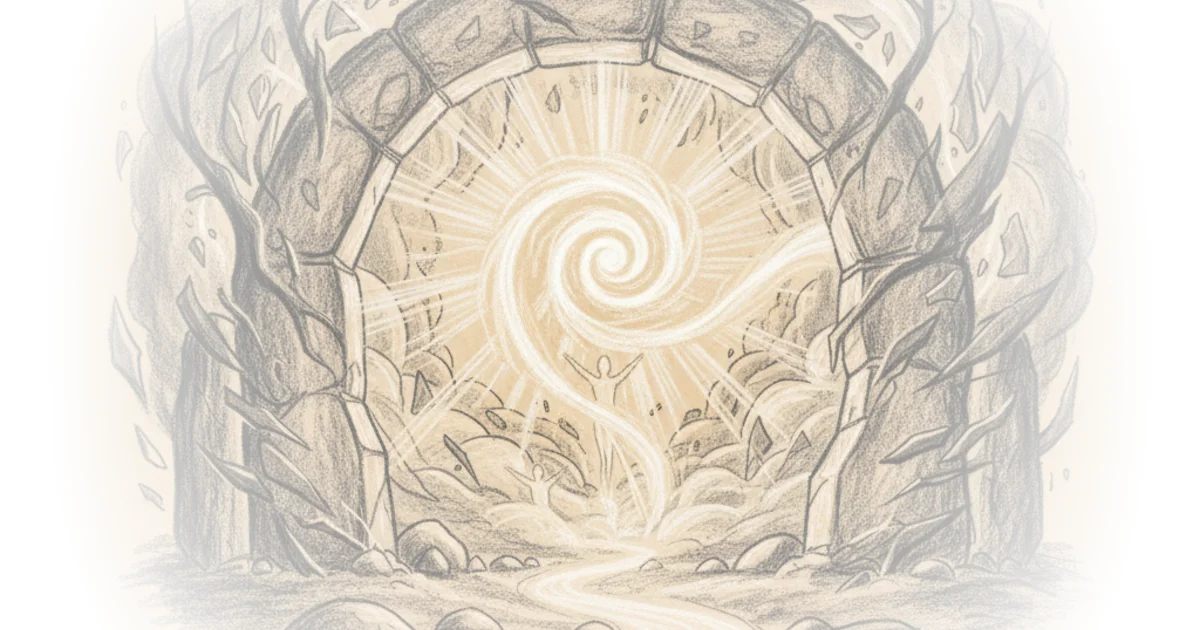
Kjellberg begins not with a tree or a carol, but with the Clava Cairns, a site where prehistoric builders aligned stone with the midwinter solstice to guarantee the sun's return. "The structures feel alien, almost as if they'd dropped from space," she writes, capturing the disorienting grandeur of these ancient tombs. She details how the cairns were not random piles of rock but carefully curated monuments: "Towards the southwest, they chose red and pink sandstone. In the light of the setting sun at midwinter, they appear to glow red, the color intensifying till the sun sinks and they grow dark." This observation reframes the solstice from a passive celestial event to an active, human-made spectacle of reassurance. The argument lands powerfully because it connects the abstract concept of "hope" to the physical labor of moving massive stones without machinery.
"It seems these seasonal events mattered back in the Bronze Age. They were reassurance, I suppose. With no other way of measuring time, those dramatic moments must have served to remind people of the change of seasons and the need to pay attention to the next phase of the year."
The piece draws a sharp line between this ancient continuity and the specific, fractured history of Christmas in Scotland. Kjellberg notes that for centuries, the holiday was not a time of joy but of legal prohibition. "In 1640, the Scottish Parliament passed a law to make the celebration of 'Yule vacations' actively illegal," she notes, pointing out that even baking the traditional Yule bread was a criminal act under the puritanical Kirk. This historical context is crucial; it explains why the modern Scottish celebration feels so distinct from its English or American counterparts. Critics might argue that focusing on the ban overlooks the underground persistence of the tradition, yet Kjellberg's point stands: the official suppression lasted four hundred years, fundamentally altering the cultural DNA of the season. The weight of this ban explains why Hogmanay, the New Year, became the true anchor of the Scottish calendar.
The Weight of Tradition
Kjellberg shifts from the macro-history of stone circles to the micro-history of her own childhood in the 1950s, a time when Christmas was still a minor, almost awkward affair. She recalls the specific texture of that era: "I remember my dad having to work on Christmas Day right into the early 1960s, though he usually got the afternoon off." The description of the gifts—"a selection box of sweets that invariably contained at least one disappointing item" and "insipid notelets so I could write a thank you for the gift itself"—paints a picture of a holiday stripped of commercial excess but heavy with ritual obligation. The core of her argument here is that the value of the season lay not in the presents, but in the shared, often difficult, waiting for the father to return home.
The narrative then pivots to the true heart of Scottish celebration: Hogmanay. Kjellberg describes the "First Foot" tradition, where the first person to cross the threshold after midnight brings luck, ideally a dark-haired man carrying coal and shortbread. "Tradition demanded they be dark and ideally handsome. Dark, allegedly because there was still a race memory of blond or red-haired Vikings, who definitely did not mean good luck," she explains. This detail adds a layer of historical depth, linking modern superstition to the violent Viking raids of centuries past. The author's recollection of being blamed for misfortune after first-footing a friend because she lacked the requisite dark hair serves as a humorous yet poignant reminder of how deeply these archaic beliefs are woven into family dynamics.
"Hogmanay remains the signature Scottish festival in the eyes of the outside world. But the traditional New Year celebration only exists nowadays in the black and white line drawings of 'The Broons'... For the rest of us, most of those customs have faded away."
Kjellberg's critique of the modern era is subtle but clear: the rituals that once bound communities together are eroding. She describes the chaotic energy of a traditional New Year's Eve, with "chaotic attempt at Scottish country dancing" and the "glacial silence that greeted an interloper's rendition" of a family favorite song. This contrast between the vibrant, communal past and the fading present is the piece's emotional engine. While some might argue that traditions naturally evolve and that modern celebrations are simply different rather than worse, Kjellberg's focus on the loss of specific, tactile rituals—the coal, the black bun, the specific songs—suggests a genuine cultural diminishment. The "black bun," described as "like a Garibaldi biscuit on steroids," becomes a symbol of a time when food was a serious, almost burdensome part of the ritual, rather than a casual snack.
Bottom Line
Kjellberg's most compelling achievement is linking the astronomical precision of the Clava Cairns to the intimate, often messy, family rituals of the 20th century, showing that the human drive to mark the turning of the year is unbroken even as the specific customs change. The piece's greatest vulnerability is its nostalgia, which occasionally glosses over the harshness of the very traditions it celebrates, such as the strict social policing of the First Foot. However, this memoir offers a vital reminder that our holidays are not just commercial events but the latest chapter in a long, desperate, and beautiful human attempt to find light in the winter dark.