Richard Hanania delivers a searing indictment of institutional decay, arguing that the appointment of Kash Patel as FBI director is not merely a political shuffle but the definitive symptom of a "kakistocracy"—a government run by the worst and least qualified. While other commentators focus on policy disputes, Hanania zeroes in on the erosion of professional norms, citing anonymous sources who describe a director whose personal conduct has become a national-security vulnerability.
The Erosion of Professional Norms
Hanania's central thesis rests on the stark contrast between past FBI leadership and the current reality. He posits that the institution's credibility relied on a specific type of elite: individuals who were "respected by their colleagues, followed the rules, and didn't hawk supplements on the side." The author argues that the previous standard required leaders to behave like "decent gentlemen" who avoided even the appearance of impropriety, such as James Comey refusing to play basketball with President Obama to prevent any perception of bias.
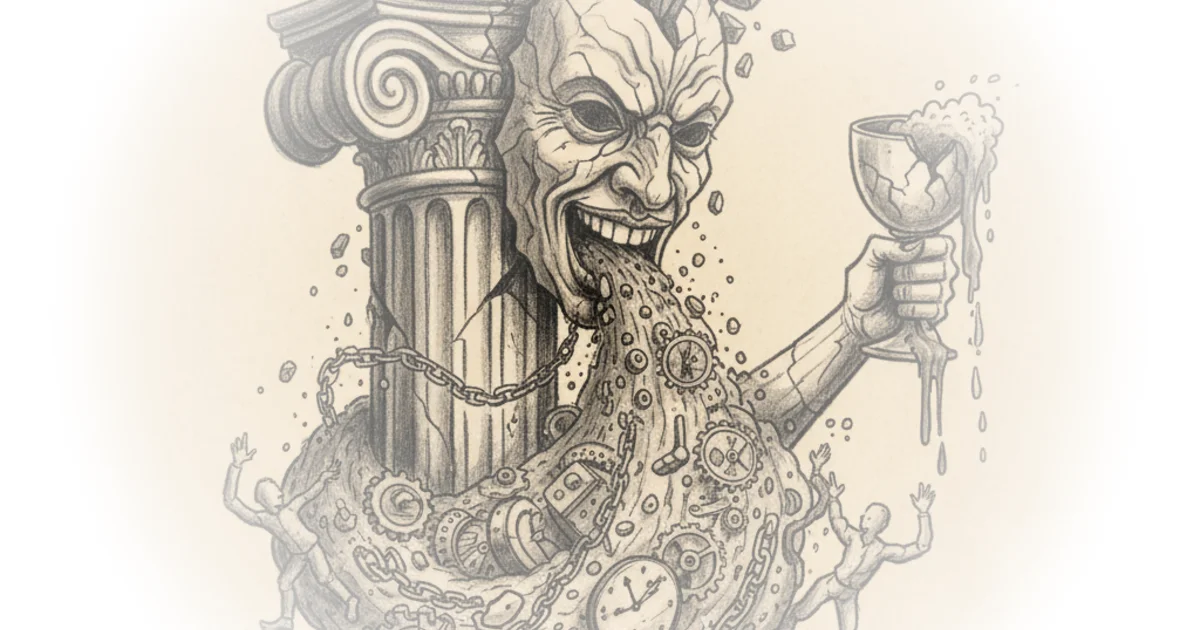
The piece details a litany of alleged failures under Patel, including reports that meetings were rescheduled due to "alcohol-fueled nights" and that the director is "erratic, suspicious of others, and prone to jumping to conclusions." Hanania writes, "Several officials told me that Patel's drinking has been a recurring source of concern across the government. They said that he is known to drink to the point of obvious intoxication." This evidence, drawn from over two dozen interviews, is used to illustrate a shift from institutional loyalty to personal dependency.
Critics might argue that relying on anonymous sources regarding personal habits can sometimes lack the rigor of documented evidence, yet Hanania's broader point about the perception of instability remains potent. When the head of the nation's primary law enforcement agency is perceived as unreliable, the trust required for the justice system to function begins to crack.
"Professionalized law enforcement is one of the things that most clearly separates societies that function well from those that don't."
Weaponizing the Justice System
The commentary takes a sharp turn when addressing Patel's legal tactics. Hanania notes that the director has made it "regular practice" to file lawsuits against media outlets like the New York Times and CNN in response to negative reporting. He argues that these actions are not about winning in court—since defamation standards are high—but about intimidation. "This has become regular practice for him," Hanania observes, noting that Patel has previously sued multiple major outlets with no success.
The author draws a historical parallel to the Francis Scott Key Bridge collapse, suggesting that just as structural integrity is essential for physical safety, professional integrity is essential for societal safety. When leaders view the justice system as a tool to "intimidate journalists," the separation between the state and the individual blurs. Hanania asserts that "law enforcement officials are the ones who, within certain bounds, decide who to target and which evidence to gather," making their impartiality the bedrock of the system.
The argument suggests that the administration's approach represents a fundamental break from the past, where even controversial figures like Bill Clinton were investigated with a degree of procedural restraint. "Before Trump's second term, it was widely agreed that you wanted individuals at the top who went to good schools, were respected by their colleagues, followed the rules," Hanania writes. The current dynamic, he contends, is one where officials are hired and fired based on their willingness to "zealously prosecute his enemies."
The Populist Status Game
Hanania frames this decline not as an ideological shift but as a change in the "status game" that leaders play. He argues that under populist movements, success is no longer determined by the approval of "smart and decent people" or professional peers, but by appealing to a base that may not prioritize ethical behavior. "You will live your life in different ways depending on whether you want to be thought well of by newspaper readers and professionals in your field, or listeners of Benny Johnson's podcast and nursing home patients with borderline dementia," he states.
This section of the commentary is particularly biting in its assessment of the incentives driving modern politics. Hanania suggests that the "MAGA movement" creates an environment where figures like Patel thrive because they are "brown-nosing strivers who have no talents outside of sucking up." He contrasts this with the tenure of Christopher Wray, who was widely respected and confirmed with broad bipartisan support, yet still resigned rather than comply with demands to fire political opponents.
"Patel is playing a different status game than his predecessors."
The author acknowledges that political bias has always existed, but argues that the current situation is distinct because it lacks the "critical mass" of responsible elites to check the pressures from below. He notes that while the left has historically misrepresented law enforcement data, the right has now "become a cult of personality centered around a conman," leading to a justification for abandoning old norms.
Bottom Line
Hanania's most compelling contribution is his framing of Patel not as an anomaly, but as the inevitable product of a system that rewards grievance over competence. The piece's greatest strength lies in its detailed cataloging of how specific professional norms—tenure independence, sobriety, and non-partisanship—have been systematically dismantled. However, the argument's reliance on a binary view of "professional" versus "populist" leadership risks oversimplifying the complex pressures facing modern institutions. Ultimately, the reader is left with a stark warning: the decline of American law enforcement is not a future threat, but a present reality visible in the daily conduct of its leadership.