Musa al-Gharbi delivers a stinging indictment of the very demographic that claims to hold the keys to social justice: the professional class itself. While the prevailing narrative blames political obstruction from the right for America's deepening crises, al-Gharbi argues that the Democratic Party's dominance in symbolic hubs like New York has not only failed to solve inequality but actively exacerbated it. This is a provocative challenge to the assumption that liberal governance is the antidote to social ills, forcing readers to confront the possibility that the problem lies not in who is in power, but in how power is wielded by those who claim to be its moral arbiters.
The Myth of the Benevolent Elite
Al-Gharbi begins by dismantling the self-image of "symbolic capitalists"—the highly educated, culturally influential professionals who dominate media, academia, and the non-profit sector. He notes that this group defines itself through altruism, believing their wealth and autonomy are tools to serve the common good. Yet, the reality on the ground tells a different story. "Over the last 50 years, there were significant changes to the global socioeconomic order that radically enhanced the affluence and influence of symbolic capitalists relative to everyone else in society," al-Gharbi writes, "However, the results from this transition are very far from what we promised."
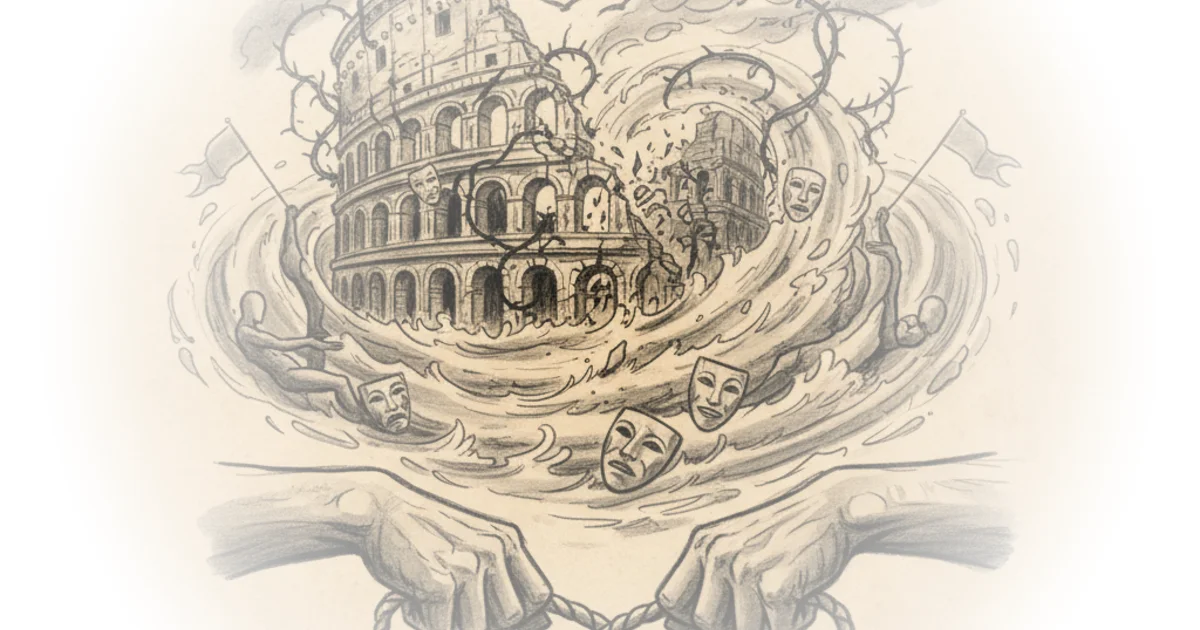
The author's central puzzle is stark: if this elite group truly cared about the marginalized, why have inequalities grown and social tensions festered under their watch? He rejects the convenient scapegoats often cited by his peers. "We have stories we like to tell ourselves about why this is the case. Ultimately, these stories tend to boil down to two villains: 'the millionaires and the billionaires' and 'those damn Republicans,'" he observes. This framing is effective because it forces a moment of uncomfortable introspection rather than offering a familiar enemy to rally against.
The New York Paradox
To prove his point, al-Gharbi turns to New York, a state and city that serves as the ultimate test case for liberal governance. The data he presents is damning. Despite being a stronghold of the Democratic Party, with a mayor, governor, and legislature all under Democratic control, New York suffers from extreme poverty and segregation. "New York has the highest levels of within-state inequality in the country," he notes, pointing out that the state ranks 44th out of 50 for social mobility. In New York City, where one in 24 residents is a millionaire, nearly one in five lives below the poverty line.
The argument here is that the failure is not a lack of political power, but a lack of political will. "The problems that plague New York are clearly not a product of Democrats lacking sufficient political power to address social ills," al-Gharbi asserts. "What they lack is the political will." He argues that even if the opposition were removed entirely, the structural outcomes would remain unchanged. "If aliens came down to earth and abducted Donald Trump and everyone who ever voted for him... almost nothing would change in any of these states and cities with respect to the dynamics described above."
Critics might argue that this analysis ignores the sheer difficulty of governing in a global financial capital where market forces often dwarf local policy, or that the Democratic Party has been constrained by fiscal conservatism and business interests it cannot easily defy. However, al-Gharbi's insistence that the symbolic elite has the capacity to redirect resources but chooses not to remains a powerful counter-narrative to the usual blame game.
If I'm being fully honest, another part of my reason for abstaining was the growing realization that, when the chips are down, and the rubber meets the road, the Democratic Party is basically useless.
The War on Higher Ed
The commentary shifts to the current conflict between the White House and elite universities, a topic where al-Gharbi refuses to take the standard partisan side. He acknowledges that higher education institutions suffer from real problems, including ideological homogeneity and ineffective diversity initiatives. "Universities are not hotbeds of antisemitism," he writes, citing evidence that college attendance actually reduces antisemitic beliefs. "In fact, faculty hiring is demonstrably more competitive, transparent, open, standardized, and metrics-focused than it's ever been."
However, he argues that the administration's response is not a solution but a self-defeating strategy. By comparing the administration's approach to the "debaathification" of Iraq, al-Gharbi suggests that heavy-handed federal intervention will only deepen the insurgency within academia. "Much like the war in Iraq, Trump's pretext for his war on higher ed is largely misleading," he states. The administration's demands, such as placing specific departments in academic receivership or altering admissions based on nationality, are described as illiberal and counterproductive.
The case of Columbia University serves as the primary example of this dynamic. The administration threatened to withhold $400 million in federal funds, a move that forced the university to capitulate to demands that included granting campus police expanded powers to detain individuals without due process. Al-Gharbi highlights the specific case of Mahmoud Khalil, a lawful permanent resident targeted for deportation based on political beliefs despite no evidence of criminal activity. "Yet, Columbia University offered no defense of their alumnus, and no objections when he was arrested on Columbia property, apparently without a warrant," al-Gharbi notes. This surrender, he argues, sets a dangerous precedent for the entire sector.
Critics of this view might contend that the administration is simply enforcing federal laws regarding foreign nationals and campus safety that universities have long ignored, and that the threat of funding cuts is a legitimate tool for accountability. Yet, al-Gharbi's point stands: the university's decision to comply without resistance suggests a failure of institutional courage that goes beyond the political pressure.
Bottom Line
Al-Gharbi's most compelling contribution is his refusal to let the professional class off the hook for the failures of liberal governance, forcing a reckoning with the gap between their stated values and their actual impact. While his critique of the administration's tactics is sharp, his broader argument that the Democratic Party is "basically useless" risks oversimplifying the complex structural barriers that prevent progressive change. The reader should watch for whether this internal critique of the elite can translate into a new political strategy, or if it will remain a lament from the sidelines.