Ryan Grim & Jeremy Scahill deliver a dispatch that refuses to let the "ceasefire" narrative obscure the grinding reality on the ground. While official statements speak of de-escalation, the authors present evidence of a "catastrophic reality" where humanitarian access is weaponized and the UN's protective status is systematically dismantled. This is not a summary of a news cycle; it is a forensic accounting of how diplomatic language is being used to mask the continuation of mass suffering.
The Myth of the Ceasefire
The core of the argument rests on a devastating contradiction: a declared pause in hostilities that functions as a "quiet continuation of genocide." Grim & Scahill anchor this claim in the testimony of Eyad Amawi, a humanitarian aid coordinator in central Gaza, who tells them that the current situation masks a reality where "90% of Gaza is crushed" and eastern territories have been converted into buffer zones. The authors use this direct testimony to dismantle the official optimism, noting that while consumer goods are permitted, the blockade on heavy equipment and fuel ensures that no infrastructure can be rebuilt.
"Humanitarian aid coordinator laments that ceasefire is largely symbolic... His comments to Drop Site are available here."
The reporting highlights a specific, chilling mechanism of this strategy: the restriction of medical supplies. Grim & Scahill detail how Israel is allowing only five trucks of medical supplies weekly, a number so low that "more than half of essential medicines" remain unavailable. They quote Dr. Munir al-Bursh, who notes that lifesaving items like antibiotics and IV solutions are barred, leaving patients with "almost no chance of receiving proper care." This framing is effective because it shifts the focus from the abstract concept of a ceasefire to the tangible, daily death of the sick and injured. Critics might argue that security concerns justify supply restrictions, yet the authors counter this by showing that the ban specifically targets heavy machinery and medical essentials while allowing non-essential consumer goods through, suggesting a policy of attrition rather than security.
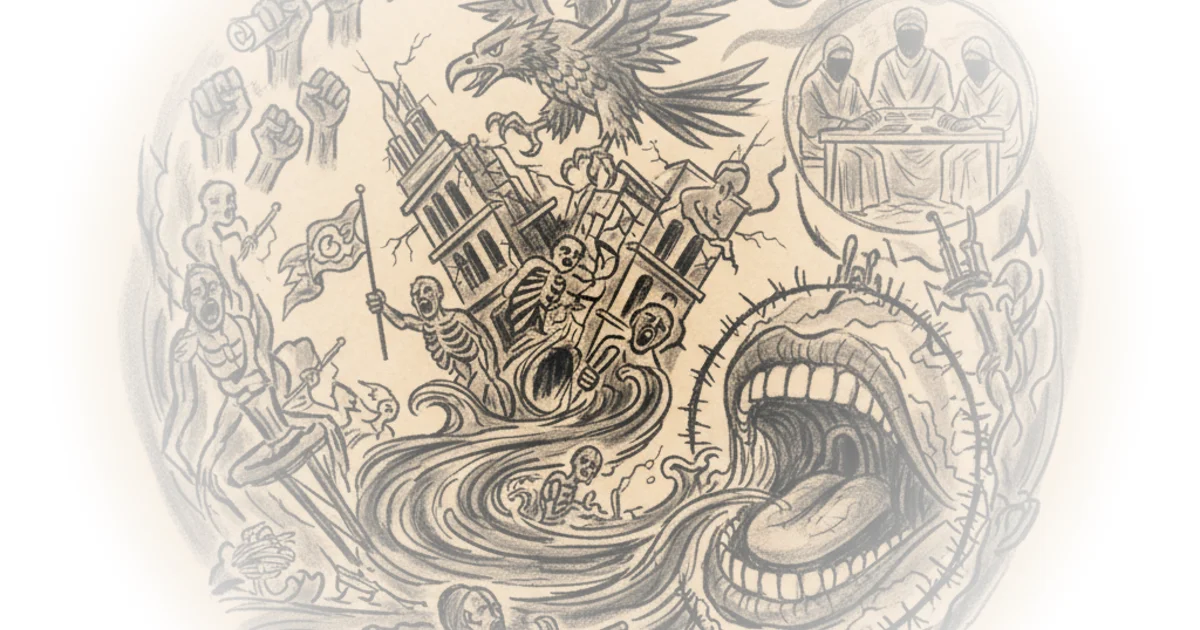
The human cost is not just in the statistics of the dead, but in the psychological toll on the living. The authors cite the UN Population Fund's warning that Gaza remains "suspended between survival and uncertainty," with a specific focus on the deepening trauma of gender-based violence. This is a crucial addition, as it moves the narrative beyond casualty counts to the long-term societal collapse that the current "pause" is failing to prevent.
Diplomatic Theater and the Erosion of International Norms
The coverage shifts to the diplomatic arena in Doha, where Grim & Scahill expose the fragility of the international consensus. They report on Syrian President Ahmed al-Sharaa's confrontation with Christian Amanpour, where he challenged the label of "terrorist" by asking if it should not equally apply to those who kill civilians in Gaza, Iraq, and Afghanistan. The authors use this moment to illustrate the shifting global perception of state versus non-state violence.
"He argued his point by saying that nearly 25 years after the U.S. war in Afghanistan, people 'are aware of who the real terrorists are.'"
The article meticulously documents the isolation of Israel within the diplomatic sphere, noting that Turkey, Egypt, and Spain are blaming it for "repeated ceasefire violations." Turkish Foreign Minister Hakan Fidan is quoted warning that the plan could collapse without "substantial" intervention, while Egyptian Foreign Minister Badr Abdelatty states that Egypt will "spare no effort" to ensure Palestinians can build their own state. Grim & Scahill highlight a stark contrast in the room: while most nations debate the logistics of an International Stabilization Force, Saudi Arabia stands as the "singular voice for disarmament," insisting on a strict interpretation of the UN plan.
"Qatar's Foreign Minister Mohammed bin Abdulrahman Al-Thani said... 'We will not rebuild what Israel destroyed.'"
This refusal by Qatar to fund reconstruction adds a layer of geopolitical realism to the piece. It underscores a growing consensus among regional powers that the destruction was intentional and that the burden of repair should not fall on those who did not cause it. The authors also touch on the secret meeting between the U.S., Israel, and Qatar, suggesting that the "next stage of the ceasefire" is being negotiated in the shadows, far from the public scrutiny of the Doha Forum. This secrecy, paired with the White House's push for economic summits contingent on gas deals, paints a picture of diplomacy driven by energy interests rather than human rights.
Institutional Assault and Domestic Repression
The piece broadens its scope to include the assault on international institutions and domestic civil liberties. Grim & Scahill detail the raid on the UNRWA compound in Jerusalem, where Israeli police replaced the UN flag with the Israeli flag under the guise of a "debt-collection procedure." This act is framed not as a bureaucratic dispute but as a direct violation of "UNRWA's privileges and immunities." The authors remind the reader that the U.S., once the largest donor, cut funding in early 2024, and Israel formally banned the agency in January, setting the stage for this escalation.
"The unauthorized and forceful entry by Israeli security forces is an unacceptable violation of UNRWA's privileges and immunities as a U.N. agency."
Simultaneously, the commentary turns to the United States, where the authors report on a Justice Department memo ordering the FBI to compile a list of American "extremists." This domestic development is juxtaposed with the international events, suggesting a coordinated global effort to suppress dissent and consolidate power. The report also notes the physical violence against elected officials, such as Rep. Adelita Grijalva being pepper-sprayed by ICE, and the expansion of Israeli "hasbara" (propaganda) funding to $750 million.
"Smotrich sets Hasbara funding at $750 million... marking a major expansion of state-backed propaganda as Israel faces intensifying global scrutiny."
This section of the argument is particularly potent because it connects the dots between the militarization of conflict abroad and the militarization of discourse at home. The authors suggest that the same logic used to justify the blockade of Gaza is being applied to silence critics within the U.S. and to fund propaganda campaigns that shape the narrative of the war.
"Gaza has revealed an 'apocalyptic' collapse of moral accountability, exposing how international safeguards have been hollowed out by the power of major states, their impunity, and Western hypocrisy."
Bottom Line
Grim & Scahill's strongest move is their refusal to accept the "ceasefire" as a resolution, instead presenting it as a tactical pause that facilitates a "quiet continuation" of destruction. Their biggest vulnerability lies in the sheer density of global events covered in a single dispatch, which risks overwhelming the reader with the scale of the crisis. However, by anchoring the narrative in the specific, human experiences of aid workers and medical officials, they ensure that the political maneuvering never obscures the human cost. The reader should watch for the next phase of the "International Stabilization Force" and whether the U.S. administration's push for economic normalization can withstand the growing diplomatic isolation of its ally.