John Pistelli delivers a startlingly intimate autopsy of the film industry, arguing that Chloé Zhao's Hamnet does not merely signal a decline in box office revenue, but represents the final, tearful collapse of cinema as a distinct cultural faith. While the industry frets over streaming deals and AI, Pistelli suggests the real death is spiritual: the loss of "cinephilia," that specific, religious devotion to the movie theater as a sacred space separate from the mundane world.
The Death of the Cathedral
Pistelli anchors his critique in a historical parallel that immediately reframes the current anxiety. He notes that the film's finale, where the audience and actors merge in shared grief, "recalls in an elegiac key cinema's fabled birth in the fin-de-siècle audience's panicked excitement at a train rushing toward the screen." This is a brilliant, if melancholy, inversion: the medium that began with a collective gasp of terror at a moving image ends with a collective sob of therapeutic release. The author argues that we are witnessing the end of the "heterocosmic separation" that once defined the moviegoing experience, a separation that Susan Sontag famously mourned decades ago.
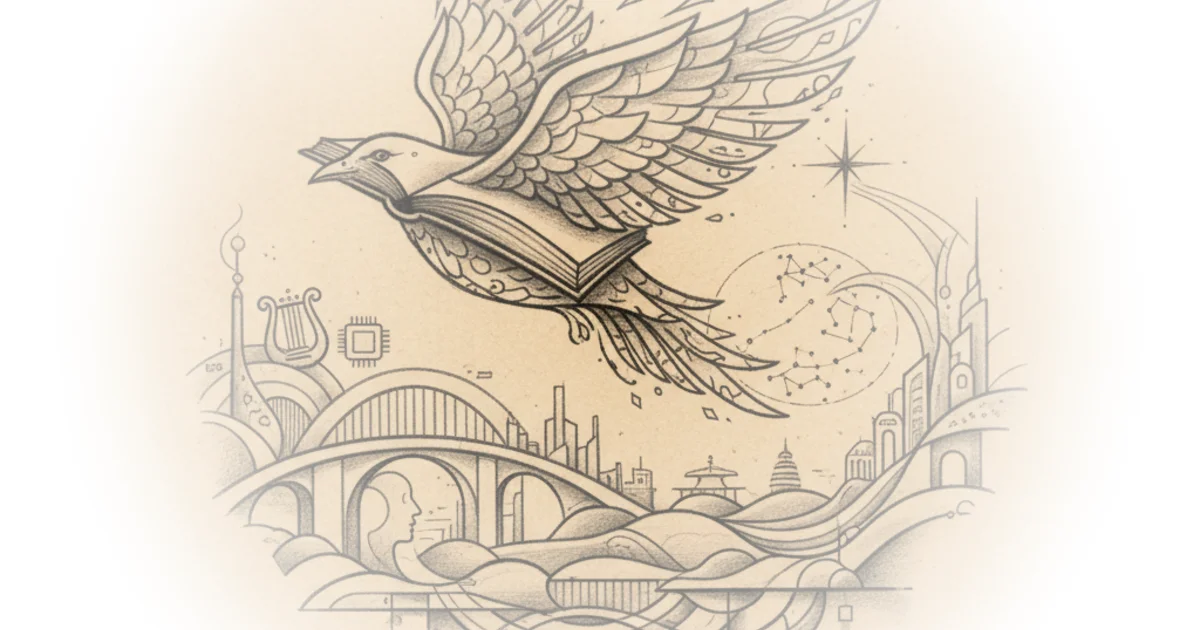
The core of Pistelli's argument is that the medium has been cannibalized by the very technology meant to save it. He writes, "Perhaps it is not cinema that has ended but only cinephilia—the name of the very specific kind of love that cinema inspired." This distinction is crucial; it suggests that while we still consume moving images, the ritualistic, almost religious intensity of the cinema has evaporated, replaced by the "feed and the scroll."
"Cinema was both the book of art and the book of life."
Pistelli contends that the internet has not killed art but rather demoted it, turning once-dominant forms like the novel and film into "minor niches" within a new, all-encompassing "Gesamtkunstwerk" of the digital feed. Critics might argue that this view is overly nostalgic, ignoring how digital platforms have democratized access to film criticism and allowed niche genres to find global audiences. However, Pistelli's point about the loss of attention as a sacred commodity remains potent. He observes that "the feed and the scroll, not the novel or the film, remains the central artwork of our time," a cathedral where we are visible only to the "eye of God" rather than to each other.
The Therapeutic Trap
The commentary shifts sharply to a critique of Hamnet itself, which Pistelli views as a symptom of this broader cultural malaise. He finds the film's reception baffling, particularly its "vapid portrait of Shakespeare" and its "risible manhandling of Hamlet." For Pistelli, the film reduces the Bard to a generic vessel for modern emotional processing, stripping away the complexity of the original works. He argues that the film demands we view art not as a challenge or a mystery, but as a tool for healing trauma.
"The desire to be labeled and so reduced... is the true spiritual sickness of our time."
Pistelli draws a sharp line between the creative act of "poiesis" (bringing forth) and the clinical act of "diagnosis" (knowing apart). He suggests that the film's insistence on "keeping your heart open" is a degenerated copy of genuine artistic exploration, one that prioritizes emotional validation over the difficult, often ambiguous work of art. He notes that "psychology is less art's 'near enemy' than... its murderously usurping offspring," a provocative claim that frames the modern obsession with mental health narratives as a form of cultural regicide.
This framing is powerful, yet it risks dismissing the genuine value of art as a vehicle for empathy and processing grief. Not every engagement with trauma requires a "diagnosis," and many audiences find profound meaning in the therapeutic resonance of a story. Pistelli acknowledges this tension, admitting that if the film had pursued a more surreal or elemental path—referencing the "New Romanticism" of a director like Ken Russell—it might have succeeded. Instead, he feels it settled for being an "Oscar-season tearjerker."
"Poetry's will to create new wholes and syntheses... might be the opposite of diagnosis's cutting abstraction."
The author contrasts Hamnet with Lynne Ramsay's Die My Love, noting that both films feature a "woman in/as forest" but offer different resolutions. While Hamnet seeks a "rapprochement" through shared grief, Die My Love offers a "bonkers, crazy love story" that refuses to stigmatize the male figure. Pistelli suggests that Hamnet relies on a "complementarian" view of gender, celebrating a "feminine consciousness" without challenging the underlying structures, a stance he finds more aligned with a conservative era than the progressive one the director intends.
The Final Frame
Pistelli concludes by questioning whether we are ready to accept the end of cinema as a distinct, sacred entity. He posits that the "leveling and dispersion of every artform onscreen" means that no single medium can hold the centrality once enjoyed by the play, the novel, or the film. The "apostles" of cinema are gone, replaced by a fragmented audience scrolling through infinite content.
"The love that cinema inspired, however, was special. It was born of the conviction that cinema was an art unlike any other."
The argument lands with a heavy weight because it connects the commercial failure of theaters to a deeper cultural shift in how we relate to art. It is not just that people are watching movies at home; it is that the experience of watching a movie has lost its transcendent quality. As Pistelli puts it, "Cinema had apostles. (It was like religion.)" The question he leaves us with is whether the digital age can ever recreate that sense of the sacred, or if we are now permanently exiled to the "ever-emptier church" of the algorithm.
Bottom Line
Pistelli's most compelling contribution is his reframing of the "death of cinema" not as a business failure, but as the extinction of a specific form of collective worship. While his critique of Hamnet as a therapeutic reduction may feel harsh to those seeking emotional resonance, his broader diagnosis of our "feed-obsessed" culture offers a necessary, if uncomfortable, mirror. The strongest part of the argument is the historical linkage between the panic of the first film audiences and the grief of the last, suggesting we have come full circle; the biggest vulnerability is the potential dismissal of how modern audiences might find new, valid forms of connection within the very digital structures Pistelli critiques.