Rohin Francis turns a bizarre medical trend into a searing indictment of modern dating culture and the commodification of the human body. While the headline promises a look at men breaking their own legs, the piece delivers a far more disturbing diagnosis: a society where height has become a non-negotiable currency for romantic and professional survival. This is not just a story about orthopedic surgery; it is an exploration of how digital dating algorithms and cultural biases are driving men to endure brutal, life-altering pain for a statistical edge in the mating market.
The Economics of Broken Bones
Francis begins by dismantling the notion that this is a fringe procedure for the severely disabled. He notes that what was once a niche correction for dwarfism has exploded into a cosmetic option for average-height men. "Recently a friend sent me an article about short men who are going to Great Lengths to be tall," Francis writes, setting the stage for a deeper inquiry into why a 5'8" man would voluntarily undergo a process that involves "deliberately breaking their femur... and over the course of many months are slowly and painfully elongating their legs." The author highlights the sheer physical toll, noting that patients must endure a recovery period where they have to "relearn how to walk" and often quit their jobs for a year.
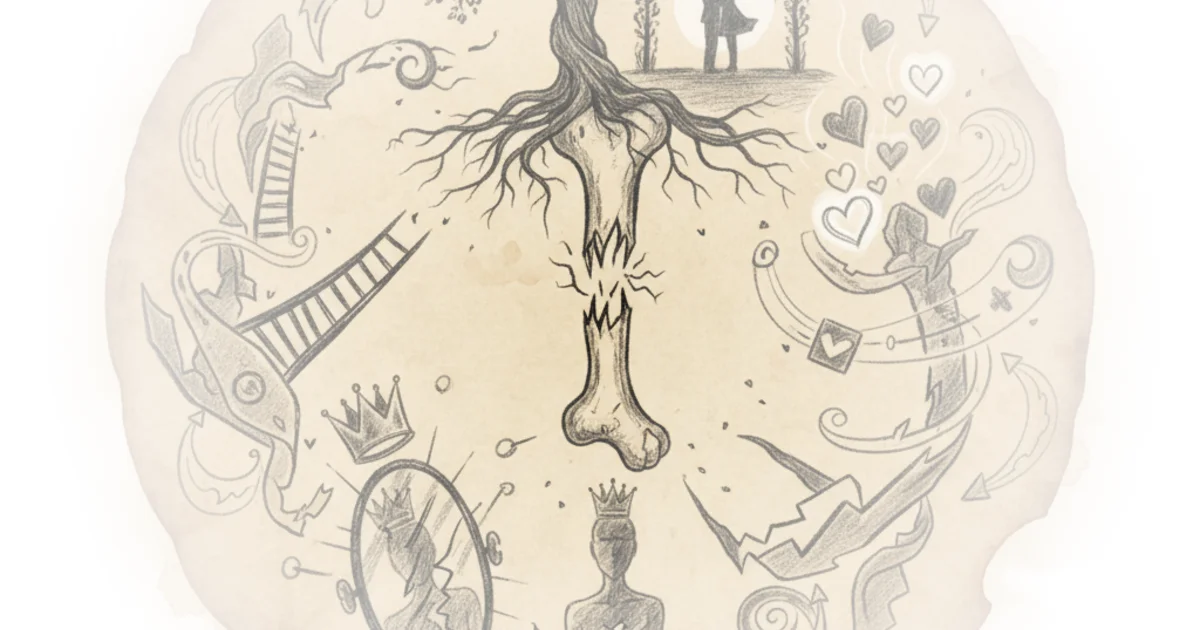
The financial barrier is equally staggering, with procedures in the US costing over $100,000, yet the demand persists. Francis points out the global nature of this desperation, observing that "many of the major medical centers in the US Now operate" this procedure, while medical tourism to countries like India and Turkey has surged. The author's framing is particularly effective here: he treats the surgery not as a medical marvel, but as a symptom of a societal disease. "I've never felt any personal connection to all the examples of body modification that we normally see in the media like nose jobs or butt lifts," Francis admits, before pivoting to the unique cruelty of this specific operation. "This is not a quick lip filler or botox injection this is brutal painful surgery with an intense 6mon or more recovery period."
This isn't a medical procedure; it's a desperate bid to buy entry into a club that was never designed for you.
Critics might argue that Francis underestimates the agency of these men, framing them solely as victims of "heightism" rather than individuals making a calculated risk-reward assessment. However, the sheer extremity of the cost—both financial and physical—suggests that the pressure is indeed systemic rather than purely personal.
The Algorithm of Rejection
The commentary shifts to the root cause: the modern dating landscape. Francis argues that while society has made strides in addressing discrimination based on race or gender, "heightism remains a form of discrimination hiding in plain sight." He illustrates this by contrasting the social taboo against explicit racial filters in dating profiles with the routine acceptance of height requirements. "We would bulk at a dating profile that said no black girls or no fat guys but it's quite routine to see don't message me if you are under 6 foot," he writes.
This section is the piece's emotional core. Francis connects the surgical trend to the cold calculus of dating apps, where men feel reduced to a set of metrics. He cites the "666 rule"—the expectation to be 6 feet tall, earn 6 figures, and have 6 inches of something else—as a manifestation of this pressure. "More bone plates more dates am I right," Francis quips, a dark joke that underscores the tragedy of men viewing their skeletons as interchangeable parts. The author notes that in countries with skewed sex ratios like China and India, the pressure is even more intense, leading to a "huge popularity for leg lengthening surgery" where profiles are stripped of personality to focus solely on "biodata profession salary cast height."
Francis also touches on the professional implications, noting that "taller people [are] seen as being more capable of leadership roles and hence being promoted and paid more." He acknowledges that while leaders like Bezos and Zuckerberg are of average height, the cultural narrative still favors the tall. "When a short guy does make it to the highest office in the land such as British prime minister Rishi sunuk there are always Snipes that mention his size," he observes, highlighting how even the most powerful are not immune to this bias.
The Bottom Line
Francis's strongest contribution is his refusal to treat this as a simple medical curiosity. By weaving together personal anecdotes, historical context, and hard data on dating trends, he exposes the brutal logic behind a procedure that seems irrational on the surface. The argument holds up because it moves beyond the shock value of the surgery to the quiet desperation that drives it. The piece's biggest vulnerability is its reliance on the assumption that height is the primary driver of male loneliness, potentially overlooking other complex factors in the dating crisis. Yet, as Francis concludes, the willingness of men to endure "daily Physiotherapy and having to relearn how to walk" is a damning verdict on a culture that equates stature with worth.
Bottom Line
Rohin Francis successfully reframes a grotesque medical trend as a logical, albeit tragic, response to a discriminatory dating economy. The piece's greatest strength is its ability to humanize the subjects while condemning the systems that push them to the brink; its only weakness is the difficulty of solving a cultural bias that is as invisible as it is pervasive. Readers should watch for how this trend evolves as dating algorithms become even more rigid, potentially turning body modification from a niche option into a standard requirement for social participation.