In an era where historical narratives are often flattened by algorithms, BobbyBroccoli delivers a masterclass in digital detective work, tracing a bizarre rumor about a biker gang's attempt to purchase a nuclear bunker from a one-paragraph newspaper clipping to a verified family history. The piece doesn't just recount a strange Cold War anecdote; it exposes how institutional panic, media sensationalism, and the fog of time can distort the truth about a facility designed to survive the end of the world.
The Anatomy of a Rumor
BobbyBroccoli begins by grounding the reader in the physical reality of the Diefenbunker in Carp, Ontario, before pivoting to the central mystery: the claim that a criminal organization once tried to buy a decommissioned nuclear shelter. "My dad told me that very strange rumor and it's so absurd and specific that it begs the question where did it come from," BobbyBroccoli writes, immediately establishing the stakes of the investigation. The author's approach is methodical, treating the rumor not as a joke but as a historical puzzle requiring primary source verification.
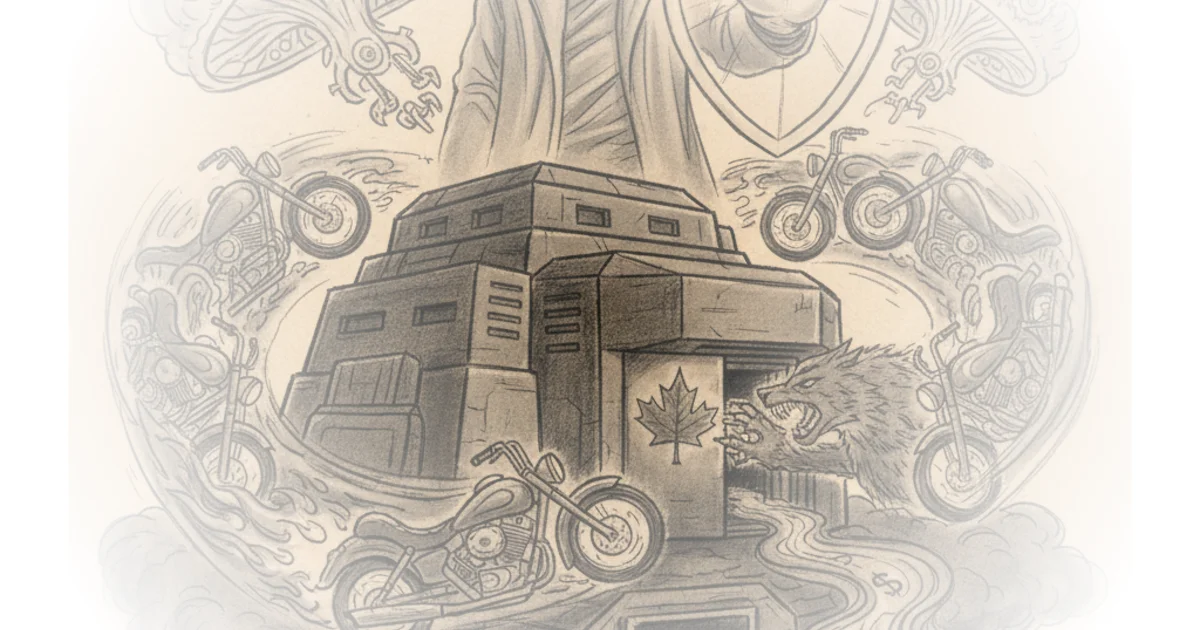
The investigation quickly hits a wall of conflicting data. A 2001 article from The Globe and Mail suggests the facility was in Penhold, Alberta, and was demolished because a "biker gang, a racist group and a suspected car theft ring" wanted it. BobbyBroccoli notes the absurdity of the location error and the escalating nature of the criminal groups involved. "I'm beginning to have some doubts," the author admits, highlighting a critical flaw in the initial reporting: the conflation of multiple facilities and the potential for a game of "broken telephone" to inflate the threat level.
"The fact that there were multiple defense bunkers makes a lot of sense. I don't know if you've ever looked at a map but Canada is geographically quite a large country."
This observation is crucial. By clarifying that there were nearly 50 such bunkers across the country, BobbyBroccoli reframes the narrative from a singular anomaly to a systemic issue of Cold War infrastructure management. The author correctly identifies that the Penhold site, not the Ottawa museum, was the subject of the sale rumors. This distinction is the key that unlocks the rest of the story, separating the well-preserved museum from the site that was actually torn down.
The Paper Trail and the Price Tag
As BobbyBroccoli digs deeper into Wikipedia entries and United Press International archives, the timeline begins to coalesce. The author uncovers a fascinating sequence of events: the federal government sold the Penhold bunker to two local businessmen in 1995, only to repurchase it in 2001 after rumors of a sale to the Hells Angels surfaced. "The feds had apparently sold the bunker to two Red Deer businessmen in 1995 for a total of four hundred and seventy two thousand dollars," BobbyBroccoli reports, contrasting this with the government's eventual decision to spend "nearly twice what it was sold for" to demolish it.
The financial logic here is striking. The government paid $1.25 million to buy back a property it had sold for $472,000, then spent another $800,000 to destroy it. BobbyBroccoli points out the sheer absurdity of this expenditure, noting that the Hells Angels reportedly offered $1.3 million, a figure that would have covered the government's costs and then some. "Curious what the Hells Angels offered 1.3 million," the author writes, underscoring the irrationality of the state's reaction to the rumor.
Critics might note that the government's decision to demolish the site rather than repurpose it reflects a legitimate, if expensive, national security protocol regarding sensitive infrastructure. However, BobbyBroccoli effectively argues that the panic was driven more by the perception of a threat than a verified one, as the original owners were never actually proven to have negotiated a deal with the gang.
The Human Element
The investigation reaches its climax not through a government database, but through a YouTube comment section. BobbyBroccoli describes the moment of discovery: "My eyes nearly fell out of their sockets my grandpa owned both bunkers." This serendipitous find leads to an interview with the grandson of Harvey Workkenton, one of the original buyers. The personal testimony validates the rumors while adding a layer of human complexity often missing from institutional histories.
Harvey Workkenton confirmed that the Hells Angels did express interest but that he would "never actually sell it to them for obvious reasons." BobbyBroccoli also highlights a bizarre subplot involving Lucasfilm, who allegedly approached the owners to use the bunker as a set for The Phantom Menace, only for the deal to fall through over compensation issues. "Now feel free to take this part with a grain of salt obviously it undoubtedly feels a little too good to be true," BobbyBroccoli cautions, maintaining a healthy skepticism even in the face of a happy ending.
"This has gone from rumor to i would argue verified fact the hell's angels really did try to buy a nuclear bunker for 1.3 million dollars."
This conclusion is the piece's strongest asset. By moving from a one-paragraph news blurb to a verified family account, BobbyBroccoli transforms a piece of local gossip into a documented historical event. The author's willingness to admit the uncertainty of the Lucasfilm story while standing firm on the Hells Angels inquiry demonstrates a nuanced understanding of historical evidence.
Bottom Line
BobbyBroccoli's investigation is a triumph of citizen journalism, proving that even the most outlandish rumors can have a kernel of truth buried under layers of bureaucratic confusion and media exaggeration. The piece's greatest strength is its refusal to accept the official narrative at face value, instead piecing together a timeline that reveals the government's expensive overreaction to a potential threat that may never have materialized. The biggest vulnerability remains the lack of concrete documentation regarding the specific negotiations between the owners and the gang, leaving a small gap between "expressed interest" and a formal offer, but the weight of the evidence is undeniable.