This week in Moldova offers a masterclass in how fiscal urgency can collide with democratic process, revealing a government struggling to balance international obligations against domestic reality. David Smith doesn't just report on a stalled tax reform; he exposes the fragile mechanics of a state trying to modernize while under siege from hybrid warfare and internal scandal. For the busy observer, this is not merely about VAT rates or gift taxes—it is a stress test for Moldova's path toward European Union membership in 2030, where every policy misstep risks fueling the very disinformation campaigns that threaten its sovereignty.
The Tax Reform Collapse
Smith begins by tracking the rapid disintegration of the Ministry of Finance's overhaul proposal, noting how Minister Andrian Gavriliță found himself in a "fighting retreat" as pressure mounted from all sides. The author highlights a critical moment when President Maia Sandu intervened, calling for a pause to ensure the reform was not rushed. Smith quotes her directly: "The tax reform must be done, but I think the Government should not rush. It must take a break, analyze the comments very well." This intervention underscores a growing tension between the executive branch's desire for swift fiscal stability and the public's fear of economic shock.
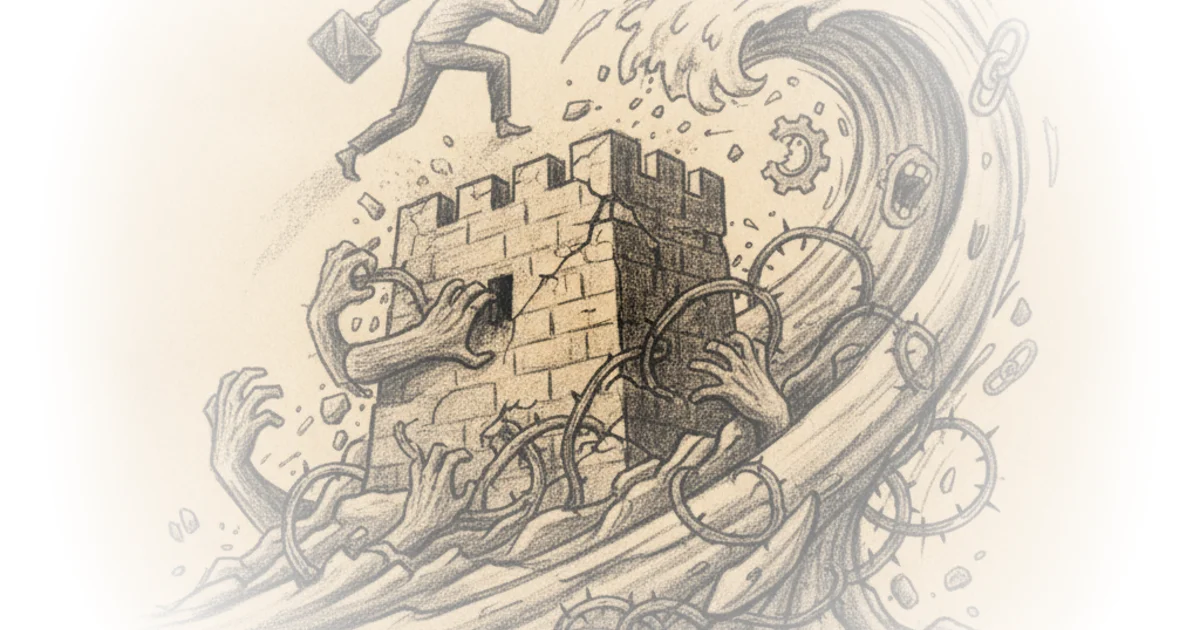
The backlash was immediate and multifaceted. Smith details how opposition parties mobilized roughly 200 protesters, focusing their anger on proposed energy tax hikes. Yet, the most damning revelation in Smith's coverage is not the protest itself, but the admission that the reform was rolled out without basic inter-ministerial coordination. When pressed on why the Ministry of Health was excluded despite warnings that "This reform will destroy the healthcare system," Gavriliță admitted there simply "was no time."
Smith argues that this lack of consultation points to a deeper structural issue: the rush was driven by external pressure from the International Monetary Fund (IMF) to reduce the budget deficit. The Minister conceded, "The reform itself is not imposed, but the need to reduce the budget deficit and stabilize the state's financial degeneration is a condition [of the IMF]." This admission reframes the narrative from one of domestic policy failure to one of constrained sovereignty, where international lenders dictate the pace of governance.
"This huge reform was rolled out without serious consultation with other ministries... Where does the reform stand? As of today, here is what we know about the planned changes."
The author meticulously lists the retreat: plans to tax wedding gifts are dead; capital gains taxes on homes are delayed until 2028; and wage increases for public servants may now be frozen. Smith notes that even the VAT hike on energy has been pushed back, though not canceled. Critics might argue that Smith is too sympathetic to the government's position, suggesting that the "pause" is merely a political maneuver rather than a genuine re-evaluation. However, the sheer number of abandoned provisions suggests a policy framework that was indeed too fragile to survive public scrutiny.
The MoldATSA Scandal and Accountability
Shifting gears, Smith turns his attention to the unfolding MoldATSA scandal, a corruption case involving the state-owned transport agency. He highlights a rare moment of accountability in Moldovan politics: four resignations following a media investigation. Smith cites journalist Mariana Rata, who captured the significance of this event perfectly: "Four resignations!!! I can't remember a single time in the history of the Republic of Moldova when a media investigation has led to four resignations."
This section is particularly poignant because it contrasts with historical precedents like the 2014 bank fraud scandal, where billions were stolen and accountability was elusive. Smith points out that even high-ranking officials like Roman Cojuhari, Director of the Public Property Agency, stepped down to "protect the image of the institution." The National Anti-Corruption Center has opened criminal investigations, signaling a shift in how power is checked.
However, Smith also notes the lingering shadows of foreign interference. He reveals that Anastasia Taburceanu, a key figure in the scandal, was funded by the European Union through a project managed by the European Bank for Reconstruction and Development (EBRD). While the EU Delegation confirmed her role as providing "communication support," they are now evaluating the contract's implementation. This detail adds a layer of complexity: even well-intentioned international aid can become entangled in local corruption narratives, potentially fueling pro-Kremlin propaganda about foreign overreach.
Hybrid Warfare and the Unionization Myth
Perhaps the most sophisticated part of Smith's analysis is his dissection of the recent "union" scandal. He explains how a fringe Romanian party introduced a bill on unification that was "tacitly adopted" by one chamber due to procedural rules, only for Moscow to spin it as an imperialist takeover. Smith clarifies the mechanics: "To prevent this [pocket veto], and to encourage speed, any bill not voted up or down in 45 days is considered 'tacitly adopted'... The bill in question wasn't remotely serious."
Smith identifies this as a classic information warfare campaign, where the Kremlin uses proxy actors to create a crisis that never actually exists. He quotes President Sandu's sharp rebuttal: "This is a document proposed by a Moscow agent, whose goal is to discredit the idea of unification... It would be as if I came to parliament tomorrow with a legislative initiative to annex France to Moldova."
The author effectively dismantles the narrative that PAS (the ruling party) or Romania are pushing for forced union. Instead, he frames it as a deliberate attempt by Russian actors to destabilize Moldova's political discourse. Yet, Smith acknowledges the danger: even when debunked, these stories plant seeds of doubt among the populace and provide ammunition for pro-Russian politicians like Igor Dodon, who called it "shameful."
Bottom Line
Smith's commentary succeeds in connecting disparate events—tax reform, corruption scandals, and disinformation campaigns—to a single overarching theme: Moldova is navigating an incredibly difficult transition where internal governance flaws are exploited by external enemies. The strongest part of his argument is the exposure of how IMF-driven urgency compromised domestic consultation, creating a vulnerability that opponents could easily weaponize.
The piece's biggest vulnerability lies in its reliance on official statements for the "hybrid war" section; while Smith does an excellent job explaining the procedural reality of the Romanian bill, he offers less concrete evidence on the specific financial flows between Moscow and the proxy parties beyond the obvious geopolitical alignment. As Moldova moves toward EU accession clusters, the reader must watch whether this brief moment of accountability in the MoldATSA case can evolve into a systemic culture of transparency, or if it remains an isolated incident swallowed by the next crisis.