Most conversations about maternal mental health stop at a triad of therapy, medication, and social support. Two Truths disrupts this clinical consensus by introducing a fourth, often silenced pillar: the right to want. This piece argues that anxiety and depression in mothers are frequently symptoms not of a chemical imbalance alone, but of a profound disconnection from one's own desires, a tension that the article suggests is the missing link in familial well-being.
The Anatomy of a Missing Piece
The editors of Two Truths frame the conversation through the lens of Toronto-based psychologist Tanya Cotler, Ph.D., who identifies the core conflict in modern motherhood. "Symptoms like anxiety and depression, she says, often arise from 'the tension between what you want and the squashing of that,'" the piece reports. This reframing is potent because it shifts the burden of pathology from the mother's internal biology to the external suppression of her agency. The article posits that to feel well, a mother must be allowed to want "deeply. Boldly. And without apology."
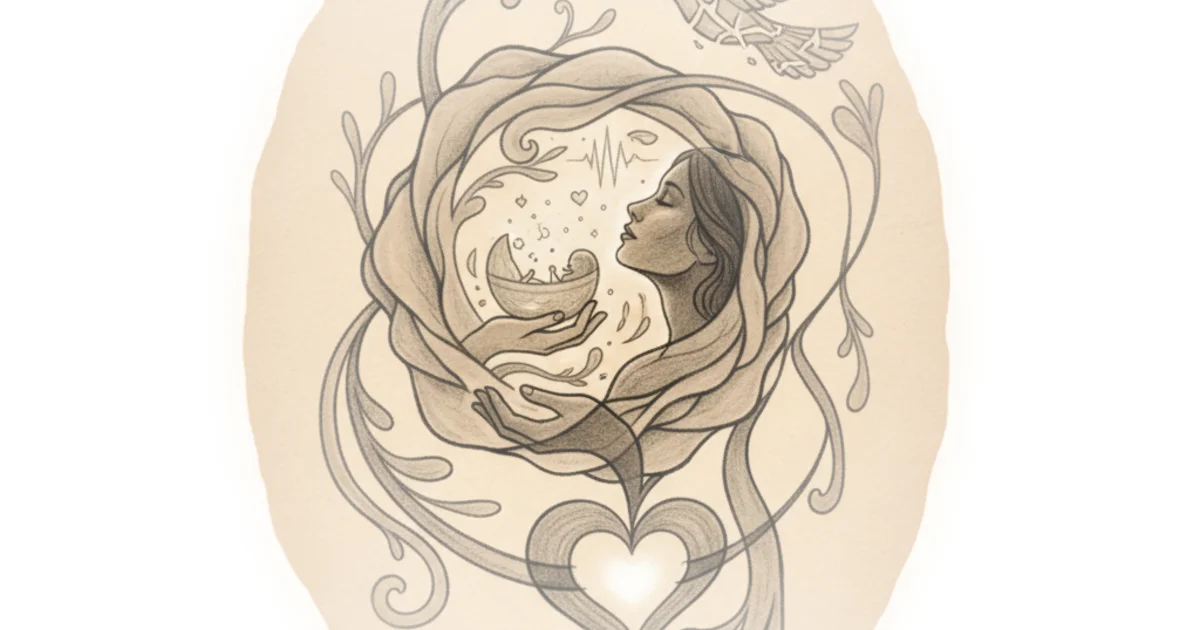
This argument resonates with historical shifts in developmental psychology. Just as the mid-20th-century concept of "maternal deprivation" highlighted the catastrophic effects of a child's separation from their caregiver, this piece suggests a reciprocal deprivation occurs when the caregiver is stripped of their own identity. The editors note that while terms like "agency" come close to describing this need, they fall short because desire is fundamentally about meaning. "Everyone has a fire inside, says Cotler—things that make us feel alive, daydreams, or fantasies. 'We want to become curious about those,'" the article quotes.
The coverage effectively dismantles the cultural narrative that a "good" mother must be entirely self-erasing. It points out that society bombards women with contradictory mandates: "Sacrifice, but stay whole; be present, but don't lose yourself; give everything to your child, but maintain an identity." The piece argues that when mothers are guided by unconscious "shoulds" rather than their own wants, they silence parts of themselves that are desperately trying to be heard. Critics might note that prioritizing individual desire in a resource-scarce environment can feel like a luxury, yet the article counters that this disconnection is precisely what harms the family unit.
"Your child maps their inner world to yours. If they feel you're alive, they feel permission to feel alive."
The Dyad and the 4R Method
Moving from theory to practice, the editors introduce Cotler's "4R method" as a strategy for navigating the inevitable friction between a mother's needs and a child's. The core of the argument is that mother and child exist as a dyad, not as competing entities. "It's not either/or. It's always both/and. I would love to see a world where we can exist in between, in the messy middle," Cotler is quoted as saying.
The article outlines a practical framework: Reflect on what a situation brings up historically; Recognize what the child needs; Acknowledge the Rupture when needs clash; and Repair the connection while holding a boundary. This approach is significant because it validates the mother's discomfort without demonizing the child's needs. For instance, the piece illustrates how a mother might dread a loud party but still honor her child's excitement by finding a compromise, rather than collapsing into resentment or forcing a celebration that breaks her limits. "Every time there's a disconnect between your needs and your child's needs, there is this important toggling back and forth between reflecting on yourself while recognizing your child," the piece explains.
This section is particularly strong in its rejection of the "perfect parent" myth. By encouraging mothers to engage in fantasy and daydreaming—activities often dismissed as selfish or impractical—the article suggests that these mental spaces are where meaning is found. "Fantasy is where meaning is," says Cotler. "It's where we come alive." The editors wisely connect this to the broader psychological impact on the child, citing Carl Jung's observation that "The greatest burden on a child is a life unlived of the parent." This historical reference adds weight to the claim that a mother's aliveness is not a selfish indulgence, but a vital resource for her child's emotional development.
Institutional Gaps and the Path Forward
The coverage concludes by highlighting the gap between this psychological reality and the institutional support available. While the piece acknowledges the standard treatments of therapy and medication, it suggests that without addressing desire, these interventions may only treat the surface. The article notes that many mothers engage in behaviors to actively avoid feeling, such as reaching for phones in moments of stillness, effectively shutting down the very signals that need attention. "Space is actually metaphorical. In many ways, it's permission not to shut down what's inside of you, but instead notice when it comes," Cotler explains.
The editors also contextualize this within the broader ecosystem of maternal support, noting that while companies like Bobbie are launching free lactation services to support feeding choices, the deeper emotional work of reclaiming desire remains largely unaddressed by policy or corporate wellness initiatives. The piece implies that until the "squashing" of maternal desire is recognized as a public health issue, the cycle of anxiety and depression will persist.
Bottom Line
Two Truths makes a compelling case that maternal mental health cannot be fully understood without addressing the suppression of a mother's own desires. The strongest part of this argument is its reframing of "selfishness" as a necessary component of family health, backed by the psychological insight that children thrive when they see their parents as whole, living individuals. The biggest vulnerability lies in the practical difficulty of reclaiming desire in a society that structurally undervalues maternal time and autonomy; the piece offers a powerful internal framework but stops short of addressing the systemic barriers that make this reclamation so difficult. Readers should watch for how this concept of "maternal desire" begins to influence clinical guidelines and policy discussions in the coming years.