Eric Blanc delivers a provocative thesis that the most significant variable in New York City's mayoral primary isn't a candidate's charisma or social media savvy, but the unexpected fracture within the labor movement. While pundits focus on the individual, Blanc argues that the real story is the bottom-up pressure from rank-and-file workers forcing union leaders to break from a century-old tradition of backing the establishment favorite. This is a crucial distinction for anyone trying to understand how political power actually shifts in a city dominated by billionaires.
The Failure of Political Realism
Blanc challenges the prevailing wisdom that union leaders must always support the most likely winner to secure a "seat at the table." He writes, "At best, billionaire-backed electeds provide crumbs. At worst, such politicians actively undermine workers' lives (and members' trust in their unions)." This reframing is powerful because it exposes the cynicism of the status quo: the strategy of appeasement has historically failed to deliver tangible gains for the working class. The author notes that despite the former governor's history of undermining public sector pensions and his eventual ouster due to sexual harassment charges, the instinct to back him remained strong among top leadership.
The piece highlights the immense risk involved in defying this norm. As DC 37 member Joshua Barnett told Blanc, "Cuomo is a real vindictive son of a bitch. So if you don't endorse and he wins, it could cost you." Blanc uses this to illustrate the high stakes for individual workers who dare to challenge the machine. The argument here is that the fear of retaliation is the primary engine maintaining the political status quo, not a genuine belief in the establishment candidate's platform.
Critics might argue that Blanc underestimates the pragmatic necessity of securing endorsements from powerful figures to ensure legislative survival, suggesting that a total break from the establishment could leave unions with zero influence. However, the text counters this by pointing out that the "seat at the table" has rarely resulted in meaningful policy changes for workers.
The Mechanics of a Grassroots Uprising
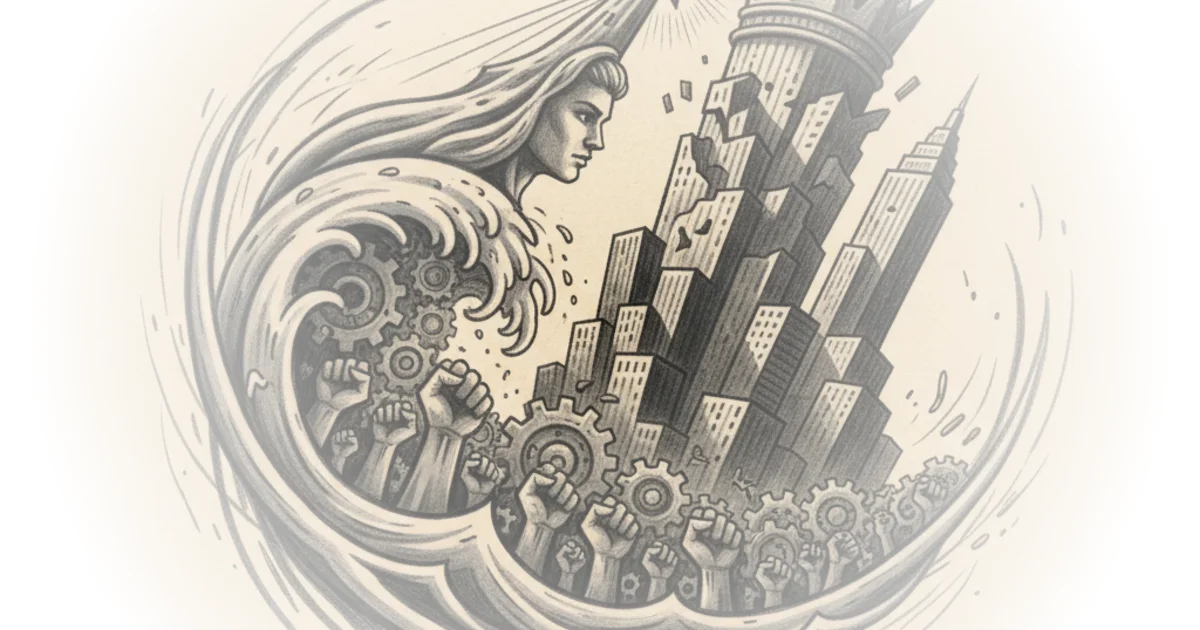
The core of Blanc's narrative focuses on how ordinary members bypassed their own leadership to force a change. He details how activists in the United Auto Workers (UAW) and the District Council 37 (DC 37) built ad-hoc committees to pressure their unions. Blanc observes that "there were lots of doubts about Zohran's viability early on," yet the organizers persisted, understanding that an early endorsement was necessary to signal that the candidate was a serious contender.
This bottom-up approach yielded results where top-down strategy failed. When the UAW Region 9a finally endorsed the socialist candidate, their director Brandon Mancilla noted, "Some may say we took a chance, but the actual reckless gamble is to endorse status quo candidates that caused the crisis working families face in the first place." Blanc presents this as a pivotal moment, shifting the union's stance from hesitation to active support based on a platform including a $30 minimum wage and rent freezes.
The coverage also examines the United Federation of Teachers (UFT), where leadership opted for neutrality rather than endorsing the establishment candidate, a move Blanc attributes to the "vocal pressure" of members. He quotes retired teacher Sonia Silva, who argued, "We all deserve so much more from our government and our unions. But that's going to take each of us standing up." This section effectively demonstrates that the shift in labor dynamics wasn't a gift from leadership, but a hard-fought victory for the membership.
"We will never get past the current political crisis if we continue to elect the same people and make the same decisions that got us here in the first place."
The Stakes of the General Election
Blanc warns that the primary is merely the opening act. He argues that if the socialist candidate wins, the general election will become a "scorched-earth scare campaign" funded by real estate tycoons and corporate CEOs. The author writes, "Real estate tycoons, billionaires, corporate CEOs, and Cuomo sycophants will stop at nothing to scare New Yorkers into thinking that a socialist mayoralty will result in fiscal bankruptcy, not to mention crime sprees and anti-Jewish persecution."
In this context, Blanc posits that unions are the only force capable of countering this narrative. He draws a historical parallel to the "sewer socialists" of Milwaukee and New York's Fiorello La Guardia, noting that "fighting labor unions were the central pillars of each of those successful urban precedents." The argument is that electoral victory alone is insufficient without the organized power of workers to defend progressive policies against obstructionism.
A counterargument worth considering is that the labor movement in New York is deeply fragmented, and relying on a coalition of rank-and-file activists to overcome the financial might of billionaire-backed opponents is an optimistic gamble. Blanc acknowledges this, stating, "We don't yet have that level of organized working-class power in New York City," but suggests the campaign itself is in the process of building it.
Bottom Line
Blanc's strongest contribution is his insistence that the labor movement's potential lies not in its leadership's deal-making, but in its members' willingness to disrupt the status quo. The piece's vulnerability lies in its reliance on the assumption that this newly awakened rank-and-file energy can be sustained against a well-funded, fear-mongering general election campaign. The reader should watch whether the unions that remain neutral or hostile will eventually align with the establishment or if the pressure from below will force a realignment before November.
"When you're going up against the most powerful people on earth, just winning an election is not enough. To actually win ambitious social-democratic policies... elected officials normally need a large amount of people power outside of the state."
The ultimate verdict is that this election serves as a critical stress test for the future of the Democratic Party and the labor movement: will they cling to a failing strategy of compromise, or will they embrace the risk required to challenge the power of capital?