In a landscape often dominated by geopolitical analysis that reduces Iran to a monolith of state power, Peter Singer's latest podcast episode with Shermin Kruse offers a startlingly human counter-narrative: that empathy is not a sign of weakness, but a tactical instrument of survival and negotiation. Kruse, a former high-stakes corporate lawyer and author, reframes the interaction between the oppressed and the oppressor not as a binary of resistance versus submission, but as a complex dance of cognitive awareness that can literally loosen a finger on a trigger. This is not merely a story about the Iranian revolution; it is a masterclass in how to retain one's humanity and agency when the state demands you surrender both.
The Tactics of Survival
Kruse anchors her philosophy in a harrowing childhood memory from the height of the Iran-Iraq War, a period marked by up to six missile attacks a day and severe energy shortages. She recounts a moment where her mother, facing a morality guard with an assault rifle, did not argue rights or express fear. Instead, she humanized the guard. "You must be very frustrated, because it is hot, because there are missile attacks, and because you are endlessly just telling people over and over again to cover their hair," Kruse recalls her mother saying. Singer highlights how this specific phrasing diffused the tension immediately, noting that the guard's body language relaxed and his finger loosened on the trigger.
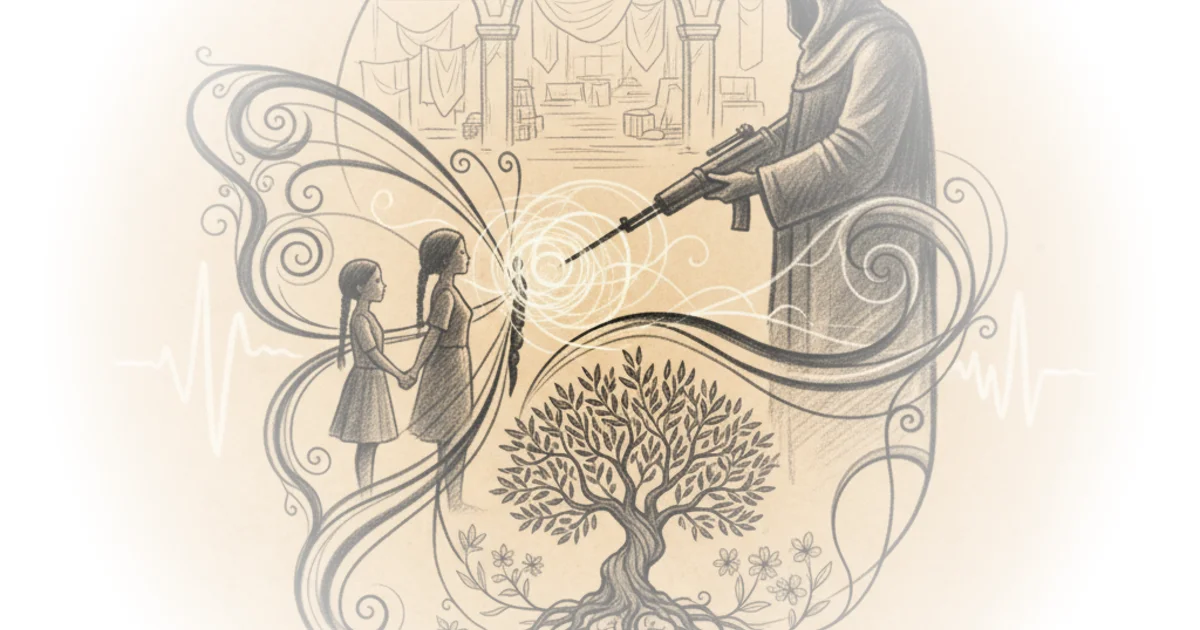
The power of this anecdote lies in its rejection of moral posturing in favor of immediate, pragmatic connection. Kruse argues that her mother's success came from providing the guard with a "reason to move on" rather than challenging his authority directly. This approach aligns with the concept of "tactical empathy," where understanding an adversary's emotional state becomes a tool for de-escalation. However, one must be careful not to romanticize this as a universal solution. Critics might note that this strategy relies on the adversary retaining a shred of shared humanity, a condition that is not guaranteed in all authoritarian contexts. Yet, Kruse's point is that even in extreme power imbalances, empathy can shift the dynamic.
"These stories are to demonstrate that empathy does not equal weakness. In situations where power imbalance, anger, and hostility are extreme, empathy can give rise to your power."
The Fragility of Tolerance
The conversation takes a darker turn when addressing the aftermath of the death of Mahsa Amini, a young woman beaten to death by the Guidance Patrol for an improper headscarf. Kruse clarifies that while there were moments of relaxed tension in the past, the regime's tolerance is volatile and lethal. She describes the "Woman, Life, Freedom" movement and the regime's violent crackdown, where demonstrators were targeted with rubber bullets often aimed at the eyes. "The tolerance level for headscarf infractions has changed, and more women get away without wearing a headscarf, but it is still incredibly risky and could have gotten my mother killed," she explains.
This distinction is crucial. It prevents the listener from viewing the past encounter as a sign of systemic change. Instead, it frames empathy as a momentary shield that can shatter at any time. The historical context of the Iran-Iraq War, mentioned earlier, serves as a grim reminder that the state's capacity for violence is always present, even when the streets seem calm. Kruse's analysis suggests that while cognitive empathy can buy time or safety in a specific interaction, it cannot substitute for structural political change.
The Cost of Freedom
The narrative then shifts to the profound sacrifices made by Kruse's family. Her father, who once employed 200 people in Iran, became an air conditioning repair person in Canada. "They left brothers, sisters, nieces, nephews, their language, their soil, their way of being," Kruse says, emphasizing that the move was made entirely for the children's future. She contrasts the illusion of a perfect life in the West with the harsh reality of being an immigrant child, yet underscores the fundamental difference in agency: "Being able to pursue any profession without a husband's permission, or being able to leave a marriage without automatically losing your children, is different."
Kruse's reflection on her "golden passport" is particularly striking. She acknowledges the sheer luck of her migration, stating, "Neither I nor they did anything to deserve that. It was luck. I had nothing to do with my migration. I was the beneficiary." This humility grounds the discussion in the reality that freedom is often a matter of geography and chance, not just merit. The stakes of returning to Iran are made clear: she is blacklisted, and the government does not recognize her citizenship. "If I'm there, I am theirs to do with as they wish," she warns, highlighting the specific targeting of dual nationals who speak out.
Cognitive Empathy vs. Emotional Overload
A significant portion of the episode is dedicated to distinguishing between emotional empathy and cognitive empathy. Kruse defines emotional empathy as feeling another's pain in one's own body, while cognitive empathy is "not walking a mile in your shoes, but next to you. Setting your rhythm to theirs, sensing what they sense, while keeping emotional distance." This distinction is vital for anyone working in high-conflict environments, as it allows for understanding without being consumed by the other's trauma.
Singer notes that this approach is not about forgiveness or emotional connection, but about understanding the mechanics of harm. "If you want to prevent it, you need to understand it," Kruse asserts. This framing is powerful because it decouples empathy from moral absolution. One can understand why a guard or a criminal acts as they do without excusing the behavior. It is a tool for prevention and self-preservation, not a moral obligation to love one's enemy.
"Stoicism expands the space between impulse and response so that you can insert as much of yourself as possible. You can allow emotion to be information rather than something that controls you."
The Limits of Control
Kruse integrates Stoic philosophy to explain how to maintain agency when external circumstances are chaotic. She uses the metaphor of archery: "You practise, prepare your arrows, aim, breathe, release. Once the arrow is in the air, there is nothing you can do to change where it lands." This analogy provides a practical framework for managing anxiety. The focus shifts from controlling the outcome to controlling the preparation and the response.
She suggests practical exercises for listeners, such as ice immersion to build pain tolerance or low-stakes negotiations to build confidence. These are not just theoretical concepts but actionable tools for building resilience. "People with chronic pain often use meditation to embrace the pain, observe it, and conquer it," she notes, extending the logic of Stoic empathy to personal psychological struggles. This section transforms the discussion from a political commentary into a guide for personal empowerment, suggesting that the skills needed to navigate a repressive state are the same ones needed to navigate a chaotic life.
Bottom Line
Peter Singer's interview with Shermin Kruse succeeds by reframing empathy from a passive virtue into an active, strategic skill set that can be deployed even in the most hostile environments. The strongest part of the argument is the rigorous distinction between cognitive and emotional empathy, which offers a viable path for maintaining humanity without succumbing to despair. The biggest vulnerability lies in the inherent risk of the strategy; it assumes a level of shared rationality that authoritarian regimes may not possess, and the stakes of failure are literally life and death. Readers should watch for how these principles of tactical empathy are applied in other high-stakes diplomatic or corporate negotiations, where the line between survival and submission is often just as thin.