Joeri Schasfoort delivers a sobering reality check: the West's reliance on Chinese mineral refining is not just an economic inconvenience, but a strategic vulnerability that dwarfs the 2022 European gas crisis. While much of the discourse focuses on mining, Schasfoort exposes the far more dangerous bottleneck—the refining stage—where China holds a near-total monopoly that allows it to weaponize supply chains with surgical precision.
The Refining Trap
The author's most striking insight is that the West voluntarily surrendered this dominance decades ago, driven by short-term profit and a desire to offload pollution. Schasfoort writes, "Businesses care about profits in the next couple of years. They do not strategize about competition in 40 years time." This observation cuts through the usual blame game, highlighting a systemic failure of foresight among Western corporations and policymakers who traded long-term sovereignty for immediate environmental relief and cost savings.
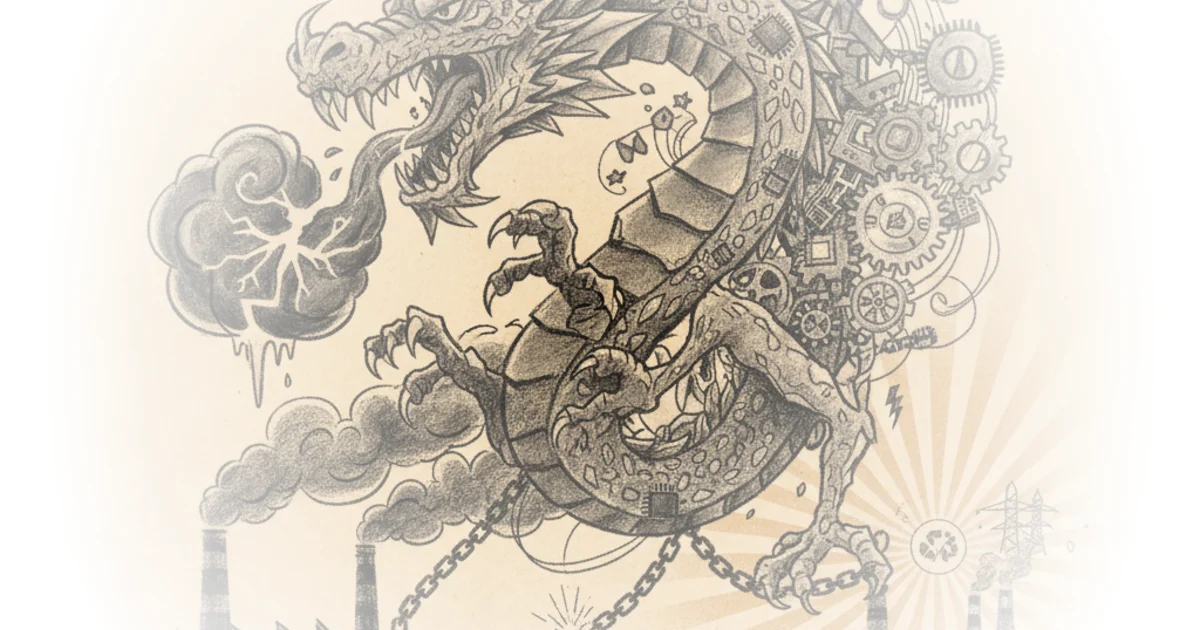
The stakes are undeniably high. Schasfoort notes that "if China cuts its critical minerals completely today, our industry is not prepared," warning that a total cutoff would cause the European automotive industry to "grind to a halt" within days. This is not hyperbole; it is a mathematical certainty given that modern vehicles, from sensors to electric motors, rely on permanent magnets that China refines and licenses. The author points out the absurdity of the current situation: "Need to go to Beijing and say, 'Hello, I'm Volkswagen. I need that permanent magnet. Do I get a license?'" This framing effectively illustrates how a commercial transaction has been transformed into a geopolitical negotiation.
Critics might argue that market forces will eventually correct this imbalance as prices rise, but Schasfoort dismantles this free-market assumption by citing China's willingness to flood the market and crush competitors. He quotes US Treasury Secretary Scott Bessent, who warns that "anytime anyone tries to stand up one of these rarer critical mineral facilities, Chinese come in, they flood the market." This predatory pricing strategy, backed by state subsidies, creates a barrier that private Western capital simply cannot overcome without government intervention.
The deck was stacked against China in the 1990s when all of the knowhow and technology was in the west, and yet China broke through. The deck is now stacked against us, but it is not impossible to reverse.
The Path to Sovereignty
Schasfoort's commentary shifts from diagnosis to prescription, arguing that the West must abandon the illusion of a purely free market in favor of a "grand geoeconomic strategy." He suggests that the West should learn from the very playbook China used to dominate the industry: aggressive industrial policy. The author asserts that "gaining some more independence from Chinese minerals can best be done in a big alliance," comparing the necessary coordination to the effectiveness of NATO versus a patchwork of individual defense pacts.
The proposed five-step plan is pragmatic. It begins with stockpiling critical materials to create buffers, then moves to forming massive multinational alliances that combine Western capital and technology with resource-rich partners like Australia and Canada. Schasfoort emphasizes that "governments need to study and copy China's industrial policy approach," utilizing tools like subsidies, price floors, and tariffs to rebuild domestic refining capacity. This is a radical departure from decades of neoliberal orthodoxy, acknowledging that "the only job of the government was to let the free market function as efficiently as possible" is a logic that "no longer works today."
However, the path forward is fraught with challenges. The author admits that the West faces a "drop in the ocean" in terms of academic talent compared to China's hundreds of thousands of mining PhDs. Furthermore, strict environmental regulations in the West, while morally necessary, create a cost disadvantage that China exploits. Schasfoort notes that "refining critical minerals is really a really dirty business," and the West's reluctance to revisit these environmental trade-offs could stall the very recovery it seeks.
Bottom Line
Schasfoort's strongest contribution is his clear-eyed assessment that the West's vulnerability is self-inflicted and that the solution requires a fundamental shift in how governments view their role in the economy. The argument's biggest vulnerability lies in the political feasibility of implementing such aggressive industrial policy across disparate Western democracies, where coordination remains a chronic weakness. Readers should watch for whether the proposed "mineral alliances" can move beyond rhetoric to actual, synchronized investment before the next geopolitical crisis hits.