In a landscape saturated with algorithmic outrage and predatory self-help, Noah Smith offers a startlingly rational intervention: the dating market isn't broken by a conspiracy of the elite, but by a collapse of confidence and a failure of imagination. This piece stands out not for its novelty, but for its refusal to treat romance as a zero-sum game or a mystical force beyond human control. Smith argues that the current "dating recession" is a solvable crisis of mindset, one that directly impacts the nation's fertility rate and the long-term happiness of young adults.
The Economics of Loneliness
Smith begins by grounding his unconventional topic in hard data, citing a Washington Post report where "over two-thirds of young adults have either not dated at all or only gone on a few dates in the last year." He connects this behavioral shift to a broader societal malaise, noting that "young Americans have become much more unhappy," and posits that better romantic lives could be a key variable in reversing this trend. The argument is compelling because it treats dating not as a frivolous hobby, but as a critical infrastructure for mental health and demographic stability. As Smith puts it, "having done happiness research in grad school, I'm well aware that romantic relationships are one of the most important predictors of long-term happiness."
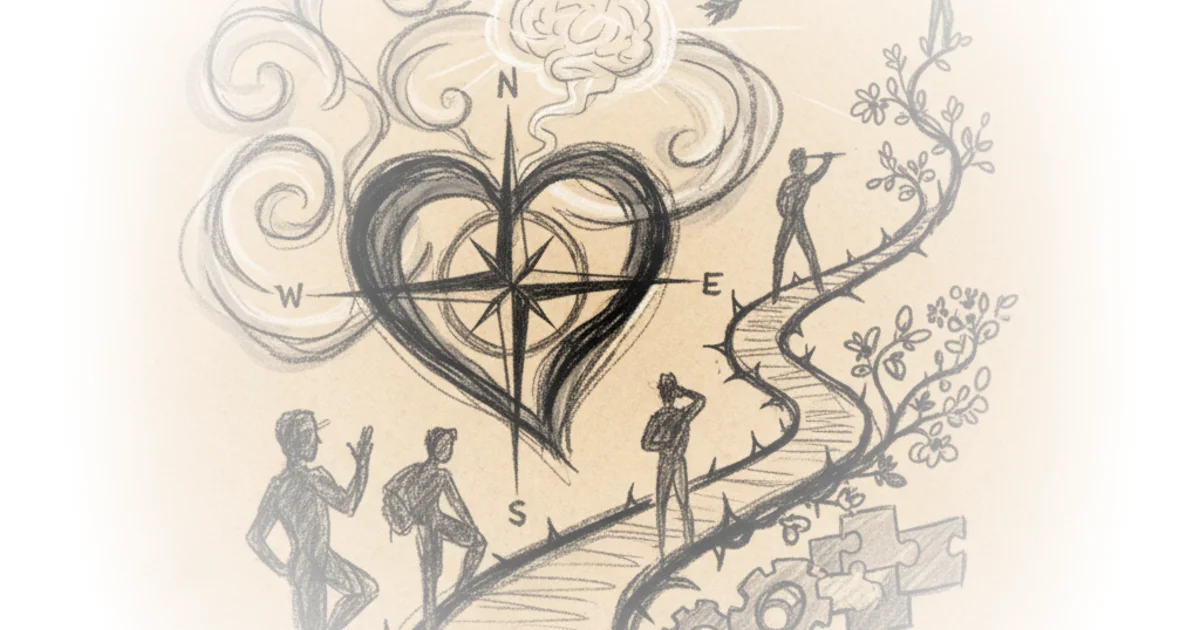
The author's framing is particularly effective in dismantling the idea that romance is reserved for a genetic elite. He explicitly rejects the "incel" worldview—the ideology that only a tiny fraction of "Chads" can succeed—by asserting that "sex and romance are achievable by regular, average men." This is a crucial distinction. While the concept of hypergamy suggests women naturally gravitate toward the top tier of status and looks, Smith argues that the market is far more nuanced. Women, he writes, want regular men "for companionship, for sex, and for helping to raise kids." This reframing challenges the fatalism that has taken hold in online male communities, suggesting that the barrier to entry is often psychological rather than biological.
"The incel's veto helps spread the ubiquitous online assumption that nobody is getting laid, anywhere, ever, and that it's inherently pathological to treat sex and romance as not just healthy aspects of human life but as mundane and achievable."
The Digital Echo Chamber
Smith's most incisive critique is directed at the digital ecosystem that has replaced traditional male mentorship. He observes that in previous eras, role models were "fathers, athletic coaches, teachers, bosses," but now, "when we all went online, we lost that." In this vacuum, young men are bombarded by "gurus" who profit from their insecurity. Smith warns that "a lot of the people on the internet offering romantic advice are trying to exploit you," whether through direct sales of courses or the indirect monetization of anger and clicks. He notes that "very few of the people online who make pronouncements about sex and romance are doing it because they want you to get a girlfriend and be happy."
This analysis of the "incel's veto"—a term borrowed from Freddie DeBoer to describe the prohibition against men discussing sex positively—is a highlight of the piece. Smith illustrates how the internet amplifies the worst fears of lonely men, creating an echo chamber where failure is normalized and success is dismissed as an anomaly. He recounts his own experience of being "blackpilled" in college before realizing that the ideology was a self-fulfilling prophecy. The danger, he argues, is that these forums are populated by trolls and sadists who "want to enjoy your suffering," rather than genuine peers offering support. Critics might note that Smith's focus on individual mindset risks underestimating structural barriers like economic precarity or the sheer difficulty of modern social interaction, but his point about the toxicity of online discourse remains undeniable.
The Average Guy's Advantage
Perhaps the most refreshing aspect of Smith's advice is his own positioning. He admits he is not a "Chad" and has no interest in seducing hundreds of women. Instead, he offers the perspective of an "average shlub" who has found fulfillment in long-term relationships. He asks the reader to consider: "If you were looking for your dream home... would you really want to take house-hunting advice from a guy who switches apartments every week and lives out of a suitcase?" This analogy cuts through the noise of the pickup artist industry, suggesting that the goal for most men should not be maximum conquest, but meaningful connection.
Smith acknowledges that the "Chad" lifestyle is often "soul-crushing and lonely," pointing out that "a lot of men... get emotionally attached to our sex partners." For these men, the pursuit of quantity is a form of "self-punishment." By validating the desire for stability over variety, Smith provides a counter-narrative to the hyper-masculine ideals often promoted online. He concludes that the best approach is to "think carefully about what you actually want from dating and romance," rather than blindly chasing the metrics of success dictated by internet culture.
"If you really want to be the charming hot guy who gets all the girls — the 'Chad', as they say — you should go get advice from one of those guys. But is that really what you want?"
Bottom Line
Noah Smith's argument is strongest in its rejection of fatalism, offering a pragmatic path forward for men who feel shut out of the dating market by their own internalized myths. The piece's greatest vulnerability lies in its assumption that mindset is the primary lever for change, potentially overlooking the profound economic and social shifts that have made forming relationships harder for an entire generation. However, as a corrective to the toxic despair of online forums, it is a necessary and grounded intervention.
"The truth is that lots of men wouldn't actually like to be a Chad. Sleeping with hundreds of women might sound awesome if you're currently sleeping with zero women, but once you start actually making a bit of progress in that direction, you quickly realize how soul-crushing and lonely that lifestyle can be."