When Corruption Becomes Normal
Matthew Yglesias opens with a striking paradox: voters perceive corruption everywhere yet mobilize against it nowhere. The piece matters because it exposes why accountability fails when the baseline expectation is that everyone is already corrupt. This isn't just about one administration—it's about a political culture where the definition of corruption has expanded so far that it now encompasses ordinary disagreement.
The Corruption Baseline
Matthew Yglesias writes, "Seventy-one percent say the 'typical politician' is corrupt." This finding reveals something crucial about the political landscape. As Matthew Yglesias puts it, "Voters just have an incredibly low estimate of the baseline level of integrity of politicians." The data shows sixty-eight percent view the typical Republican as corrupt, sixty-one percent say the same about Democrats, and seventy-two percent believe long-term elected officials are probably corrupt.
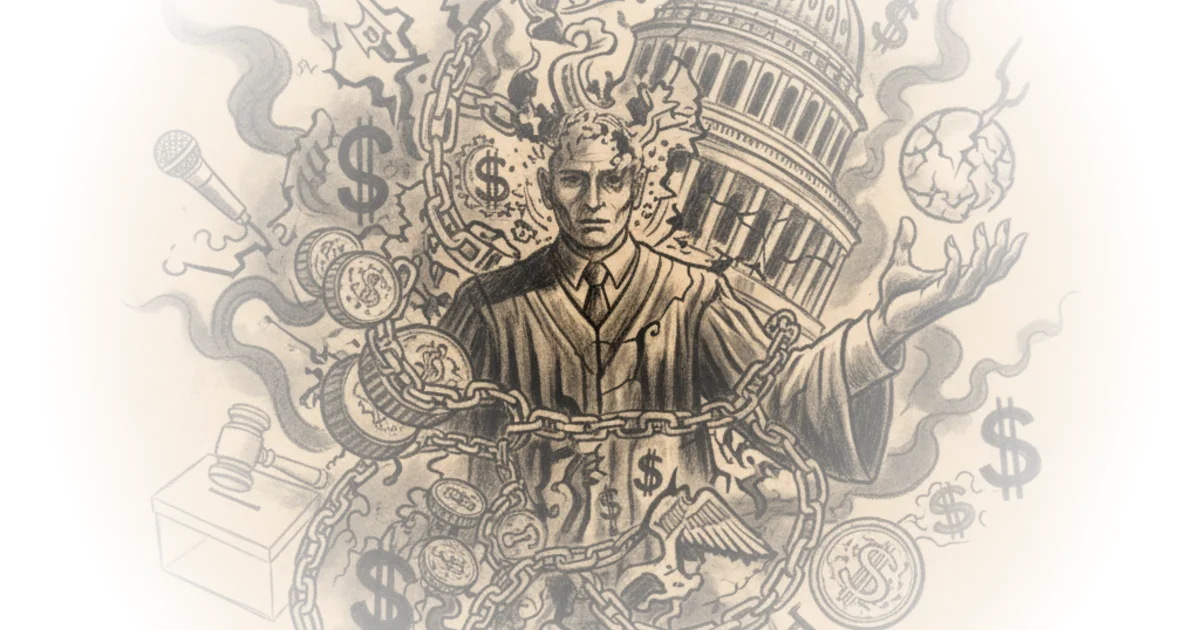
When corruption becomes the expected default, calling out specific instances loses its political force. Matthew Yglesias notes, "I think it's hard to make political hay out of Trump's corruption because, while it looks extraordinary to me (and probably to you if you're reading this), many voters see it as pretty normal."
The historical context matters here. The Tea Party Express rallies of 2010 displayed signs critical of the Obama administration, channeling anger about perceived corruption. Yet that mobilization faded. Midterm elections almost always punish the president's party regardless of corruption claims—the House typically shifts, but the Senate remains stable.
"What I love about this series of questions is that it indicates that most people are not using the word 'corruption' in the way that I or most political practitioners or most investigative reporters would use it."
What Counts as Corruption
Matthew Yglesias argues voters employ an extraordinarily expansive conception of corruption. Beyond bribes and handing jobs to unqualified friends, they view "government officials voting the way elites in their social group want instead of what most people in their district want" as corrupt by overwhelming margins.
Matthew Yglesias writes, "After all, the basic shape of this is that just holding an unpopular view is corrupt." This creates an impossible bind for politicians. If a Democrat in Iowa or Ohio holds unpopular views on affirmative action, transgender athletes, or late-term abortions, that stance becomes corruption itself rather than a policy consideration to weigh against other concerns.
Matthew Yglesias observes, "There's no way that you're ever going to be able to prove that your support for a ban on single-use plastic straws reflects a sincere assessment of the public interest rather than the influence of climate donors and green-minded cultural elites."
Critics might note this expansive definition makes meaningful accountability impossible. When every disagreement becomes corruption, actual corruption becomes harder to identify and prosecute.
Stealth Democracy
Matthew Yglesias draws on the 2002 book "Stealth Democracy" by John Hibbing and Elizabeth Theiss-Morse to explain why Jerome Powell remains the government official voters trust most. The Federal Reserve operates with minimal visible conflict—board members rarely debate publicly, dissenting statements are uncommon and politely worded, and the range of expressed disagreement stays narrow.
Matthew Yglesias writes, "The fact that politics is almost never smooth and quiet is, to most voters, evidence that the politicians are doing something wrong."
Matthew Yglesias explains the underlying thesis: most people believe policy problems aren't actually difficult, and that people of goodwill cooperating could solve them. Matthew Yglesias puts it, "Sophisticated people know that this is not true. It's not that balancing the budget is an unsolvable problem. But it involves difficult tradeoffs and reasonable people are going to disagree about those tradeoffs."
Matthew Yglesias notes voters prefer institutions that appear consensus-driven. Matthew Yglesias writes, "My advice to elected officials interested in reform in their states is to spend a lot of time trying to find opposite-party partners to work with and very little time stressing about polling."
Critics might note this advice privileges process over substance. Bipartisan consensus can mask real policy failures while giving voters the smooth quiet they desire.
The Circular Firing Squad
Matthew Yglesias argues left-wing advocacy organizations share this expansive corruption definition when pursuing internal conflicts. Matthew Yglesias writes, "The entire premise of the Revolving Door Project, for example, is that not only are moderate Democrats bad, but all intra-party disagreement about ideology and policy is a form of corruption."
Matthew Yglesias experienced this when writing for the New York Times about oil and gas policy. Matthew Yglesias notes his take was greeted not by disagreement on the merits, but by accusations he was somehow on the take. Matthew Yglesias writes, "But obviously if progressive donors spend money on building a bunch of progressive nonprofits and aligned media outlets, all of which are constantly flinging accusations of corruption at Democrats, then it's going to be incredibly challenging to turn around come the general election and try to convince people that actually Trump is the corrupt one."
Matthew Yglesias argues this tactic has pulled Democratic politicians further left, but using it to go further left damages non-leftist Democrats' image and makes beating Trump harder.
Critics might note Matthew Yglesias understates how donor influence shapes both progressive and centrist positions. The corruption accusation isn't always wrong—sometimes it's precisely right.
Bottom Line
Matthew Yglesias identifies a paradox: Americans demand corruption accountability while defining corruption so broadly that normal politics becomes indistinguishable from actual malfeasance. The solution isn't more transparency—it's rebuilding trust in institutions that deliver results without constant public fighting. But when every policy dispute becomes a corruption allegation, voters lose the ability to distinguish between genuine ethical breaches and ordinary political disagreement.