The sublime is one of the most enduring concepts in literary aesthetics—and one of the hardest to define. Harold Bloom called it the essential qualification for any great imaginative work. Samuel Johnson's dictionary offers a starting point: sublimity means something raised high, elevated, lofting above ordinary experience. But what does it actually mean in literature?
What Is the Sublime?
The word traces back to the Latin sublimis—to raise or lift up. Samuel Johnson's Dictionary entry includes phrases like "exalted at loft, high in excellence" and "elevated by joy." The definitions cluster around height, elevation, grandness—something that exceeds ordinary bounds.
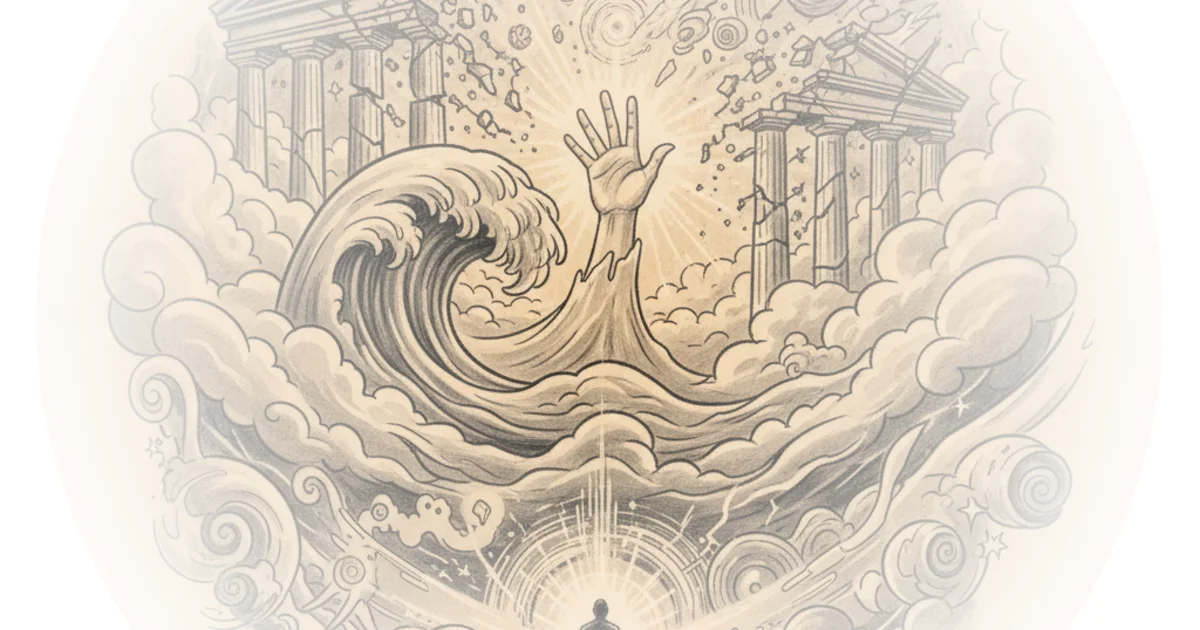
Yet recognizing the sublime is less about dictionary definitions than felt experience. Theorists from Longinus to Kant to Burke agree: the sublime is the capacity to feel greatness. It's a response triggered by overwhelming presence—whether Gothic cathedrals, mountain vistas, or Shakespeare's villain soliloquies. The feeling leaves one small, insignificant, and somehow transformed.
Longinus and the Grand Style
Longinus wrote his treatise on the Sublime in the first century, defining it as a specific aesthetic experience characterized by awe. The purpose of sublime literature is not to persuade but to amaze—to dazzle readers with something that exceeds human proportions or understanding.
For Longinus, the sublime manifests as an extension of the divine. It represents aesthetic transcendence where individual faculties stretch toward glimpse of something greater. This experience has important implications for our understanding of art and creative expression—he calls it the grand style.
Longinus identifies five sources of sublimity: two come from internal response—grandeur of thought and strong emotion—and three from literature itself—figurative language, noble diction (word choice), and dignified composition. The combination creates what he calls aesthetic transcendence.
"A piece is truly great only if it can stand up to repeated examination... Sublimity exists in such works as please all men at all times."
The Medieval Silence
By the fifth century, the concept was established in literature. But something strange happened: Longinus was forgotten. The word disappeared from critical discourse.
In the medieval period, secular literary inquiry ceased. The sublime as a concept lost its place—but not entirely. Elevated language persisted in religious works. Dante's Divine Comedy demonstrates lingering interest in something greater than human experience. Mystics like Henry Suso recorded spiritual passages that clearly demonstrate what we might call the sublime:
"Something shines in my heart beyond the power of words... If I take the fairest creatures, the purest beings, thou yet surpassest them all unspeakably."
The feeling remained alive in religious discourse, even without using the word.
Romantic Poets and the Sublime
By the eighteenth century, the sublime returned with new urgency. Wordsworth, Shelley, Byron, and others deliberately engaged this long tradition—trying to effectuate the sublime in their poetry, to make it happen in readers' minds. They emulated the grand style of Milton and other masters.
These poets understood that subliminal language pushes experience and emotion to their limits. It's like standing on the verge of something beyond—the verge of a new sense beyond the ordinary five senses.
Counterargument
Some critics question whether the sublime is too vague a concept to be useful. Others argue that defining it through emotional response risks obscuring the formal, technical elements Longinus emphasized—diction, composition, figurative language. The feeling is real, but can it be taught?
Bottom Line
The strongest part of this argument is its historical sweep—from Longinus through Kant, showing how the sublime shaped great literature across centuries. The vulnerability is that the concept remains slippery, inherently subjective. Still, for readers seeking to understand what makes certain writing "great," Longinus offers a clear starting point: grandeur of thought, strong emotion, noble diction, dignified composition. These aren't just academic categories—they're tools for reading, and perhaps for writing.