This piece cuts through the noise of trade war rhetoric to deliver a startling admission from the heart of Beijing's economic establishment: the era of ignoring global friction is over. Sinification reports that Huang Yiping, a top Chinese economist, has conceded that China must "take fuller account of the effects its surplus has on partner countries," a pivot that signals a potential thaw in the diplomatic freeze. For busy leaders watching the transatlantic rift deepen, this is not just another policy paper; it is a rare moment where the Chinese side acknowledges the structural pain their exports are causing, even as they rebrand the phenomenon from a "shock" to an "opportunity."
The Anatomy of a New Economic Shock
The article reframes the current tension not as a sudden rupture, but as the evolution of a long-standing dynamic. Sinification notes that while the first wave of trade friction involved low-end goods like textiles, "China Shock 2.0" targets the very pillars of the European welfare state. The piece argues that the new competition is in "frontier and high-end manufacturing sectors such as electric vehicles, lithium batteries, photovoltaics, high-end machinery, industrial robots and semiconductors." This distinction is critical because, as the editors note, these are "sectors developed countries had spent decades cultivating, and where they believed they held secure competitive advantages."
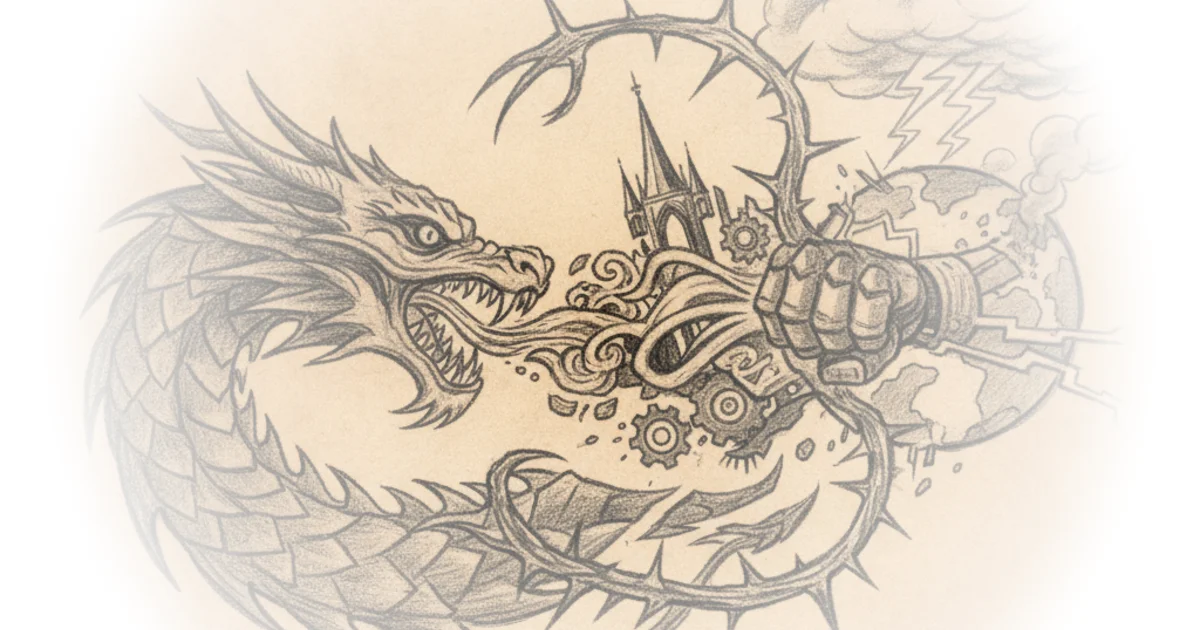
The analysis suggests that Europe's anxiety is uniquely acute because its economic model relies on these specific industries to fund high-income, high-welfare systems. Huang Yiping, quoted in the piece, admits that while China has made progress in rebalancing, "the pressure its surplus exerts on other countries' industrial structures cannot be overlooked." This is a significant departure from the standard Beijing playbook, which often dismisses external concerns as protectionism.
"China must move beyond simply invoking the broad macroeconomic benefits of free trade to take fuller account of the effects its surplus has on partner countries."
However, the commentary highlights a tension in this new framing. While the admission is refreshing, the article suggests it comes with a caveat: the push to "bypass highly politicised EU-wide negotiating frameworks." This recommendation echoes the historical concept of "Dutch disease," where a booming sector (or in this case, a massive export surplus) distorts the broader economy, but here it is applied to political strategy. The piece warns that fragmenting the EU's negotiating power could undermine the very multilateral system China claims to want to preserve.
The Global Tech Divide and Europe's "Awkward Position"
The coverage then shifts to a sobering assessment of the global technology landscape, placing Europe in a precarious middle ground. Sinification reports that while the US and China dominate AI algorithms and infrastructure, and Northeast Asia secures the hardware supply chain, Europe is struggling to convert its research into industrial scale. The article points out that "European universities and research institutes hold a substantial stock of patents... yet these strengths have not yet translated into visible progress in commercialisation and large-scale industrial deployment."
This stagnation is particularly dangerous given the historical context of "Strategic Autonomy." The piece notes that Europe has been quick to build regulatory frameworks, from GDPR to AI legislation, but "commercialisation and industrial application of frontier innovations do not seem to have kept pace." Critics might note that this regulatory-heavy approach, while ethically sound, may be actively stifling the very innovation needed to compete with the scale of Chinese manufacturing or the agility of American tech giants.
The article draws a sharp contrast with the UK, which is described as having "more scope to expand into future industries" because its manufacturing base is less exposed to direct substitution. Meanwhile, the rise of Northeast Asia in AI hardware is described as a "second wave of manufacturing resurgence," with Japan, South Korea, and Taiwan providing the "stable and well-developed hardware foundation" for the global AI chain. This leaves the EU in a position where it is neither a dominant innovator nor a low-cost producer, trapped in a "high-cost, low-scale" trap.
"China and Europe may be the last hope for preserving an open, multilateral international economic system—a bilateral trade war would deliver a major shock to global trade and supply chains."
This warning is the piece's most urgent call to action. It suggests that the stakes have moved beyond bilateral tariffs to the survival of the global trading order itself. The editors argue that the solution lies in shifting the narrative from "competitiveness" to "win-win" outcomes, specifically in five areas: green transition, high-end manufacturing, industrial AI, high-end services, and third-party markets.
Bottom Line
The strongest element of this analysis is Huang Yiping's candid acknowledgment that China's trade surplus creates real, structural externalities that cannot be ignored, a concession that could serve as a foundation for renewed dialogue. However, the piece's biggest vulnerability lies in its simultaneous push to fragment EU unity, a strategy that may ultimately undermine the stability required for any "win-win" deal to succeed. Watch for whether the EU can leverage this opening to demand concrete market access reforms before the October ministerial meeting, or if the push for bilateral deals will fracture the bloc further.