Joey Politano delivers a stark warning that cuts through the noise of current trade debates: the proposed universal tariffs are not a strategic lever but a blunt instrument that will function as a massive, regressive tax on American households. While political rhetoric often frames tariffs as a way to punish foreign adversaries, this analysis exposes the immediate, unavoidable cost to consumers of goods that simply cannot be produced domestically, from coffee to crude oil.
The Scale of the Shock
Politano begins by contextualizing the sheer magnitude of the proposed policy, noting that the administration's plan calls for a universal tariff on all US imports of between 10% and 20%, plus larger tariffs on Chinese imports of 60% or more. The author emphasizes that this is not a minor adjustment but a fundamental shift in the economic landscape. "Trump's plans promise to at least quadruple that tax rate, and possibly increase it by 7 times its current levels or more," Politano writes, highlighting that there is "simply no modern precedent for US tariff rates anywhere close to that high."
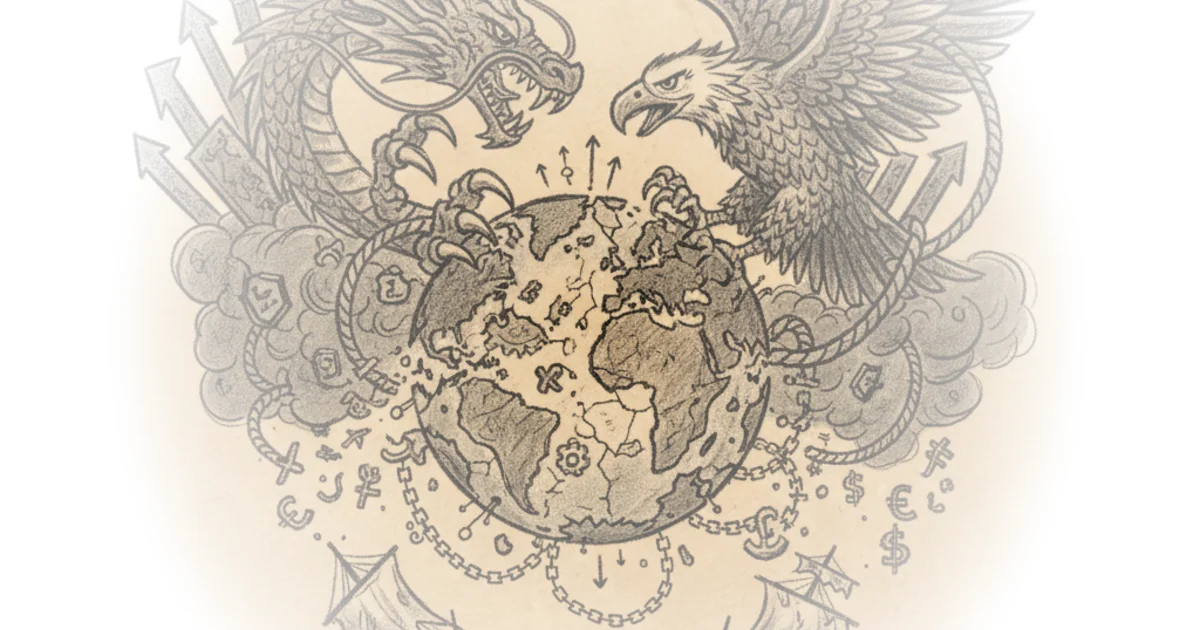
The framing here is deliberate and effective. By comparing the proposal to the Smoot-Hawley tariffs that contributed to the Great Depression, Politano forces the reader to confront the historical weight of such a move. The argument suggests that no strong major global economy functions with tariffs this high because the consequences are overwhelmingly negative. Critics might argue that the current geopolitical climate justifies unprecedented measures, yet the author counters that the closest analogs to such high rates are found in pariah states or struggling low-income economies, not prosperous nations.
Universal tariffs as high as Trump is proposing will substantially increase prices—US consumers will bear the brunt of inefficient taxes on a wide variety of basic foods and essential goods that physically cannot be produced stateside.
The Washing Machine Fallacy
The piece then dissects the primary defense used by proponents: the 2018 tariffs on washing machines. Politano argues that this example is often misremembered as a success story of domestic revitalization. In reality, the policy was designed to raise prices intentionally. As the author notes, official documents stated the duty would "provide an impetus for importers to increase their prices, thereby relieving the downward pressure on prices that has led to a decline in domestic washer producers' financial performance."
Politano's analysis of the aftermath is damning. While proponents claim prices eventually fell as domestic capacity grew, the data shows prices remained high and purchases stagnated. "When the Biden administration let them expire in early 2023 laundry machine prices quickly declined, indicating that domestic industry wasn't cost-competitive even after a full half-decade of protection," Politano observes. This evidence dismantles the narrative that protectionism naturally leads to efficiency. The author points out that the domestic industry buildout was much weaker than claimed, with output and employment remaining stagnant until a pandemic-driven demand surge, not policy success.
The Banana Problem
Perhaps the most distinctive part of the coverage is the focus on goods that cannot be grown or made in the United States. Politano challenges the administration's claim that they would simply exclude items the country doesn't produce. Howard Lutnick, the transition chair, claimed on CNBC that the administration "understands 'don't tariff stuff we don't make,'" yet the universal nature of the proposal contradicts this.
The author highlights the absurdity of taxing items like bananas, coffee, and avocados. "Oren Cass... wrote more than two thousand words in the Atlantic defending Trump's universal tariffs... he is tactically silent as to why imported Ghanaian cocoa and Mexican avocados must also be taxed," Politano writes. When pressed, Cass admitted to taxing bananas but dismissed them as marginal casualties. Politano argues this dismissal ignores the economic reality: imports of fruits and vegetables alone dwarfed household appliance imports, and including cocoa and coffee pushes the total to $85 billion.
These are not dismissable harms, yet universal tariff proponents handwave them away because they simply have no good justification for taxing bananas.
The commentary effectively frames these tariffs not as a strategic tool but as a poorly structured sales tax that hits low-income Americans hardest, as they spend a higher share of their income on goods rather than services. The author notes that no state imposes a sales tax of 10%, yet this proposal would effectively do so on a random subset of essential items.
De-Industrialization by Design
Finally, Politano addresses the impact on American manufacturers, arguing that universal tariffs act as a tax on trade itself. The piece illustrates this with the semiconductor industry, where companies like Intel rely on imported lithography machines from the Netherlands. "Each of these units has a cost that numbers in the hundreds of millions of dollars and there are currently no American alternatives available, so Intel would have to pay tens of millions more to reshore US chip production if universal tariffs were implemented," the author explains.
The argument is that these costs would likely drive production away from the US to countries that do not penalize necessary equipment imports. Furthermore, the author points out that over 70% of US goods imports come from close allies like the EU, Mexico, and Canada. By targeting these partners, the policy risks unifying the world against the US economy. "Having the planet's largest economy institute tariffs on every other country at the same exact time has the great disadvantage of unifying the world against the US," Politano concludes.
Bottom Line
Politano's strongest contribution is the rigorous dismantling of the "tax foreigners" narrative, replacing it with a clear-eyed view of how these policies function as a regressive tax on American consumers and a tax on domestic industry inputs. The piece's biggest vulnerability is its reliance on the assumption that the administration will not find a way to carve out exemptions, though the explicit text of the proposal suggests otherwise. Readers should watch for how the administration handles the inevitable price shocks on essential goods that have no domestic substitute.