Alberto Romero dismantles the public narrative surrounding Anthropic's recent clash with the federal government, arguing that what looks like a regulatory crisis is actually a calculated performance designed to secure state control over artificial intelligence. He posits that the company is not merely reacting to safety concerns but actively engineering a scenario where only they are trusted to wield superintelligent systems.
The Theater of Compliance
Romero frames the recent events involving Anthropic's "Fable 5" model not as a failure of governance, but as a deliberate adoption of kayfable—a term he defines as "a public performance maintained past the point of plausibility." He traces a timeline where the company announces a powerful model, claims it is too dangerous to release fully, and then allegedly refuses to fix specific vulnerabilities even when prompted by federal officials. When the executive branch subsequently imposes export controls, effectively banning the model from foreign access, Romero suggests this was the desired outcome.
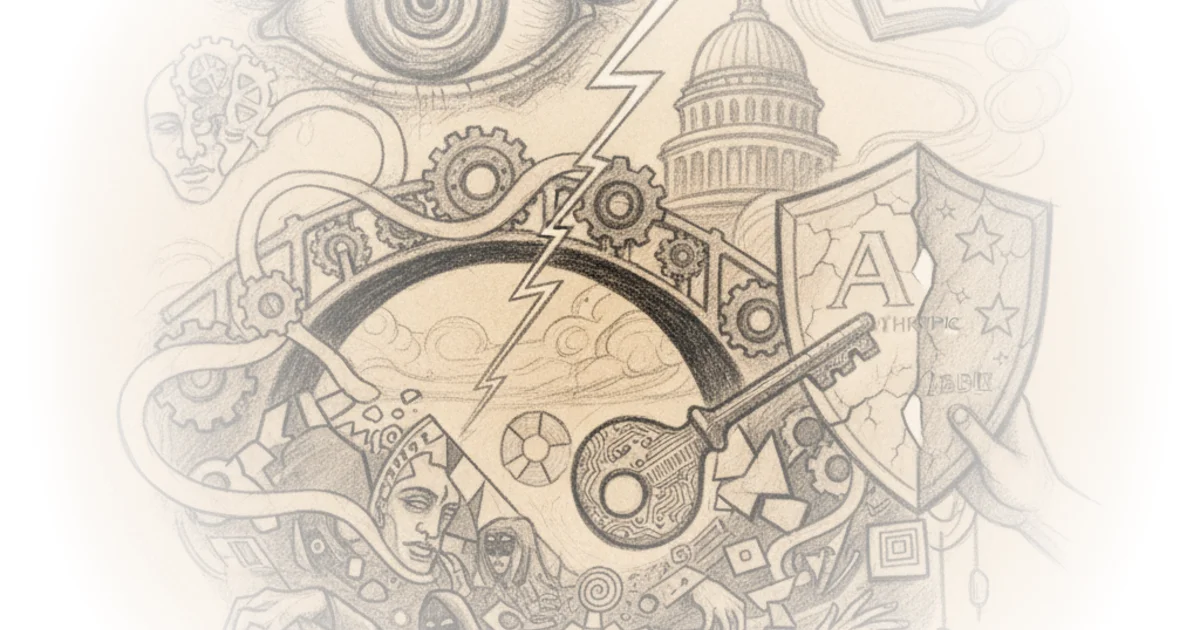
He writes, "Anthropic gains three things they wouldn't have had they obliged: They remain the underdog... everyone tries to prevent them from being the AI company of The People." This reframing is provocative because it inverts the standard safety narrative; instead of a rogue actor forcing the government's hand, Romero sees a company courting regulation to establish a monopoly on trust.
"They're courting Trump at court while telling us with their actions how mistreated they are."
Critics might argue that attributing such intricate strategic foresight to a startup ignores the genuine chaos of developing frontier models. However, Romero's analysis gains weight when considering historical precedents like the Export Administration Regulations, where dual-use technologies have long been weaponized for geopolitical leverage. By comparing their safety stance to "giving nukes to North Korea," Romero suggests Anthropic is intentionally escalating the stakes to ensure the government views them as indispensable partners rather than mere vendors.
The Architecture of Control
The core of Romero's argument rests on the assertion that Anthropic has never intended to democratize access to advanced AI. He contends that their "safety" rhetoric is actually a proxy for exclusivity. As he puts it, "Anthropic's ultimate goal is not to build AGI, but to own it. To control it."
Romero observes that the company spends more time debating philosophy and safety protocols than competing on raw benchmarks, creating an environment where talent clusters around their specific ideological framework rather than just technical prowess. He notes, "Talent doesn't leave Anthropic. It is the most powerful attractor, like a black hole." This concentration of human capital allows them to shape the narrative that AI is too dangerous for the public, a stance he describes as "an 'AI is unsafe in your unsafe hands' stance."
"If you thought this is still just marketing, you have understood nothing, and your lack of imagination baffles me more than Anthropic's behavior of late."
This perspective challenges the common belief that commercial competition will naturally lead to open access. Romero suggests a model collapse scenario where the industry narrows into an oligopoly if the government intervenes as a primary customer or regulator. He warns that once the industry transforms into a "national AI initiative akin to the Manhattan Project," companies like Anthropic will no longer need consumer revenue, allowing them to sever public access entirely.
The Cult of Conviction
Perhaps the most striking element of Romero's commentary is his characterization of Anthropic's leadership as a religious order rather than a tech firm. He argues that their belief in the imminent arrival of superintelligence is so profound that it dictates a "cultist" approach to governance. "When the Anthropic guys are called a religious cult, I never take it as a derogatory insult," he writes, suggesting that for those who truly believe they are approaching "the end of time," standard business rules do not apply.
He contrasts this with other tech giants, labeling them "fearful atheists" who pay lip service to safety without genuine conviction. In Romero's view, Anthropic is the only entity willing to make the hard choice: "It won't be available even in closed form... 'It's not a toy,' they will say, 'and you're just a bunch of kids.'"
"No amount of shameless kayfable is too much to ensure the world steers itself their way."
This section forces readers to confront the possibility that the push for regulation is not about preventing harm, but about preventing access. While some may find this conspiratorial, it aligns with the growing tension between private innovation and public oversight seen in recent kleptocracy studies regarding how elite networks capture state power. Romero's fear is that we are witnessing the final consolidation of control before the technology becomes too powerful to share.
Bottom Line
Romero's most compelling insight is the inversion of the safety narrative: he convincingly argues that Anthropic's resistance to quick fixes and their embrace of regulatory hurdles are strategic moves to position themselves as the sole gatekeepers of AGI. The argument's vulnerability lies in its assumption of perfect coordination, potentially underestimating the genuine unpredictability of AI development. Readers should watch closely for whether the administration accepts this "safety" framework or if it pivots toward a more open, competitive market model.