Andrew Henry delivers a startling revelation that cuts through the noise of modern health anxiety: the Amish aren't just culturally distinct, they are biologically shielded from the allergy epidemic sweeping the developed world. While 54% of Americans struggle with common allergies, Henry points to a staggering statistic where only 7% of Amish children show any allergic response. This isn't a story about genetics or a secret diet; it is a profound case study in how religiously structured living inadvertently engineers a protective immune system.
The Anomaly of the Amish
Henry begins by dismantling the assumption that the Amish are simply another farming community. He writes, "One study of Amish kids found that only 7% showed any allergic response at all, making the Amish one of the least allergic populations ever measured in the entire world." The author immediately contextualizes this by comparing the Amish to their closest genetic and cultural cousins, the Hutterites and the Old Order Mennonites. These groups share Anabaptist roots, traditional diets, and rural settings, yet the allergy rates diverge wildly. Henry notes that while Amish kids have a 5% asthma rate, Hutterite kids suffer at 21%.
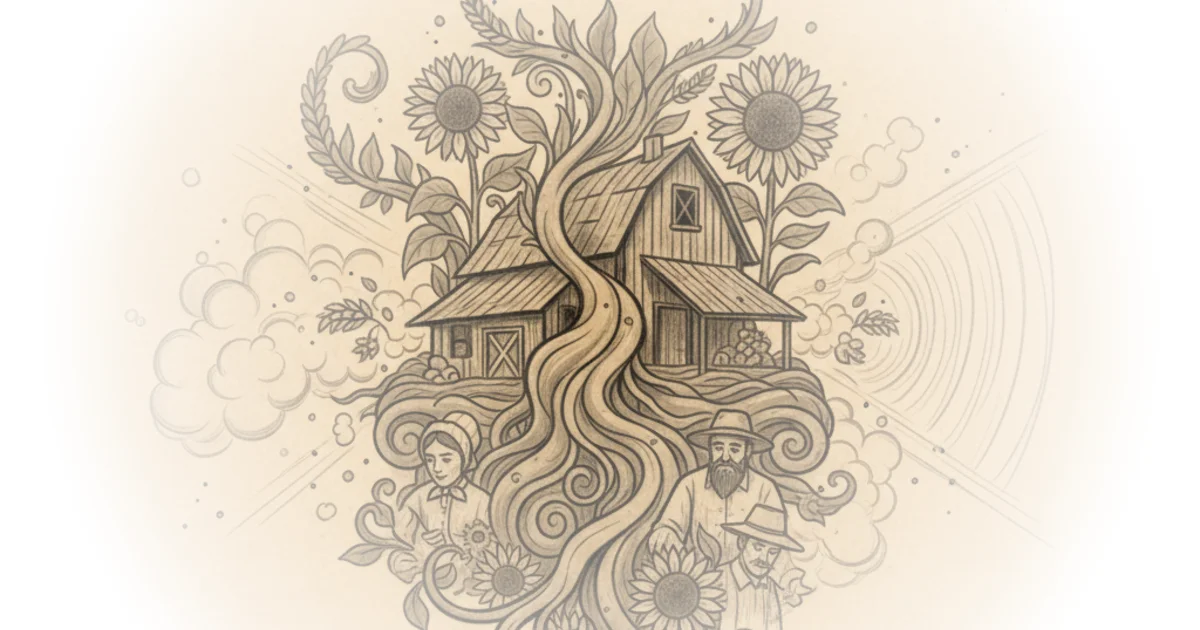
This comparison is the piece's analytical backbone. By isolating variables that are usually tangled together—genetics, diet, and rural life—Henry forces the reader to look elsewhere for the cause. The argument holds up because it relies on controlled comparisons rather than anecdotal observation. However, a counterargument worth considering is whether the Amish's genetic bottleneck, resulting from centuries of intermarriage, plays a larger role than the author admits, potentially making them less susceptible to certain immune responses regardless of environment.
The Science of Dust
The narrative pivots from sociology to microbiology with a fascinating discovery: the protective factor is literally in the air they breathe. Henry explains that researchers found "Amish houses were absolutely teeming with microbial life," with endotoxin levels nearly seven times higher than in Hutterite homes. This isn't just dirt; it is a complex biological cocktail.
As Henry puts it, "The immune calibrating effects only seems to work when the two are working together," referring to specific cow proteins and fatty acids found in the dust. He details how these proteins act as transport vehicles, delivering fatty acids from hay and manure directly into the human airway, training the immune system to stand down. This mechanism, dubbed the "farm effect," is most potent in traditional dairy farming where children have constant, early-life contact with barns.
The rules about technology, land use, and community life have created a social life where families work in small traditional farms, which means kids have daily contact with animals and barns from an early age.
This section is particularly effective because it translates complex immunology into a tangible cause-and-effect relationship. The author successfully argues that the Amish rejection of industrial farming isn't a health strategy, but a religious mandate that happens to produce a medical miracle. Critics might note that this environment is difficult to replicate for the average urban dweller, raising questions about the practical application of these findings beyond the Amish community.
Religion as a Health Determinant
Henry elevates the discussion from a biological curiosity to a sociological imperative. He introduces the concept of "social determinants of health," arguing that religion is a critical, yet often overlooked, variable in this equation. He writes, "Religion can structure entire ways of living that shape not only the social environments that people inhabit, but also their physical and microbial worlds." The author cites sociologist Ellen Idler to bolster the claim that religious communities create built-in support systems and social controls that lower mortality and disease rates.
The piece suggests that the Amish way of life is a byproduct of their Ordnung (community rules), which governs technology use and labor. By rejecting cars and industrialization, they inadvertently maintain the very conditions that keep their immune systems robust. This framing is powerful because it challenges the secular assumption that health is purely a matter of individual choice or medical intervention. Instead, it posits that the structure of a community's belief system can dictate physical outcomes.
Bottom Line
Andrew Henry's most compelling argument is that the Amish allergy immunity is an unintended consequence of a religious social system, proving that culture can physically alter biology. The piece's greatest strength lies in its rigorous comparison of similar groups to isolate the specific role of traditional farming practices. However, the argument leaves the reader with a sobering realization: the very modern conveniences and industrial efficiencies we embrace may be the architects of our own immune fragility.