Rob Henderson delivers a sobering diagnosis for the modern intellectual: the era of the solitary writer is dead, replaced by the necessity of the "mini-celebrity." He argues that in an attention economy flooded with artificial content, the only viable path to a sustainable career is not just writing well, but performing a curated personality that cuts through the noise. This is not a romantic lament for the past, but a tactical manual for survival in a media landscape where the human element is the only remaining premium asset.
The Evolution of Imitation
Henderson begins by grounding the modern influencer phenomenon in deep evolutionary psychology. He posits that humans are "high-fidelity imitators" who, for most of history, copied successful figures in totality—tools, habits, and even clothing—because they couldn't easily separate skill from luck. "If you can't neatly separate what works from what doesn't, you copy everything," he writes. This biological imperative explains why we still pay exorbitant sums for the used tissues of celebrities or the golf clubs of historical figures; we are seeking a transfer of prestige.
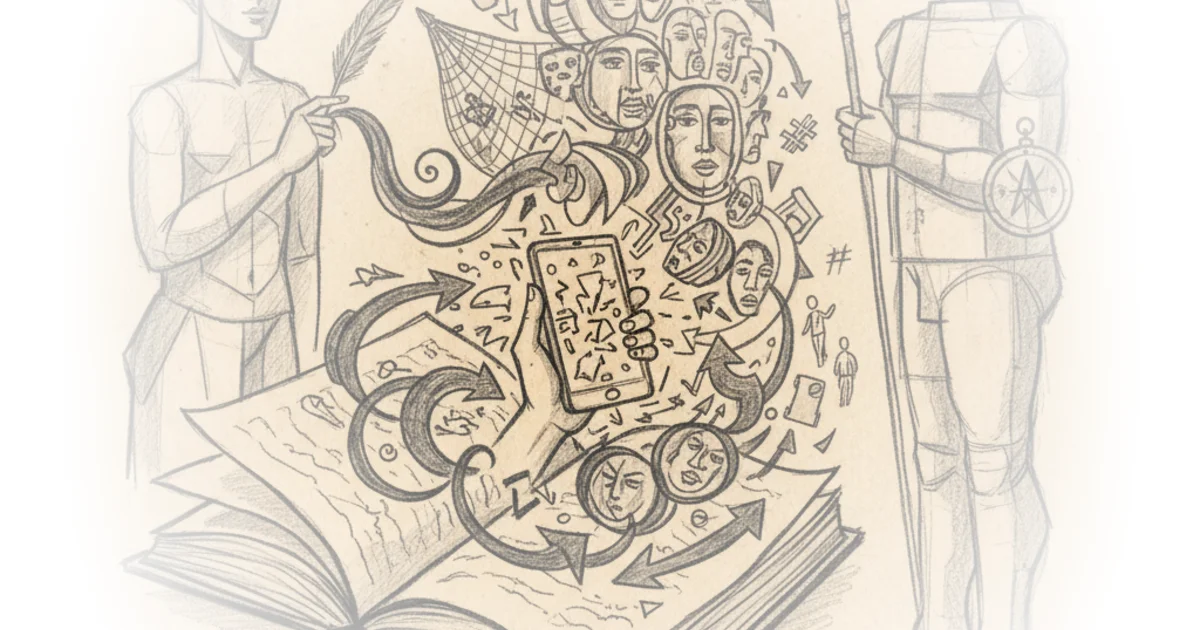
The author suggests this ancient drive has merely been hijacked by modern marketing. "Drinking the same protein smoothie or popping the same vitamins as your favorite entrepreneur or podcaster probably isn't going to do a lot for your own success," Henderson notes, "but the human impulse to over-imitate the successful still wonders." This framing is effective because it removes the moral judgment often applied to fans and instead presents the behavior as a predictable, almost mechanical, response to status signals. It connects the modern obsession with personal branding to the ancient human need for belonging and safety.
For humans, prestige serves as a binding force. A respected figure becomes a symbol of the group.
The Death of the Quiet Writer
The piece pivots to the practical reality for writers today. Henderson observes that the job description has fundamentally shifted from pure creation to multimedia management. "Writers are usually not known for their public speaking skills," he writes, "but the job has changed. Today a full-time writer is expected to have a website, run a newsletter, stay active on several social media platforms, and have a plan for how they will talk about their book once it is out."
This creates a paradox where the act of writing becomes secondary to the act of promotion. Henderson admits that even those with narcissistic tendencies often don't want to build a platform; they simply want to have one. The core argument here is that repetition is the only way to break through the clutter, even if it annoys long-time followers. "Repetition is the only way to break through," he asserts. "Repetition means that some of your long-time readers will get annoyed, but it is the only way to reach people who are unfamiliar with your work."
Critics might argue that this model favors extroverts and performers over deep thinkers, potentially lowering the quality of public discourse. However, Henderson counters that the rise of AI makes this shift even more urgent. In a world where bots can generate infinite recipes or articles in seconds, "the human behind the work is what stands out." The argument holds weight: when content is infinite, personality becomes the only scarcity.
The Five-Year Grind
Henderson is refreshingly candid about the timeline required to make this work. He rejects the myth of the overnight viral sensation, detailing his own trajectory from 2017 to 2022. "Most people who make their living writing or podcasting or being influencers of one kind or another tell me that it took them around 5 years on average before they were in a position to quit their day jobs," he writes. He shares his own data: starting on Twitter in 2017, hitting 10K followers in 2020, and only reaching financial independence on Substack in 2022.
This section serves as a crucial reality check against the "get rich quick" narratives often found in creator economy advice. Henderson emphasizes that the content must be interesting for reasons unrelated to money. "You earn attention by being useful or entertaining. Only then can you mention your work," he explains. This approach mirrors the dynamics of parasocial interaction, where the audience feels a personal connection to the creator, but Henderson reframes it as a necessary economic strategy rather than a psychological trap.
The only reliable way to make a living is to become a kind of mini-celebrity.
The "Smart-Dumb" Intelligence
Perhaps the most provocative part of Henderson's analysis is his defense of the "smart-dumb" intelligence required to succeed on platforms like TikTok or Instagram. He challenges the snobbish dismissal of creators who use filler words or seemingly shallow content. "If you pander to idiots, you will make yourself dumber in the process," he warns, but then immediately pivots to acknowledge the cunning required to sustain popularity.
He cites Ethan Strauss's concept of "smart-dumb" intelligence, noting that successful creators are "solving a hard problem. They are cracking the code of what millions of people will want to watch." Henderson observes that while a video might seem idiotic, the creator behind it is likely "reading human psychology with an impressive level of precision." This is a nuanced take that avoids the trap of simply mocking the medium. It suggests that the ability to distill complex ideas into consumable formats is a skill in itself, even if it feels like a degradation of traditional intellectualism.
However, Henderson acknowledges the distortion this creates. "The version of you that lives in the minds of other people is a simplified one. It is a thin slice of the full person," he writes. This simplification is the price of admission. The audience engages with a persona, not the full human being, and the creator must constantly perform to maintain that illusion.
The Funnel and the Future
The commentary concludes with a look at the modern sales funnel. Henderson describes a path where a listener on a podcast follows the creator on social media, enjoys their tweets, and eventually buys a book or subscribes to a newsletter. "The hope is that if listeners think you are interesting, they'll assume your writing is interesting too," he writes. This ecosystem relies on the creator being a "multimedia figure" who can pivot between formats.
He notes that publishers now view an existing online audience as "insurance." "It helps you get the book deal in the first place and helps you make the book succeed once it is published," Henderson explains. This shifts the power dynamic away from traditional gatekeepers and toward the creator's ability to cultivate a direct relationship with their audience.
If an influencer starts out by posting content that is thoughtful and measured, rather than chasing easy engagement, their audience will expect substance.
Bottom Line
Rob Henderson's argument is a pragmatic, if slightly weary, acknowledgment that the romantic ideal of the solitary writer is incompatible with the current attention economy. His strongest point is the reframing of "self-promotion" not as a vice, but as an evolutionary necessity for survival in an AI-saturated world. The piece's vulnerability lies in its assumption that all writers must become performers; while this may be true for those seeking a mass audience, it risks alienating those who prefer niche, deep-dive work that doesn't require a daily content stream. For the smart, busy reader, the takeaway is clear: if you want to be heard, you must be willing to be seen, and you must be prepared to treat your personality as your primary product.