Devin Stone, a former Marine Judge Advocate and current deputy district attorney, dismantles the cinematic mythology of A Few Good Men not by nitpicking legal procedure, but by exposing the profound disconnect between Hollywood drama and the rigid, often absurd reality of military culture. While most legal analysts focus on the courtroom theatrics, Stone brings a unique, boots-on-the-ground perspective to the film's central conflict, arguing that the movie's greatest inaccuracies lie not in the law, but in the very fabric of military life it attempts to portray.
The Culture Clash
Stone immediately identifies a critical error in the film's terminology that sets the tone for his entire critique. "You just described them as soldiers and that's about as worse as sin as you could possibly... worse than murder, worse than espionage. You do not call marine soldiers," he notes, highlighting how the script fails to respect the distinct identities of the armed services. This isn't just pedantry; it underscores a fundamental misunderstanding of the chain of command and unit cohesion that the film relies upon for its emotional weight. Stone argues that the movie's portrayal of the Marines as a monolithic, fanatical force is historically illiterate, noting that the setting of Guantanamo Bay in the early 1990s was a place of boredom rather than the high-stakes fanaticism depicted on screen.
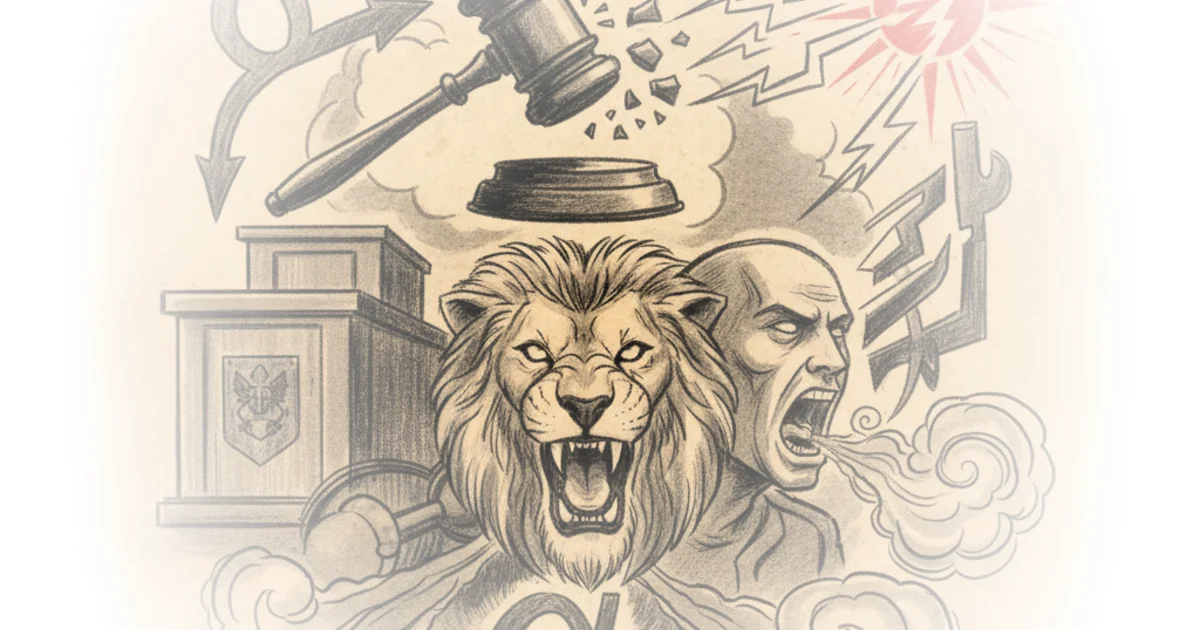
The commentary effectively reframes the "Code Red" not as a mysterious military ritual, but as a generic term for hazing that the film invented for dramatic effect. Stone explains that while the movie treats the order as a complex legal defense, the reality is starkly different: "It's not a defense if you either know that the order is unlawful or a person of ordinary sense and understanding would have known the orders to be unlawful." He points out that the film's central legal pivot—the idea that a subordinate can blindly follow an illegal order—collapses under the weight of actual military law, where the duty to disobey unlawful commands is paramount. Critics might argue that the film is a work of fiction and deserves artistic license, yet Stone's point stands that the movie misleads the public on how the military justice system actually functions.
You do not call marine soldiers. You just don't do it. It's worse than murder, worse than espionage.
The Theater of Justice
Stone's analysis of the courtroom scenes reveals a deep appreciation for the film's dramatic tension while simultaneously critiquing its procedural absurdity. He observes that the character of Lieutenant Kaffee, played by Tom Cruise, lacks any genuine concept of military discipline, a flaw Stone suggests is central to the character's arc. "He has no concept of wearing the uniform... no concept of what it means to be an officer," Stone writes, contrasting the movie's protagonist with the rigid expectations of real military counsel. The commentary shines when Stone dissects the opening statements, noting that while the character's use of the lectern is technically correct, his behavior in the courtroom well is a violation of protocol that would rarely happen in a real military tribunal.
The piece also tackles the portrayal of Colonel Jessup, played by Jack Nicholson, as a caricature of military leadership. Stone argues that the character's fame and the film's depiction of his influence are unrealistic, stating, "There's no reason why anyone would have heard of the Jack Nicholson character... a colonel in the news in general unless they have committed some horrible crime." This observation strips away the movie's mythos, revealing a narrative that relies on the audience's suspension of disbelief regarding how the military operates. Stone's background allows him to see the "synergistic relationship" between the Judge Advocate General Corps and the silent drill platoon not as a cinematic trope, but as a historical reality that the film reduces to a punchline.
The Legal Reality
Ultimately, Stone's commentary serves as a corrective to the popular understanding of military justice. He emphasizes that the defense strategy in the film—relying on the ubiquity of "Code Reds" to justify the order—is legally fragile. "If they're only charged with premeditated murder... focusing on that intent could be a home run," Stone explains, but he quickly pivots to the reality that the recklessness of the act makes the defense of following orders nearly impossible. The film's climax, where the order is admitted, is portrayed by Stone not as a triumph of truth, but as a legal suicide that would never occur in a real court-martial where the focus would be on the specific intent and the legality of the command.
The analysis of the medical testimony further highlights the film's dramatization of facts. Stone notes that the cross-examination of the doctor is a "master class in ridiculous acting" rather than a realistic legal strategy, pointing out that real lawyers would not ask questions that set up a "softball" for a hostile witness. This critique extends to the film's broader narrative, which Stone suggests prioritizes emotional payoff over legal accuracy. "The reality is, if that charge did exist, every single marine under the rank of corporal would be in a lot of trouble," he remarks, illustrating how the film's stakes are artificially inflated to fit a dramatic narrative.
Bottom Line
Devin Stone's commentary is a masterclass in applying real-world expertise to pop culture, successfully arguing that A Few Good Men is less a legal thriller and more a cultural artifact that misunderstands the very institution it seeks to honor. The piece's greatest strength is its ability to separate the film's emotional resonance from its legal and cultural inaccuracies, offering a nuanced view that respects the audience's intelligence while correcting the record. The biggest vulnerability in the film's logic, as Stone exposes, is the assumption that the military operates on a code of honor that supersedes the law, a notion that the real military justice system explicitly rejects. Readers should watch for how this analysis reshapes their view of the film, moving from a celebration of dramatic justice to a critique of institutional ignorance.