Jason Slaughter doesn't just explain why Dutch streets are made of bricks; he reveals how a simple material choice exposes a fundamental flaw in how we design cities for cars versus people. While most observers see aesthetic charm, Slaughter argues that the prevalence of clinkers is actually a sophisticated engineering strategy that prioritizes long-term maintenance, water management, and pedestrian safety over the short-term convenience of high-speed traffic.
The Philosophy of the Paver
Slaughter begins by acknowledging the obvious advantages of asphalt: it is smooth, cost-effective for large areas, and quick to lay. However, he quickly pivots to the Dutch reality where "most Dutch streets are built out of preconstructed brick pavers called clinkers." This isn't merely a nod to history; it is a deliberate choice that extends even to "recently built neighborhoods." The author notes that while historic centers use stone for "aesthetic purposes," the modern application is functional. He explains that these bricks, technically known as "strot buck stain" or "street bricks," are baked at high temperatures to be far more durable than building bricks.
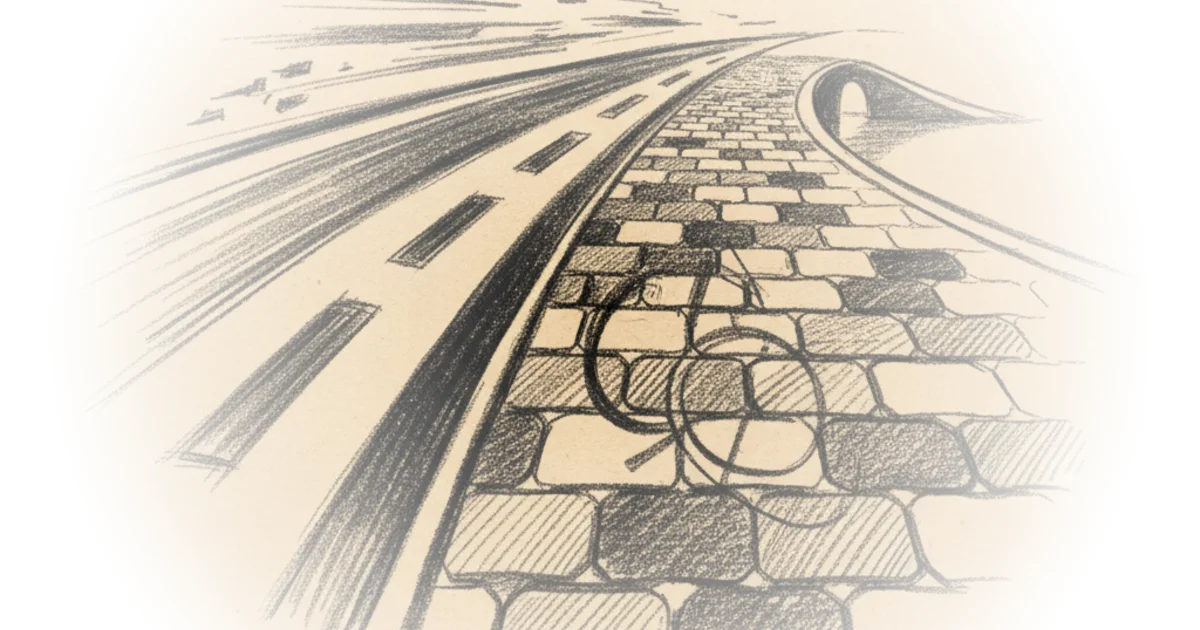
The argument here is compelling because it reframes the street not as a passive surface, but as an active component of the urban ecosystem. Slaughter points out that municipalities standardize patterns for specific functions, such as using the "kipper bond" pattern for driving surfaces because it is "the most resistant to displacement from tires rolling along the street." This level of granular design suggests a system where the street itself communicates rules to the driver, slowing them down through texture and visual cues rather than just signs.
"When parking spots are on the road if there aren't any park cars then the street becomes bigger which we know encourages people to speed but when the parking spaces are on the sidewalk it allows the sidewalk to be bigger when there are no cars there which is a lot nicer."
This observation is critical. By shifting parking to sidewalk level, the street physically shrinks when empty, naturally calming traffic without the need for aggressive enforcement. Critics might argue that this design sacrifices road capacity for pedestrians, but Slaughter implies that the trade-off is intentional: a city designed for driving inevitably becomes hostile to the people living in it.
Maintenance as a Design Feature
Perhaps the most striking part of Slaughter's coverage is the discussion on infrastructure lifecycle. He contrasts the "ugly asphalt scars" common in North American cities with the Dutch ability to dig up streets for utility work and restore them perfectly. "The old clinkers are removed and set aside when the work is done the clinkers are put back in place and you can't even tell that they were dug up at all." This is not just about looks; it is about the massive economic and environmental cost of constantly repaving roads.
Slaughter highlights that asphalt requires resurfacing every 10 to 15 years, whereas a clinker street can last "30 years or more." He notes that while the initial installation of clinkers is more expensive, the long-term savings are significant because "maintenance is relatively inexpensive and the street lasts a long time." Furthermore, the modular nature of the bricks means that damaged units can be replaced individually without heavy machinery, a stark contrast to the "blobs of asphalt" that mar sidewalks elsewhere.
"The solution to that is to fill cracks as soon as they are discovered which helps to prevent potholes and makes the road last much longer even in freezing temperatures of course the problem with North American cities is that because of car Centric urban sprawl there are so many kilometers of asphalt per person that it's too expensive to maintain it all to an acceptable level."
This is a damning indictment of the car-centric model. The sheer scale of asphalt required to support sprawling suburbs creates a maintenance burden that eventually leads to decay. Slaughter's point is that the Dutch system is financially sustainable precisely because it does not try to accommodate unlimited vehicle volume on every street.
The Limits of the Brick
Slaughter is careful not to present clinkers as a panacea. He acknowledges that "ultimately a street like this is not going to hold up well to a large amount of motor vehicle traffic." The bricks will develop ruts and grooves under heavy loads, which is why the Netherlands still uses asphalt on high-volume distributor roads. This distinction is central to their "sustainable safety" philosophy, which separates roads designed for moving traffic from those designed for local access.
"This brings up an extremely important aspect of Dutch Street design the very clear distinction between distributor roads and neighborhood access streets."
This separation allows the city to use the right material for the right job. High-speed traffic gets smooth, durable asphalt, while neighborhood streets get the tactile, slow-speed environment of clinkers. The system fails only if one tries to force a high-volume traffic pattern onto a low-volume design, a mistake many North American cities make by trying to turn every street into a thoroughfare.
"Clinkers are more expensive than asphalt to install initially but maintenance is relatively inexpensive and the street lasts a long time so overall streets and sidewalks made with clinkers are actually less expensive than those made with asphalt and concrete which means that Dutch cities are actually saving money by having these nicer looking streets."
Bottom Line
Jason Slaughter's analysis succeeds by moving beyond the superficial beauty of brick streets to expose the rigorous engineering and economic logic beneath them. The strongest part of the argument is the demonstration that what looks like a quaint aesthetic choice is actually a superior long-term investment in urban resilience. The biggest vulnerability, however, is the difficulty of replicating this model in cities already locked into decades of car-centric sprawl, where the sheer volume of asphalt infrastructure makes a transition to modular paving economically and politically daunting.