The Algorithm's Honest Man
A confession captured on tape. An estate agent's contractor admits he manufactured anti-immigrant propaganda not because he believed it, but because hate brings views. Michael Macleod's investigation into the fake TikTok account Reform_UK_2025 exposes something darker than disinformation: the commodification of hatred as a business model.
"I Just Wanted the Clicks"
The man on the recording cannot fathom how London Centric traced his anonymous account back to his employer by geolocating wheelie bins in his videos. He thought no one would notice. Last summer, sitting in his car analyzing TikTok trends, he had a brainwave.
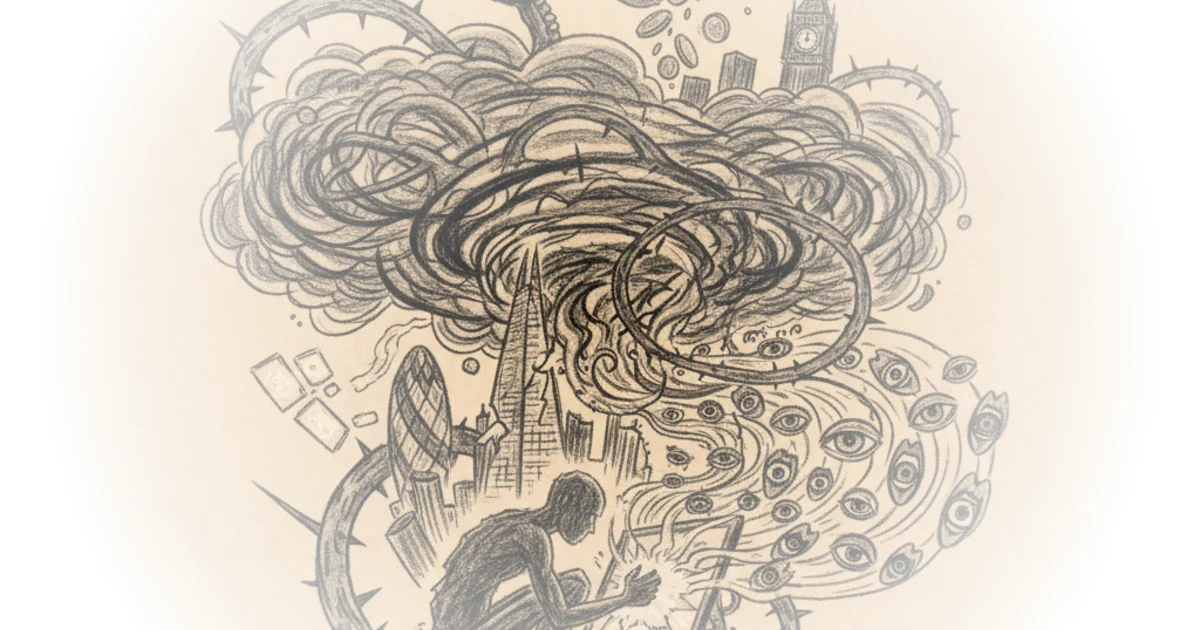
"Hate brings views," he says.
Michael Macleod writes, "I was thinking of unique videos I can do for people." At that time, protests outside asylum hotels were spreading across the country. The man noticed far-right audiences were highly engaged on TikTok. They were easy to rile up.
"They hate such videos of illegal migrants. I was like, why not?"
The result was an account that co-opted Nigel Farage's political movement's logo and name without permission. It posted video tours of Londoners' homes with AI-generated voiceovers claiming properties in Knightsbridge and Chelsea had been handed to illegal immigrants for free. It smeared visible residents as rapists. It was an instant hit, attracting millions of views. It was also, the man confesses, all lies.
"One day I might make some money."
The Monetization Pipeline
As Michael Macleod puts it, the aim was to build an audience and then make cash through TikTok, which allows people to monetize content once they reach a certain number of views and followers. The man had previously run a TikTok account that amassed 24,000 followers. One night, he received his first payout from TikTok's creator scheme.
"I told my wife, wow, it's £1,000."
Then TikTok deleted his account because he was stealing other people's videos. Hooked on the income, he started filming properties during viewings, added AI voiceovers about asylum seekers and rapists, and pressed upload. The audience response was instant.
"My first video got one million [views]. Most of the videos got over 10,000… so I thought, one day I might make some money."
Critics might note that TikTok's algorithm rewarded this content with millions of views while the platform claims hate has no place there. The man insists his videos weren't racist because TikTok's algorithm would have downgraded racist content. He was just an entrepreneur following a simple strategy.
"Every single video I would basically copy paste the same thing. I wrote down 'illegal migrants.'"
The "Rogue Contractor" Defense
When London Centric traced the account to SmartLet Estates, company director Sam Wasserstrum initially claimed the operator was a member of the public looking to rent. He now admits that was a lie. His new version: the person was a rogue contractor employed for two years as a viewings agent.
Wasserstrum says he had no idea his employee was running the hate-filled account until London Centric approached his company in November. The employee was sacked soon afterwards. To support his case, Wasserstrum provided lengthy audio recordings of himself confronting the anonymous employee.
Michael Macleod writes, "They came to the office... they had every single fact you can think about. They've cross referenced everything… We've had management companies calling us, councils calling us up, saying you're putting our clients in danger."
The man appears confused by the fuss. He suggests the impact on tenants was limited because they didn't get many views compared to his other content.
"It wasn't racist," the man says of his account. "I didn't do anything because of hate. I didn't care. It's just I wanted the clicks."
Spreading Hate for Clicks
London Mayor Sadiq Khan told London Centric that the investigation reveals part of a dangerous and divisive trend. Accounts are talking London down because the algorithms reward them for doing so.
As Michael Macleod puts it, "Our democracies are being undermined by those bad faith actors spreading hate for clicks."
The mayor added that large social media companies and regulators need to do much more to prevent algorithms pushing hate and violence into people's feeds. Wasserstrum has now asked police to investigate his former employee, condemning the actions in the strongest possible terms.
Critics might note that the estate agency knew the truth from the start and lied to journalists. They might also question whether one sacked contractor represents the full scope of the problem, or whether platforms themselves bear responsibility for algorithmic amplification of divisive content.
Bottom Line
This confession reveals the engine behind modern disinformation: not ideology, but income. The man didn't believe the hate he manufactured—he believed the algorithm would pay for it. When platforms reward outrage with reach, and reach with revenue, ordinary people become weapons in wars they don't even understand.