This piece from The Pillar does more than announce a papal itinerary; it reframes the entire narrative of the African Church from a recipient of Western aid to a mature, self-sustaining global force. By anchoring the upcoming visit of Pope Leo XIV in the historical weight of Saint Augustine's legacy in Hippo Regius, the editors move beyond standard diplomatic reporting to explore a profound theological and cultural shift. The real story here isn't just the logistics of a tour through Algeria, Angola, and Cameroon, but the assertion that the continent has outgrown the "crib mentality" of its missionary past.
A Strategic Mosaic
The Pillar reports that the selection of countries for this trip is not random but "representative of the entire continent," deliberately chosen to showcase the linguistic and cultural diversity of Africa. The piece notes that the itinerary covers the Maghreb in Algeria, the strategic crossroads of Cameroon, the Lusophone influence in Angola, and the insular nature of Equatorial Guinea. This linguistic calculus—spanning Arabic, French, English, Portuguese, and Spanish—serves as a proxy for the continent's complex identity.
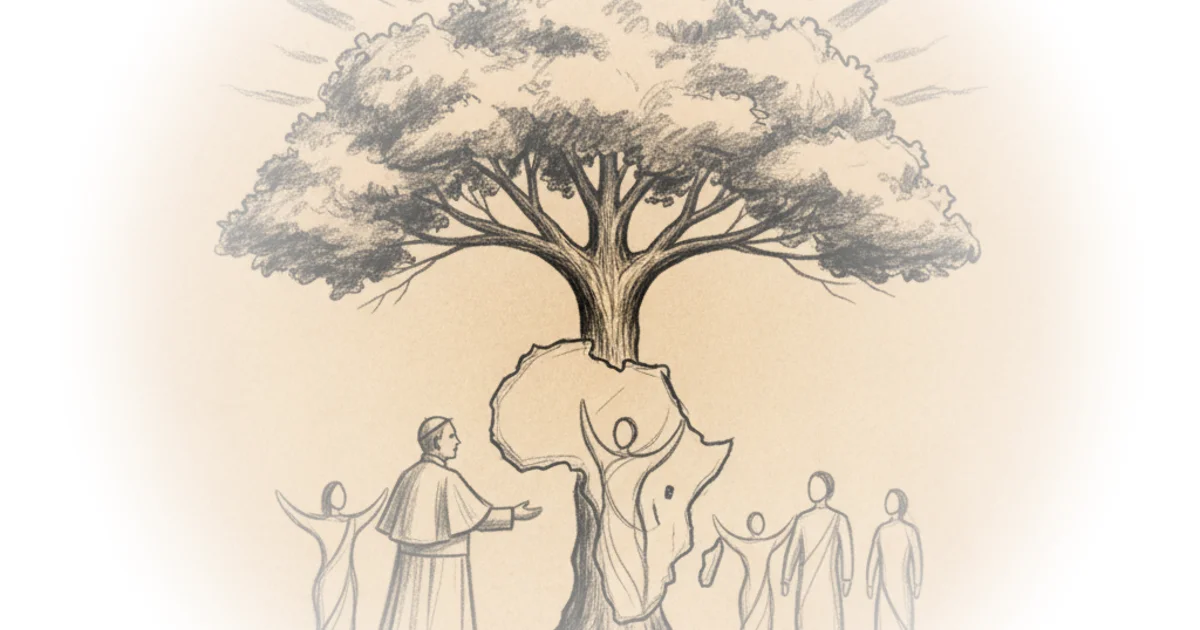
The argument gains depth when the editors weave in the historical context of the Algerian leg. By highlighting the visit to Annaba, the site of the former city of Hippo, the piece connects the modern pontiff to the ancient roots of Western theology. This is not merely a pilgrimage; it is a return to the "fountain" for a pope described as "profoundly Augustinian." The editors note that for a leader shaped by this tradition, "returning to Hippo is something of a particular spiritual significance," suggesting the trip is as much about internal renewal as external outreach.
"The African Church was birthed through Western missionaries... Gradually, the churches in Africa got accustomed to being at the receiving end, like a child that is in the crib, being pampered and cuddled by their elders in the West."
Archbishop Fortunatus Nwachukwu, quoted in the piece, provides the intellectual backbone for this analysis. He argues that the Church must transition from a state of dependency to one of "adult mentality." This is a bold claim in a sector often criticized for neo-colonial dynamics. The piece suggests that the "crib mentality" has led to a situation where the African voice is treated as a "distraction" rather than a contribution in global church discussions.
Critics might note that framing the issue as a psychological "syndrome" risks oversimplifying the very real structural economic disparities that keep many African dioceses reliant on foreign funding. However, the piece counters this by emphasizing that the "adult mentality" is about agency and resourcefulness, not just financial independence.
The Pastor of Sinners
Perhaps the most provocative section of the coverage addresses the controversy surrounding the visit to nations with authoritarian governments. The Pillar reports that while activists have called for the trip to be cancelled, the Vatican's stance is that the Pope is a "pastor of all sinners." The editors paraphrase Nwachukwu's defense: "If the pope had to cancel trips because of the type of government, then I think the pope would not visit any country in the world."
This argument rests on the theological premise that the message of Christ is specifically for those in need of redemption, not those who are already "righteous." The piece argues that "countries with problematic regimes are the ones that need the visit of the pope the most." This reframes the visit not as an endorsement of a regime, but as a strategic intervention to "open a small space so that the people can breathe some fresh air."
The coverage draws a sharp distinction between the challenges faced by the Church in Algeria versus the rest of the continent. In Algeria, the challenge is "having a space to exist and operate as a Christian community" amidst a Muslim majority where proselytism is forbidden. Here, the mission is one of "presence and of charity." In contrast, in countries like Cameroon and Angola, the Church is a majority or significant minority facing societal issues like "poverty, security, bad governance, corruption."
"The reliable common ground is Jesus Christ, the Incarnate word of God, and Scripture, both for Catholics and Protestants. If we focus on Jesus Christ and take the person and the message of Jesus Christ seriously, then we can find solutions and healing for our African societies."
The piece effectively uses the historical parallel of the Trappist monks of Tibhire, martyred during Algeria's civil war, to underscore the risks and the depth of the Christian witness in the region. It suggests that the current peace, while fragile, allows for a different kind of dialogue than the "extremists who were trying to take power" in the past.
From Dependency to Maturity
The core of the commentary lies in its vision for the future of the global Church. The Pillar argues that the "now-adult church in Africa" is ready to stop asking for "milk to keep it quiet" and start offering its own voice to the universal family. The editors highlight that the Pope's own life story—moving from Chicago to the Peruvian jungle and back to Rome—serves as a model for the youth: "Nothing and nobody should discourage you."
This section challenges the reader to reconsider the power dynamics of the Catholic Church. The piece asserts that the "baby in the crib" syndrome is a barrier to the African Church being taken seriously in global conversations. By visiting these nations, the administration is signaling a shift in recognition. The editors note that the visit will "spread universal light on this dimension of the now-adult Church in Africa."
"When a baby gets in the middle of a conversation, the adults there try to hush up the baby. The baby's voice is not seen as a contribution, but as a distraction."
A counterargument worth considering is whether a single papal visit can truly dismantle decades of institutional dependency or if it risks being a symbolic gesture that masks deeper structural inequalities. The piece acknowledges the need for gratitude toward past missionaries but insists that "we have to help the people also to come to an adult mentality."
Bottom Line
The Pillar's coverage succeeds by shifting the focus from the political optics of visiting authoritarian regimes to the theological maturity of the African Church. Its strongest argument is the reframing of the "crib mentality" as a barrier to global ecclesiastical influence, a claim that demands attention from Western observers. The piece's biggest vulnerability is the assumption that spiritual maturity automatically translates to political or economic self-sufficiency in the face of systemic corruption. Readers should watch to see if this "adult mentality" translates into tangible shifts in how the Vatican allocates resources and listens to African leadership in the years following the trip.