Cory Doctorow argues that the European Union is making a catastrophic strategic error by hesitating to build its own digital infrastructure while the executive branch in Washington actively weaponizes American technology against sovereign nations. He posits that the current political crisis has shattered the illusion of safe interdependence, yet European bureaucrats are choosing to negotiate with the very entities threatening their digital sovereignty rather than accelerating their exit. This is not merely a policy debate; it is a race against time to prevent the remote disabling of critical national assets, from supply chains to judicial communications.
The Weaponization of Interdependence
Doctorow's central thesis rests on the uncomfortable reality that the internet's architecture has become a geopolitical lever. He writes, "Donald Trump is the greatest crisis of our young century, and the EU looks set to squander the opportunity, to its own terrible detriment." The author's analysis is compelling because it moves beyond abstract privacy concerns to concrete, existential threats. He illustrates how the United States has historically used its dominance in transoceanic fiber-optic cables to spy on the globe, a vulnerability exposed years ago by whistleblowers like Edward Snowden.
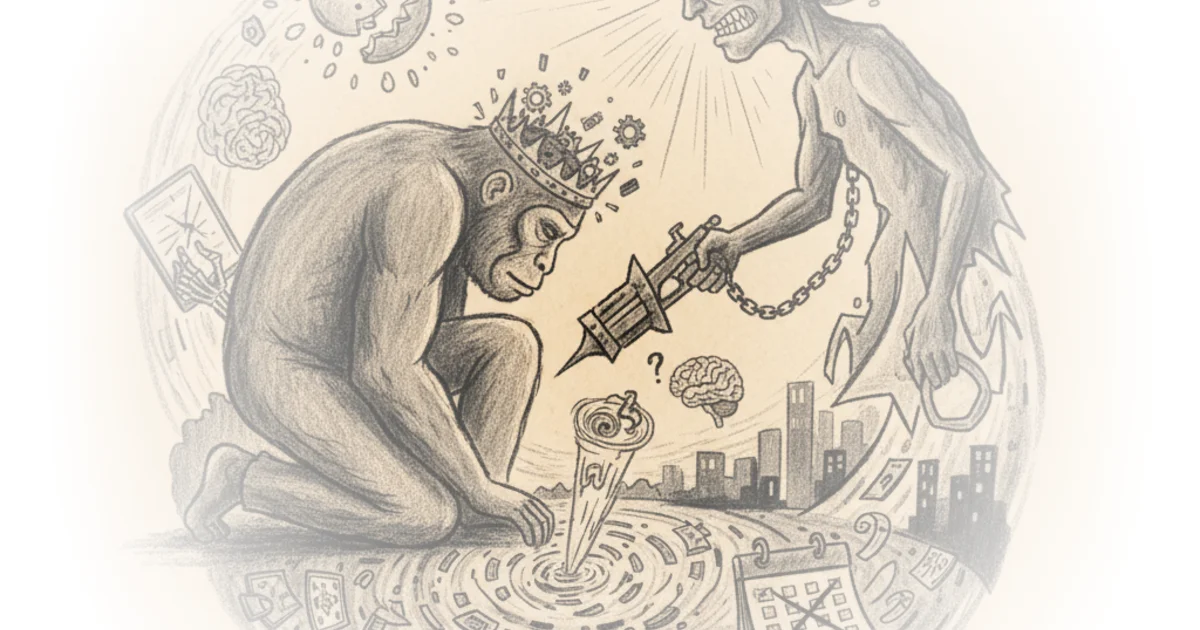
The argument gains urgency when Doctorow describes the potential for "remote bricking" of essential machinery. He notes that American companies have already "repurposed their over-the-air software update capabilities to remotely brick expensive machinery in service to geopolitical priorities." This is not hypothetical; it is a documented capability that could be turned against European allies. The author suggests that if the administration wanted to pressure a nation like Denmark, it could simply instruct tech giants to disable their email archives, databases, and even the tractors used in their agriculture.
"At the click of a mouse, Trump could shut down the world's supply of Lego, Ozempic, and delicious, lethally strong black licorice."
This vivid imagery serves to ground the abstract concept of "digital sovereignty" in tangible economic reality. However, critics might argue that such a total shutdown would be an act of war with unpredictable global consequences, making it a less likely tool than targeted sanctions. Doctorow counters this by pointing out that the "status quo bias" has lulled the world into complacency, allowing these offensive capabilities to become routine rather than exceptional. He writes, "No one wants to let go of the vine they're swinging from until they have a new vine firmly in their grasp."
The Failure of European Regulation
The commentary shifts to the internal dynamics of the European Commission, where Doctorow identifies a "reactionary counterrevolution" against the continent's own landmark regulations. He argues that a faction within the bureaucracy is preparing to let the administration direct the enforcement of the Digital Markets Act and the Digital Services Act. This would effectively allow American tech giants to "grade their own homework," a move Doctorow labels a "fatal decision for our companies and our democracy."
The author's frustration is palpable as he describes the administration's aggressive stance. He notes that the executive branch has already "sanctioned a group of officials who helped draft the Digital Services Act" and ordered tech companies to hand over private communications of European officials. In this context, the European Commission's desire for "dialogue" appears less like diplomacy and more like appeasement. Doctorow writes, "Caving to Trump won't make him more favorably disposed to Europe or Europeans. Trump treats every capitulation as a sign of weakness that signals that he can safely ignore his end of the bargain and demand twice as much."
This assessment of the administration's negotiation style is supported by the pattern of reneging on commitments. The author suggests that the "art of the deal" in this context is simply "reneging." The argument here is that the EU is misreading the incentives of the current US leadership. By trying to find a middle ground, they are ignoring the clear signal that the administration views European regulation as an adversary to be crushed, not a partner to be accommodated.
"The best time to get shut of the American internet was 15 years ago. The second best time is right fucking now."
The urgency of this statement is underscored by the existence of viable alternatives that are being stalled by political inertia. Doctorow points to initiatives like "Eurostack" and the European Digital Infrastructure Consortium as the "new vine" Europe needs to grab. He references the concept of "enshittification" to explain why relying on US platforms is a losing strategy: these companies are structurally incentivized to degrade their products to extract more value, a process that accelerates when they face no competition.
The Cost of Waiting
The final section of the commentary addresses the psychological barrier to change. Doctorow argues that the EU is waiting for a crisis so severe that it forces action, but he warns that the next crisis will be far worse than the current one. He writes, "Sure, Europe could wait for the next crisis to let go of the Big Tech vine and grab the Eurostack one, but that next crisis will be far, far worse." This is a powerful critique of bureaucratic risk aversion. The author suggests that the fear of the unknown (building a new internet) is currently outweighing the fear of the known (being held hostage by US tech giants).
The argument is strengthened by the historical context of how the US has used its digital dominance. Doctorow reminds readers that the "latent offensive capabilities were obvious long before Trump," but previous administrations used them subtly or under the cover of national emergencies. The current administration has removed the veil of deniability, making the threat explicit. This clarity should be a catalyst for change, yet the author observes that "status quo bias exerts a powerful gravity."
Critics might note that building a fully independent "post-American internet" is technically and economically daunting, requiring massive investment and coordination that the EU has struggled to achieve in the past. While Doctorow acknowledges the difficulty, he insists that the cost of inaction is far higher. He frames the choice not as a matter of convenience, but of survival: "Moving to the post-American internet is hard — but it will only get harder."
"The EU can't afford to wait for Trump to brick one or more of its member states to (finally, at long last) take this threat seriously."
Bottom Line
Doctorow's most compelling contribution is his reframing of digital regulation as a matter of national defense rather than consumer protection, exposing the existential risk of relying on a hostile foreign power's infrastructure. The argument's greatest vulnerability lies in the sheer scale of the logistical challenge required to replace the American internet, a hurdle that may prove insurmountable without a unified, immediate political will that currently appears fractured within the European Commission. The reader should watch for whether the EU's "dialogue" with the administration leads to a genuine compromise or a total capitulation that leaves European digital sovereignty permanently compromised.